Specifying china small circle mirrors for factory for Wholesale and OEM Orders
Returns usually trace back to the same weak point: silver delamination at the edges due to poor back-coating application. When sourcing small-diameter wall mirrors, the variance between a functional accent and a recurring failure lies in the technical precision of the silvering process and the stability of the edge treatment. Procurement officers must look beyond visual clarity to evaluate the chemical bond and dimensional consistency across different production batches.
Scope of Supply and Physical Form
| Parameter | Standard Range / Options |
|---|---|
| Diameter Options | 100mm to 600mm (±0.5mm tolerance) |
| Glass Thickness | 3mm, 4mm, 5mm float glass |
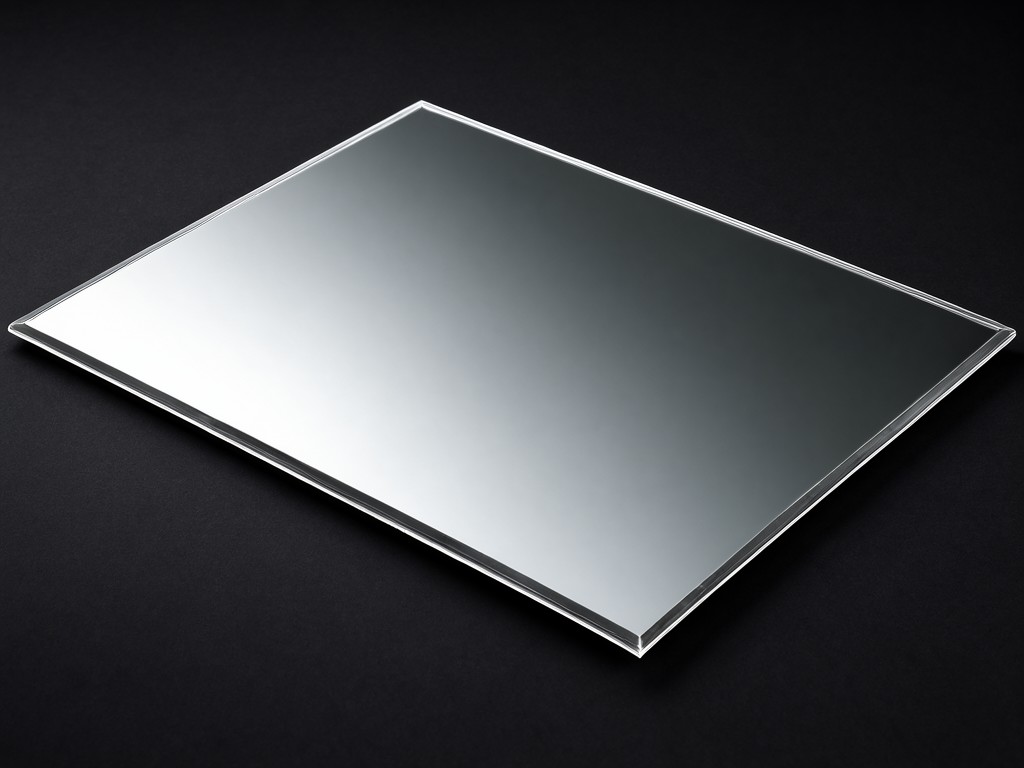
| Edge Treatment | Flat polished, beveled (10mm/20mm/30mm), frosted |
| Back-Coating | Oxidation-resistant epoxy-based paint |
The physical form of the mirror dictates the mounting hardware and the final weight. Small-format mirrors (under 200mm) are often utilized as modular decorative clusters or functional accents in retail displays, whereas larger 500mm+ units require 5mm thickness to prevent bowing during installation. The choice of edge treatment significantly impacts the unit cost; a beveled edge requires additional diamond-cutting passes compared to a flat polished edge.
What Actually Determines Performance
Performance in wall mirrors is primarily measured by the longevity of the reflective layer against the glass substrate. In high-humidity environments, standard silvering reacts with moisture, leading to "black edge" spots or edge corrosion. We utilize a multi-layer protective coating that creates a moisture barrier between the glass surface and the reflective metallic film.
Flat Polished Edge
Suitable for modern, minimalist aesthetics. Offers the lowest cost-per-unit for high-volume retail applications where visual depth is not required.
Beveled Edge
Adds optical depth and refraction to the mirror. Requires precision CNC grinding to ensure the bevel angle is consistent across the entire circular perimeter.
The structural integrity of the glass substrate also determines its resistance to impact. A 3mm mirror is prone to chipping during transit if not packed in reinforced foam-density inserts, while 5mm glass provides the rigidity required for commercial high-traffic transit zones.
Usage Scenarios and Buyer Segments
Small circle mirrors are deployed across diverse sectors, each with specific environmental stressors. Hospitality procurement often demands moisture-resistant coatings for bathroom fittings, while retail-oriented brands focus on aesthetic variety and price-point optimization for sets.

- Hotelity: Demand anti-corrosion properties for bathroom environments.
- Retail Decor: Focus on varied diameters and edge finishes for private-label gallery walls.
- Residential: Accent wall mirrors where easy adhesive-based mounting is prioritized.
- Commercial: Small functional mirrors for dressing rooms or narrow corridors.
Segment-Specific Requirements
Most quality disputes start with a consistency gap between the sample and the bulk shipment. For private-label buyers, the tolerance levels are critical if the mirrors are intended for adhesive mounting. The back-side of the mirror must be perfectly flat without any waviness in the paint backing to ensure full surface contact.
Technical Tolerance Standards
We maintain a diameter tolerance of ±0.5mm and a thickness variance of ±0.2mm. This ensures that multi-mirror installations remain aligned when mounted on a grid layout.
Working as a Production Partner, Not a Catalogue Supplier
The manufacturing process requires a rigorous specification phase before the first production run begins. We start with a technical drawing that defines the radius, edge profile, and the specific type of back-coating required. Once the drawing is approved, a physical sample is produced to verify the silvering clarity and edge-feel.
This workflow minimizes the risk of mass-scale defects. By finalizing the artwork and branding requirements during the artwork and branding review phase, we ensure that the final product meets the brand's specific market positioning without mid-production adjustments.
Volume Planning and Lead Time
Lead times are dictated by the order volume and the complexity of the edge treatment. Standard flat-edge mirrors typically require 15-21 days for production and quality inspection. Large-scale OEM orders requiring custom beveling or specialized protective coatings may require extended timelines to account for the curing time of the epoxy back-coating layers.
Keeping Repeat Orders Supplied
Consistency across reorders is maintained through strict batch-tracking. We document the specific glass batch and silvering formula used for every shipment to ensure that if a buyer reorders six months later, the optical properties and dimensional fit remain identical to the original sample approval.
Questions Ask Before Ordering
Are these mirrors suitable for high-humidity bathrooms?
Yes, provided the multi-layer epoxy back-coating is specified. This prevents oxygen and moisture from reaching the silver layer at the edges.
What is the standard packaging for small-diameter mirrors?
We utilize individual foam-wrapped inserts within corrugated cardboard boxes with dividers to prevent impact-related breakage during international transit.
Can we have custom branding applied to the back?
Custom silk-screened logos can be applied to the back-coating before the final protective layer is cured, ensuring the branding is permanent.
Ready to finalize your technical specifications and request a sample?
Initiate Artwork and Branding Review