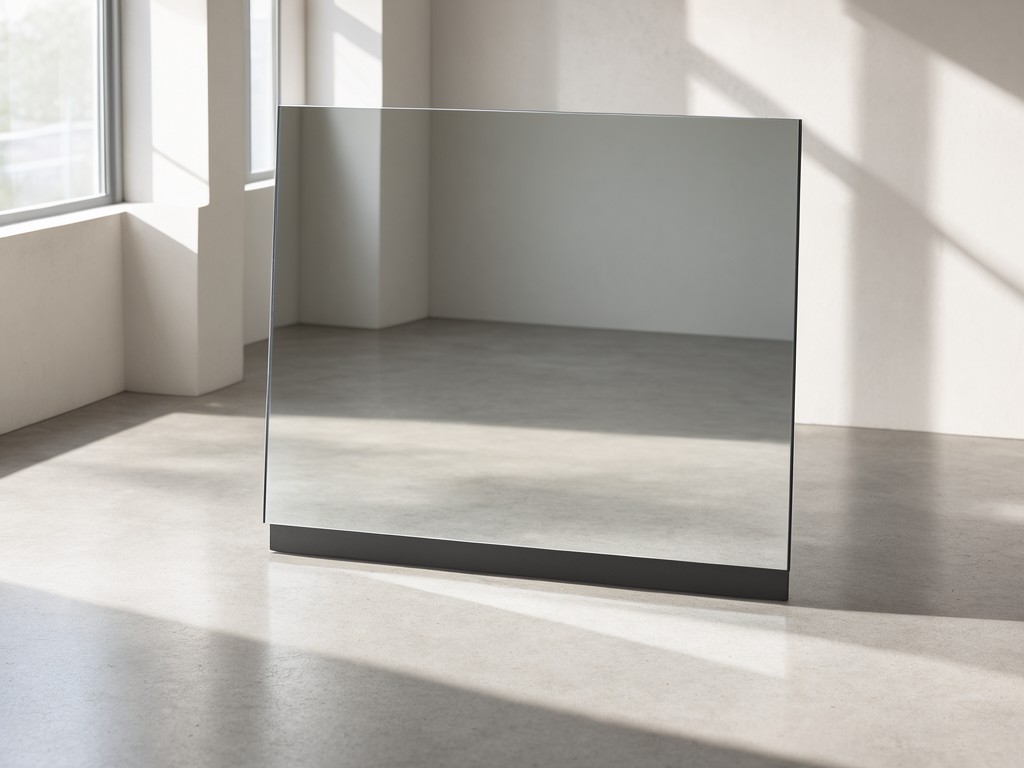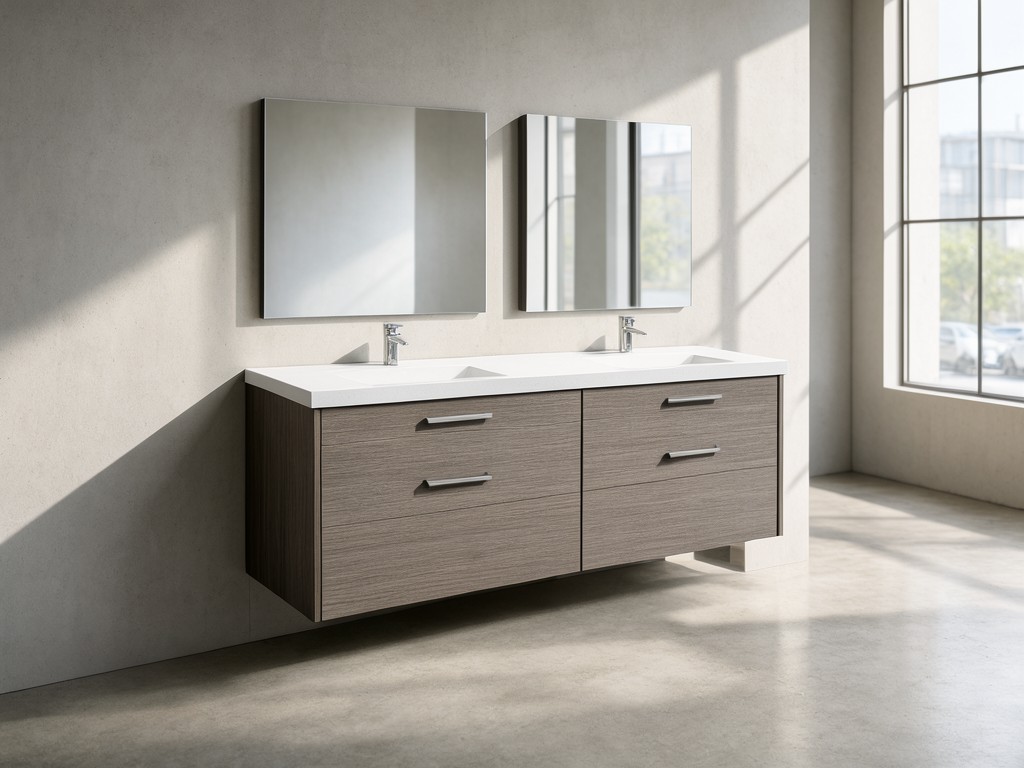
best price rectangular bathroom vanity wall mirrors Company - Bulk Supply and Specification Guide
Copper-free silvering adds roughly 12-18% to the unit glass cost versus standard silvered float glass, but it prevents the black-edge corrosion that shows up after six to twelve months of bathroom steam. For a vanity mirror program, the real choice is not mirror versus no mirror; it is whether the buyer pays for corrosion resistance now or absorbs reorders and finish claims later.
How It Performs in Use
The build method decides how much silver a rectangular vanity mirror keeps after two heating seasons. Standard silvered float glass relies on a thin silver layer sealed with copper and paint; in a bathroom, steam drives moisture toward the edge, and the first failure is usually a dark spot that spreads along the cut edge. The buyer sees it as a quality defect, but it is really a specification choice made at the forming stage.
Lot-to-lot drift shows up in three places the buyer can price: mirror dimensions within a ±1.5 mm frame tolerance, silvering thickness that changes reflectance, and backing-paint adhesion that varies by coating line. A 0.02 mm shift in glass thickness does not matter for a single unit. Across a 500-unit shipment it creates gaps at the wall mount and uneven reveals against the vanity top. Reorders rise when the second lot no longer matches the first.
Process choice shows up later as optical distortion or edge chip during installation. The working principle is simple: a flat glass substrate carries a reflective metal layer, then a protective paint backing; what varies is whether that layer survives condensation, ammonia-based cleaners, and the torque of a wall cleat.
Who Uses It and Where It Matters
A retail buyer ordering vanity mirrors for a bathroom collection is not buying glass alone; the item has to survive daily steam, condensation wiping, and the cleaning chemicals used by housekeeping staff. Hospitality and multi-unit residential programs fail most often at the mounting point, where a mirror that weighs 8 kg pulls away from drywall because the cleat rating was never matched to the unit mass.
Club and academy purchasing managers specify these for locker-room vanities, where impact from bags and bumping carts creates edge chips that standard annealed glass cannot absorb. The same mirror in a gym bathroom sees higher humidity than a residential powder room. The backing must resist delamination under continuous moisture rather than occasional splashes.
Segment-Specific Requirements
Retail buyers need dimensional consistency across a season so that a vanity top ordered in March matches the mirror ordered in August. Contract manufacturers serving private-label brands face rejection when silvering thickness varies enough to shift the reflected colour between lots, or when the backing paint flakes during container unloading.
| Attribute | Standard Option | Upgrade Option | Impact on Unit Cost / Service Life |
|---|---|---|---|
| Glass substrate | Annealed float glass, 4 mm | Tempered safety glass, 4 mm | +15-22%, higher break resistance |
| Reflective layer | Standard silvered with copper seal | Copper-free silvering | +12-18%, prevents black edge |
| Edge finish | Seamed edge | Flat-polished or bevelled edge | +8-14%, smoother install, less chip risk |
| Backing | Grey protective paint | Dual-layer moisture barrier paint | +6-10%, better delamination resistance |
| Mounting | Zinc alloy wall cleat | Aluminum French cleat | +5-9%, higher load rating |
| Size range | 400-1000 mm width | Custom up to 1200 mm | Tooling dependent |
Segment requirements diverge by order profile. A hotel rollout values edge finish and mounting hardware over unit price, while a mass-market retail program accepts seamed edges and standard silvering if the lot-to-lot size stay inside tolerance.
Inspection Items and Test Methods
Consistency is set at the forming stage, but it is verified at inspection. The most common field failure—silver backing delamination—starts as a coating adhesion problem that a visual check at the loading dock will not catch.
- Silver adhesion cross-cut: score the backing paint and apply tape; no flaking at the cut intersections.
- Humidity chamber: 40 °C, 95% relative humidity for 240 hours; inspect edges for blackening or separation.
- Dimensional check: width, length, and diagonal within ±1.5 mm; weight variance within ±5% per lot.
- Edge impact: tumble or drop test on corner and flat edge; no chipping beyond 2 mm depth.
- Mounting torque: wall cleat fasteners to specified torque; mirror must hold static load without detachment.
Test methods matter less than the pass criteria the buyer agrees to before production. A supplier that reports “passed” without defined humidity hours or edge-impact depth is hiding drift that will appear in the second order.
Volume Planning and Lead Time
Lead time collapses when packaging is treated as an afterthought. Rectangular mirrors ship flat-packed with foam corners and interleaving paper; if the carton spec changes between lots, breakage in transit rises and the launch date slips.
| Component | Specification | Notes |
|---|---|---|
| Primary pack | Foam corner protectors + LDPE sleeve | Per mirror |
| Inner carton | Five-ply corrugated, marked “This Side Up” | 1-4 units depending on size |
| Master carton | Double-wall export carton with palletisation | For FCL/LCL consolidation |
| Pallet | ISPM-15 heat-treated wooden pallet, shrink-wrapped | Optional for LCL |
| Lead time | 30-45 days after sample approval | Varies by silvering grade |
| MOQ | 100 units per size and finish | Lower MOQ at higher unit price |
Capacity planning should mirror the retail calendar, not the factory schedule. Sample approval takes one to two weeks, and production slots for copper-free silvering fill faster because fewer lines run that chemistry.
Specification Review
Send your vanity mirror size, silvering grade, and order volume for a specification review and confirmed delivery slot.
Request specification review