B2B Half Circle Wall Mirror Manufacturer: What Buyers Should Check Before Ordering
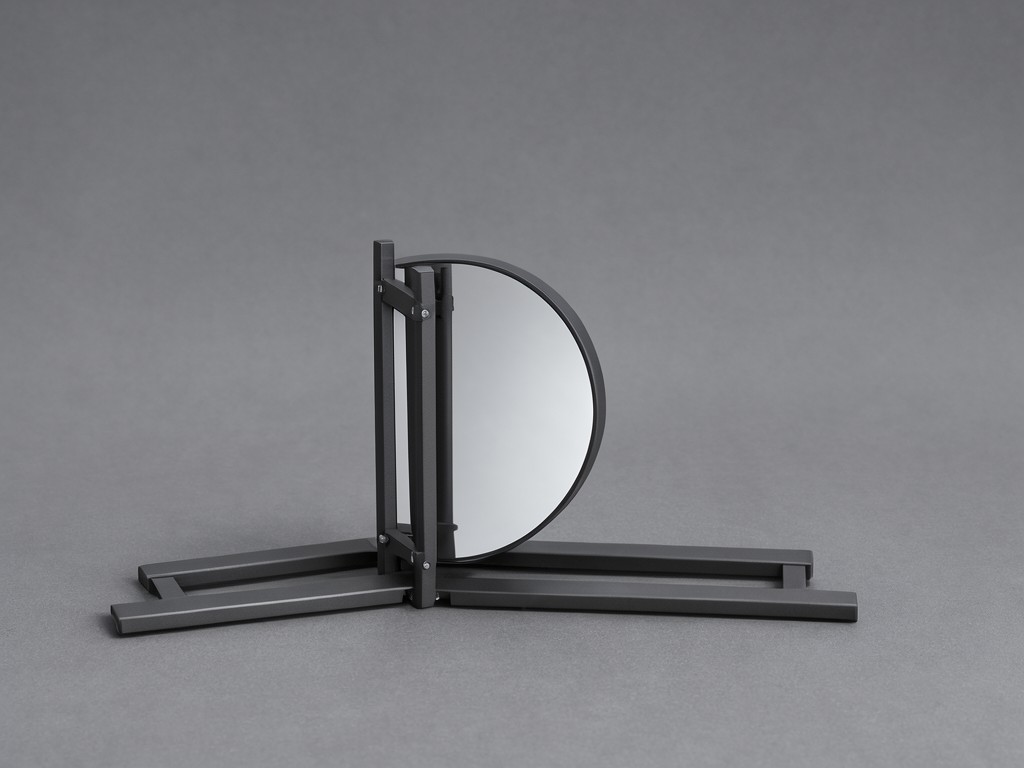
During a private-label launch with a fixed ship date, a half circle wall mirror that passes sample approval can still fail at container volume if edge seal thickness and backing adhesion drift between lots. Buyers ordering repeat shipments usually judge consistency by silvering uniformity, frame mitre gaps, and mounting hardware pull-out strength rather than by the first approved sample. The decision rule is to lock tolerances on glass thickness, backing coat weight, and frame joint geometry before the first production run, not after a warranty claim arrives.
Where This Product Beats Standard Alternatives
| Configuration | Glass Diameter | Glass Thickness | Approx. Weight | Typical Use |
|---|---|---|---|---|
| Frameless half circle | 600 mm | 4 mm | 2.8 kg | Dry-area wall decor |
| Frameless half circle | 900 mm | 5 mm | 8.4 kg | Hallway or bedroom |
| Aluminium frame half circle | 600 mm | 4 mm | 3.6 kg | Bathroom or humidity zone |
| Wood frame half circle | 900 mm | 5 mm | 11.2 kg | Retail fit-out or hospitality |
Standard rectangular mirrors ship with flat edges and simple corner packs, but a half circle profile concentrates stress at the curved perimeter and at the straight diameter edge where the glass meets the wall bracket. A 4 mm sheet holds flat within roughly 0.5 mm over a 600 mm radius, while 5 mm reduces sag but adds freight cost per unit. Buyers should match thickness to hanging height and wall material rather than defaulting to the heaviest option.
Silvering adhesion at the curved edge is the first failure point in humid rooms. A backing coat that passes a tape test on a flat sample can separate at the arc within one heating season if the edge seal is uneven. The specification should name the backing type and edge seal method for each destination climate.
Option Comparison by Usage Level
Copper-Free Silvering
Uses a protective top coat without copper accelerant. Black-edge formation slows in bathroom steam and coastal air. Adds roughly 8-12 percent to mirror cost versus standard silvering.
Standard Silvering
Copper-bearing silver layer is economical for dry interior walls. In humidity zones, backing breakdown typically appears at the curved edge first, within 12-24 months depending on ventilation.
Moving from sample orders to container loads changes how backing choice shows up in returns. A sample hung in a dry showroom will not reveal silvering breakdown that appears after six months in a hotel bathroom. The trade-off is straightforward: copper-free backing suits humidity-exposed walls and justifies a higher wholesale price, while standard backing suits dry-area retail displays where replacement cost is low.
| Usage Zone | Recommended Backing | Glass Thickness | Expected Service Condition | Warranty Implication |
|---|---|---|---|---|
| Dry interior wall | Standard silvering | 4 mm | Low humidity, incidental contact | Standard 12-month replacement |
| Bathroom vanity | Copper-free silvering | 5 mm | Direct spray, condensation | Extended warranty only with sealed edges |
| Hospitality corridor | Copper-free or standard | 5 mm | Frequent cleaning, impact risk | Frame and mount inspection required |
| Covered outdoor area | Copper-free silvering | 6 mm | UV and temperature cycling | Not recommended for full exposure |
Who Uses It and Where It Matters
Interior fit-out contractors order half circle mirrors for bathroom vanity walls, hallway accent panels, and hospitality headboard zones. Each setting imposes a different load pattern: a vanity mirror faces direct spray and condensation, while a hallway mirror faces incidental impact and cleaning wipe-downs. The buyer’s specification should name the room type and mounting surface before the factory quotes glass thickness and backing grade.
- Bathroom vanity walls require copper-free backing, sealed edges, and corrosion-rated wall anchors.
- Hotel corridor accents use 5 mm glass, lightweight aluminium frames, and D-ring mounting rated for the mirror weight.
- Retail display walls use standard silvering, frameless edge polish, and adhesive or cleat mounting for fast reconfiguration.
OEM and ODM Programme Structure
When a brand extends an existing range, the OEM programme must carry the frame finish, backing paint colour, and mounting hardware selection from the approved sample into the pilot run without drift. Tooling for a custom frame die adds lead time, typically 15-25 working days, but removes per-unit frame assembly variance on repeat orders.
The programme structure should separate sample approval, pilot run, and bulk production sign-off so that a frame mitre specification does not drift between the pilot and the container. Buyers should approve a sealed sample that specifies silvering coat weight, edge polish grade, and frame joint tolerance before tooling is released.
How Consistency Is Held Across Batches
Moving from sample orders to container loads changes what the buyer sees: the approved sample is one piece, while a container holds hundreds with potential lot-to-lot drift in glass flatness, silvering thickness, and frame joint gap. A factory holds consistency by measuring radius deviation at three points on the arc, checking backing adhesion on every tenth unit, and recording frame mitre gaps against a 0.2 mm limit.
Consistency rule: lock the silvering line speed and backing coat weight per batch. A 5 percent change in coat weight alters edge seal life and reflection uniformity without changing the mirror’s appearance at sample stage.
Drift in any of these variables shows up as uneven hanging, visible black edges, or bracket misalignment, which drives warranty claims and reorder hesitation. Batch traceability labels on each carton allow a return to be traced to a specific silvering run rather than written off as general product failure.
Inspection Items and Test Methods
Factory inspection for half circle mirrors covers dimensional, optical, and mechanical checks. Inspectors verify arc radius and diameter against the approved drawing, then view a reflected grid through the glass to detect warp or distortion beyond 0.5 mm over a 300 mm span. Backing adhesion is checked with a cross-cut tape test at the edge and centre, while edge polish is inspected under magnification for chips that could initiate silvering breakdown.
Mounting hardware is pull-tested at 1.5 times the mirror’s rated weight before packing. Rejection criteria include black spots larger than 2 mm, backing delamination at the curved edge, and frame mitre gaps over 0.3 mm. These limits are written into the purchase order so the receiving team has an objective pass/fail basis instead of a subjective visual check.
Export Packaging and Handling Protection
Export packaging for half circle mirrors must protect the curved edge, which is the most vulnerable point during palletising and deconsolidation. Each unit should sit in individual foam corner guards with a cardboard wrap and a moisture barrier if the destination port has high humidity. Carton stacking height is limited to four units to prevent edge crush from transferring to the glass backing.
Handling protection continues at the warehouse: mirrors should be stored vertically on A-frame racks, not flat-stacked, because the semicircle shape concentrates weight on the straight diameter edge when stacked. A packing list with batch numbers and inspection stamps supports insurance claims if damage appears after the container is opened.
Request an Artwork and Branding Review
Send your frame logo placement, backing paint colour reference, and mounting hardware specification for a pre-production artwork review. We will confirm radius tolerances, silvering grade, and packaging configuration before the pilot run.
Start inquiry