Wall Mounted Mirrors Material Composition and Performance Analysis

Selecting the right statement piece for a feature wall often comes down to a balance between reflective utility and architectural form. While standard mirrors provide clarity, decorative silhouettes transform a room's perceived volume and light distribution.
The shift toward "light luxury" in contemporary interior design has moved away from heavy, ornate carvings toward geometric repetition and refined metallic finishes. This evolution is particularly evident in the resurgence of Art Deco motifs, where the sunburst pattern serves as a focal point that anchors the entire room's aesthetic.
Understanding the intersection of material science and design allows buyers to distinguish between simple home accessories and professional-grade wall mounted mirrors that offer long-term structural stability and visual impact.
The Architectural Influence of Sunburst Geometry

The sunburst silhouette is more than a stylistic choice; it is a study in radial symmetry. By extending mirrored sections outward from a central round core, the design creates a sense of movement and energy that draws the eye toward the center of the wall.
Unlike traditional circular mirrors, the alternating pointed peaks and inward curves of a sunburst frame break the monotony of flat walls. This architectural approach creates a rhythmic interplay of light and shadow, effectively turning a functional object into a piece of wall art.
Material Composition and Frame Engineering
The structural integrity of complex mirrored frames relies heavily on the choice of substrate. Polyurethane (PU) has emerged as a preferred material for high-detail decorative mirrors due to its ability to hold sharp, precise edges and complex geometric molds without the excessive weight associated with solid stone or metal.
The glass used in professional decorative mirrors typically features a premium silver-backed coating. This ensures a high-definition reflection with minimal distortion, which is critical when the mirror is divided into multiple radiating fan-shaped sections. Each mirrored segment must be perfectly aligned to maintain a cohesive visual flow.
From a manufacturing perspective, the integration of the PU frame with the mirror glass requires precise adhesive bonding to prevent separation over time. This synergy of lightweight frame construction and heavy-duty glass creates a product that is both visually substantial and manageable for wall installation.
The Psychology of Champagne Gold Tones
Color temperature plays a pivotal role in how a mirror integrates with an existing interior. Traditional bright yellow gold can often feel overly aggressive or dated in modern settings, potentially clashing with neutral palettes.
Champagne gold serves as a sophisticated middle ground, offering the warmth of gold but with a muted, understated tone that complements stone, wood, and contemporary monochromatic furniture.
This specific finish reduces the visual "noise" of the metallic frame, allowing the radiating geometry and the reflective surfaces to remain the primary focus. It aligns with the "light luxury" character, providing a sense of opulence without sacrificing the minimalism required for modern living spaces.
Assessing Visual Impact Across Scales
Scale is the most critical variable when placing a statement mirror. A mirror that is too small can disappear into the wall, while one that is too large can overwhelm the furniture around it. For medium-sized feature walls, the 80 × 80 cm proportion is often considered the ideal balance.
To understand how different mirror styles affect room perception, we can look at a relative impact index. While a simple round mirror provides a neutral balance, a radiating sunburst design significantly increases the "architectural energy" of the space.
Figure 2. Relative Visual Impact of Mirror Styles
Application in High-End Hospitality and Residential Projects
In boutique hospitality interiors, such as hotel lobbies or luxury guest rooms, the goal is to create an immediate sense of arrival and prestige. Placing a sunburst mirror above a console table in an entryway creates a high-contrast focal point that suggests a curated, designer-led environment.
For residential applications, these pieces are effectively used in dining room accent walls or living room feature walls. The radiating frame not only reflects the room's light but also breaks the linear nature of most room layouts, adding a necessary organic yet structured element to the interior composition.
Evolution of Statement Mirror Trends
The industry is witnessing a transition from "minimalism" to "curated maximalism." While the previous decade focused on frameless or thin-edged mirrors, today's designers are seeking pieces with a stronger decorative identity. The focus has shifted toward mirrors that function as sculptures.
MIRAVORY has tracked this progression by evolving from simple aesthetics to complex, architecturally inspired collections. By integrating PU frames with customizable finishes, the brand allows for a level of flexibility in size and tone that matches the specific requirements of large-scale renovation projects.
The future of decorative mirrors lies in the ability to blend timeless Art Deco shapes with contemporary material science, ensuring that the pieces are durable enough for commercial use while remaining aesthetically refined for high-end homes.
Selection Framework for Professional Sourcing
Professional buyers, including interior designers and hospitality procurement officers, must evaluate mirrors based on more than just visual appeal. The balance between frame material, mirror quality, and the ease of installation determines the overall value of the piece.
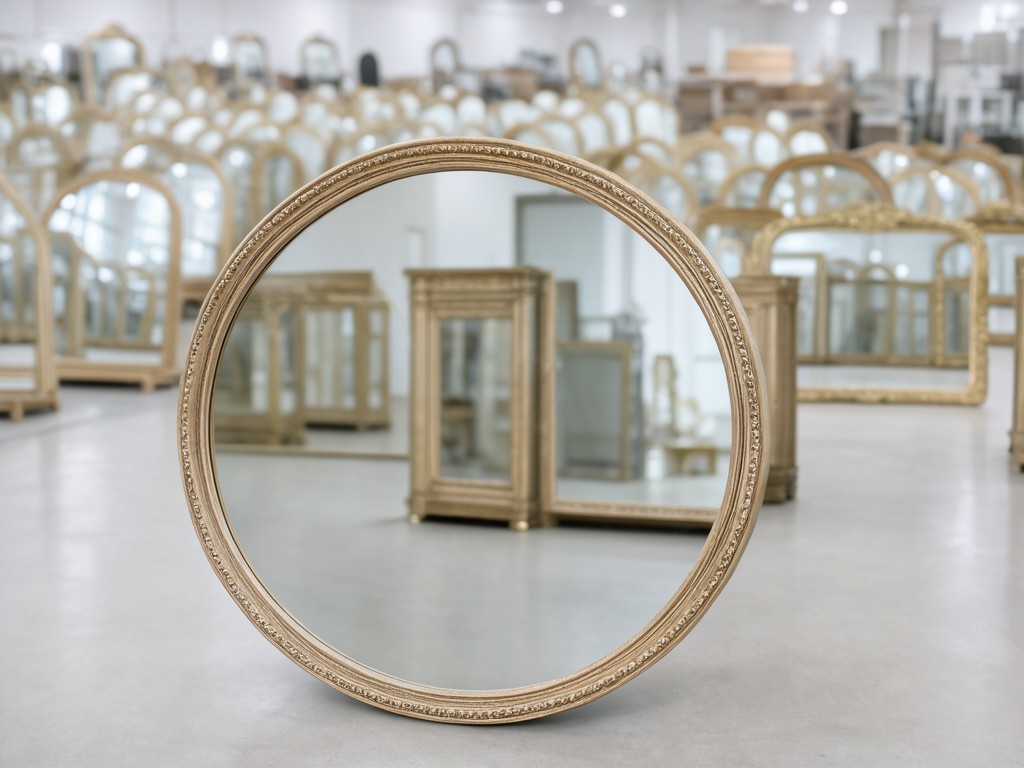
When comparing a sunburst model to a conventional round mirror, the trade-off is typically between "neutrality" and "impact." A round mirror blends in, whereas a radiating frame demands attention. Therefore, the choice depends on whether the mirror is intended to be a supporting element or the room's primary anchor.
The following evaluation framework assists in choosing the correct mirror style based on the intended application and desired atmospheric effect.
| Evaluation Factor | Round Mirror | Sunburst Mirror | Irregular Mirror |
|---|---|---|---|
| Visual Focal Point | Low to Medium | Very High | High |
| Space Perception | Opens Space | Adds Energy | Adds Fluidity |
| Best Application | Bathrooms/Bedrooms | Entryways/Dining | Living Room/Art Walls |
| Design Style | Minimalist | Art Deco / Glam | Organic Modern |
| Installation Complexity | Simple | Moderate (Scale) | Moderate (Positioning) |
| Atmospheric Effect | Balanced | Opulent | Avant-Garde |
Questions & Answers
Unlike a standard round mirror, which provides a clean and neutral reflection, a sunburst mirror incorporates a radiating frame that extends outward from the center. This creates a dynamic, architectural silhouette that acts as a piece of art. The radiating sections and pointed peaks draw the eye and add a layer of geometric complexity, making it a statement piece rather than a purely functional object.
The ideal size depends on the wall's dimensions and the surrounding furniture. For medium-sized walls or placement above a console table, a diameter of around 80 cm is typically effective. The rule of thumb is to ensure the mirror occupies roughly 60-75% of the width of the furniture it sits above, providing enough scale to be a focal point without overwhelming the architectural boundaries of the room.
Champagne gold is a more muted, sophisticated tone that avoids the harshness of bright yellow gold. It is easier to coordinate with a wider range of interior palettes, including neutrals, cool grays, and natural wood tones. In the context of "light luxury," champagne gold provides a refined metallic accent that feels contemporary and timeless rather than overly ostentatious.
Polyurethane (PU) frames offer several advantages: they are lightweight, which simplifies wall mounting and reduces the risk of accidental falls; they allow for high-precision molding of intricate Art Deco details; and they are highly durable and resistant to warping. When finished with high-quality metallic coatings, PU can mimic the look of expensive metals while being more cost-effective and easier to manufacture in complex shapes.
The most effective locations are areas where a strong visual anchor is needed. Entryways above a console table are ideal as they create a prestigious first impression. Dining room accent walls benefit from the added light and energy, while living rooms can use them to break up the linearity of the space. In hospitality settings, they are often placed in lobbies or guest rooms to signal a luxury boutique atmosphere.
Yes, professional manufacturers often provide customization for size, frame finish, and glass type. For large-scale hospitality or residential projects, customization ensures that the mirror fits the specific architectural dimensions of the space and matches the overall color scheme of the interior design. This flexibility is key for designers who need a specific visual impact that off-the-shelf products cannot provide.
Final Thoughts
The transition of the mirror from a utility to an architectural element reflects a broader trend in interior design toward intentionality and artistic expression. By leveraging the geometric energy of the sunburst pattern and the refined neutrality of champagne gold, a space can be transformed from ordinary to memorable.
For those sourcing for premium projects, the focus should remain on the quality of the silver-backing and the precision of the frame construction. When these technical elements align with a bold design, the result is a piece that enhances both the light and the luxury of any interior environment.