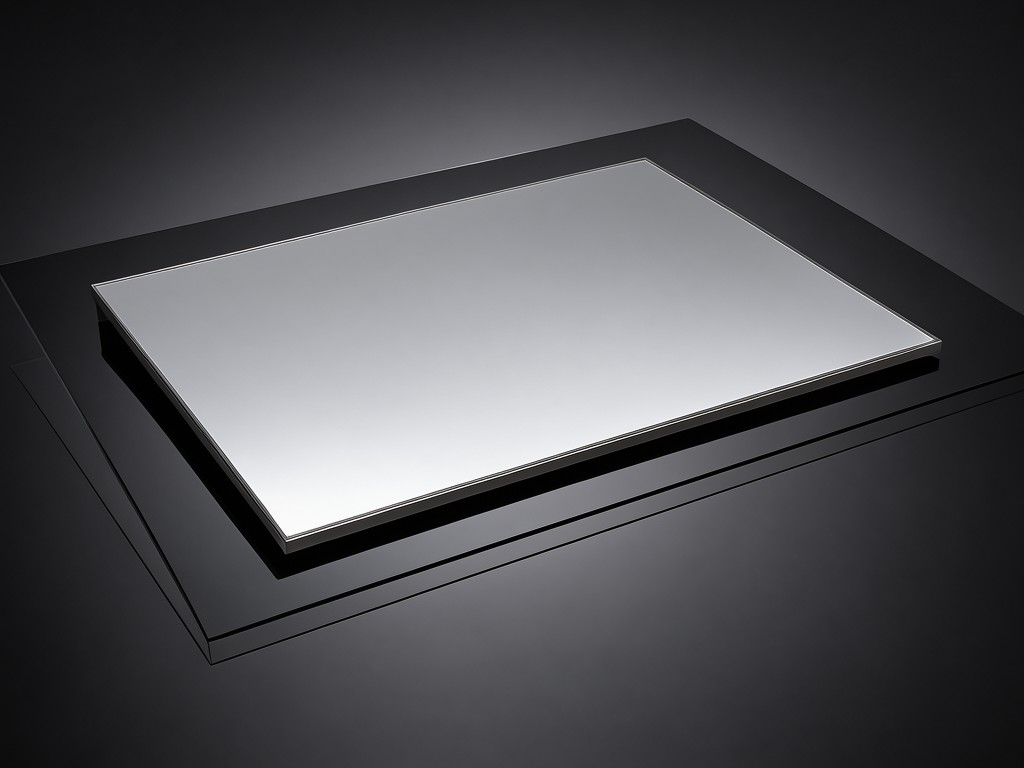
wholesale large framed bathroom vanity mirror Company: What Buyers Should Check Before Ordering
When a brand extends an existing range, the focus shifts from aesthetic appeal to structural integrity under scaled logistics. Large-format bathroom mirrors often fail not because of the initial design, but due to thermal expansion coefficients between the frame material and the glass substrate. Procurement officers must de-prioritize visual trends in favor of the silvering thickness and the moisture-resistance of the backing to prevent oxidation in high-humidity residential environments.
Moving from sample orders to container loads changes the requirements for packaging and load distribution. Small-batch shipments can survive standard bubble-wrap, but wholesale volumes of framed mirrors require reinforced corrugated crates with internal foam corner bracing to prevent micro-fractures during maritime transit. If the frame-to-glass bond is purely adhesive, the vibrations from sea freight can lead to delamination of the edges over time.
Design Constraints Behind the Specification
The environment of a bathroom dictates the selection of glass thickness. A standard 4mm glass is common for cost-saving but prone to optical distortion when the span exceeds 1200mm. For large vanity mirrors, a 6mm float-glass substrate provides a flatter reflection plane, though it increases the unit weight and necessitates more heavy-duty mounting hardware.
Material Compatibility Logic
Moisture-resistant MDF or PVC-backed boards are mandatory. Using standard particle board leads to edge swelling as the core absorbs humidity, which puts uneven pressure on the mirror edges and causes cracking in the silvering layer.
Glass Substrate
6mm copper-backed float glass prevents the "black edge" effect common in large-format installations.
Frame Material
Anodized aluminum alloy offers the highest strength-to-weight ratio for oversized spans.
Backing Grade
Zinc-coated silvering ensures the reflective layer remains stable against vapor penetration.
How It Is Built and What That Changes
Mechanical fastening is preferred over chemical adhesives for wholesale-grade framed mirrors. By using mechanical clips or Z-channels, the glass is allowed to expand and contract independently of the frame. This construction choice significantly reduces the rate of stress-induced fractures in climates where temperatures fluctuate between hot showers and cold air.
The edge treatment method also impacts the retail value and durability. A flat-polished edge is faster to produce but more susceptible to chipping if the mirror is struck. A beveled edge increases the surface area of the glass perimeter, providing a more robust buffer against accidental impact-related damage during the installation phase.
Comparing Two Standard Configurations
| Feature | Minimalist Aluminum | Luxury Solid Wood |
|---|---|---|
| Weight Class | Low (4-8kg per m²) | High (15-25kg per m²) |
| Moisture Resistance | High (Non-reactive) | Medium (Requires Sealant) |
| Lead Time Tooling | Standard (Extruded) | Variable (Carved/Jointed) |
Working as a Production Partner, Not a Catalogue Supplier
On a club programme that reorders twice a season, the primary concern is batch-to-batch color consistency. Variations in powder-coating shades or wood-grain stains can ruin a retail display across multiple locations. We maintain strict color-matching master samples to ensure that a frame ordered in Q1 matches the Q3 order the previous year exactly.
OEM services allow for the integration of specific hardware requirements into the manufacturing flow. By amortizing tooling costs over larger volumes, the unit cost of custom frame profiles drops, allowing retail buyers to offer exclusive designs without compromising the structural margin. Review our custom production capabilities here.
How Consistency Is Held Across Batches
Consistency is managed through automated silvering lines. Manual application of reflective coatings often results in uneven thickness, which manifests as "ghosting" under direct light. Our vacuum-deposition process ensures a uniform micron-layer across the entire surface of large mirrors, eliminating optical variance complaints.
Frame tolerances are monitored using CNC jig-cutting. If the frame squareness deviates by more than 0.5mm, the glass will not seat securely, creating internal stress that leads to spontaneous breakage weeks after the product is exposed to its first temperature change.
What Gets Checked Before Shipment
Before shipment, every large mirror undergoes an optical distortion test. We place the mirror on a calibrated light table to ensure no bowing is present in the glass itself. We also perform a salt-spray test on frame hardware to verify that the finish will not corrode in humid bathroom environments.
- Impact resistance testing on corner joints to verify adhesive integrity.
- Dimensional verification against the master template to ensure fit.
- Weight-load testing of the pre-installed hanging-brackets.
Capacity, Tooling and Scheduling
Production capacity is dictated by the availability of raw glass sheets and extrusion stock. For standard profiles, lead times are typically 30-45 days for container-sized orders. Custom-tooling frames require an additional 21 days for die-making and sample-approval before the mass production run begins.
Keeping Repeat Orders Supplied
Reliable supply is built on proactive inventory management of core materials. By maintaining a stock of common glass thicknesses and frame profiles, we mitigate the risk of raw material shortages affecting your delivery schedule. This ensures that our retail partners can maintain consistent stock levels even during peak market fluctuations.
Ready to discuss technical specifications for your next-scale mirror order?
Request a technical quotation and production review






