Wholesale Extra Large Wall Mirrors For Living Room Company - Bulk Supply and Specification Guide
Design Constraints Behind the Specification
Tooling amortisation decides the unit economics of extra-large wall mirrors before a single sheet is cut.
Glass thicker than six millimetres shifts freight class and changes the wall anchor specification, while four-millimetre stock tends to show oil-canning across a 1.8-metre span. The silvering layer determines whether black edges appear after eighteen months in a humid living room, and the safety backing decides whether a cracked sheet stays in the frame or drops shards onto the floor. Buyers who quote only on square-metre price usually discover the real cost in replacement rate, not unit price.
Size, Weight and Specification Range
| Specification | 1200 × 800 mm | 1500 × 1000 mm | 1800 × 1200 mm | 2000 × 1500 mm |
|---|---|---|---|---|
| Glass thickness | 4 mm | 5 mm | 6 mm | 6 mm |
| Approximate weight | 7.5 kg | 18 kg | 26 kg | 36 kg |
| Edging | Seamed or polished | Polished or bevelled | Bevelled or polished | Polished only |
| Mounting points | 2 | 4 | 6 | 8 |
| Max wall load | 15 kg | 30 kg | 45 kg | 60 kg |
Weight drives the anchor specification more than glass thickness does.
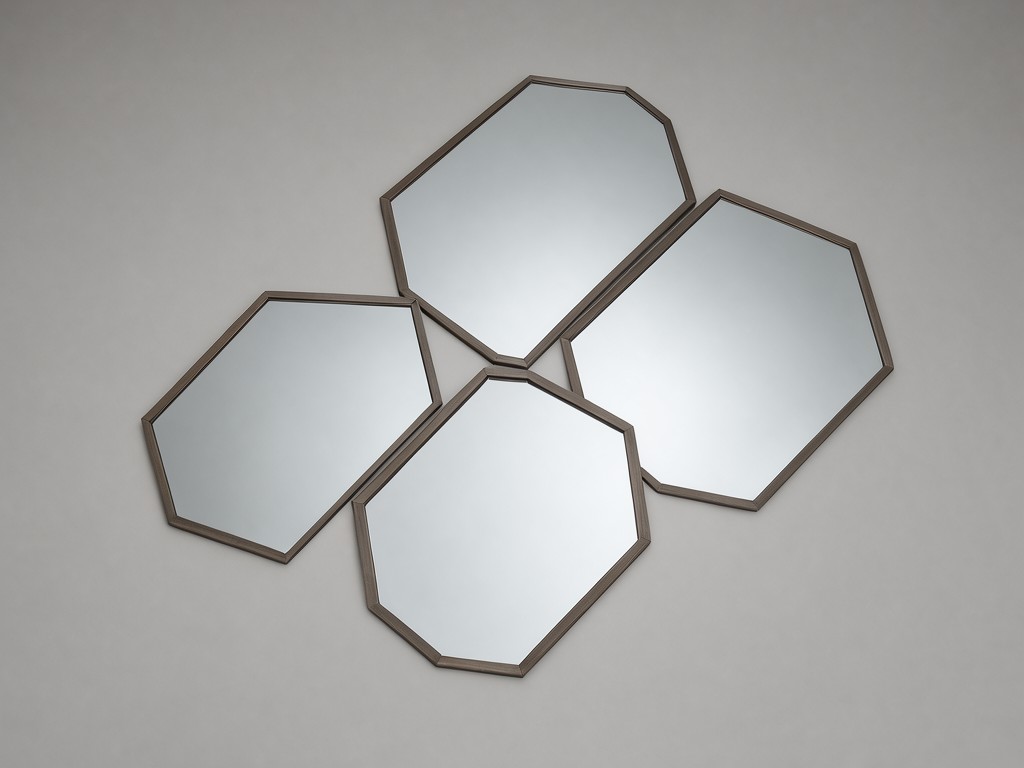
Dimensional tolerance is typically ±2 mm on length and width, with squareness within 2 mm across a diagonal. Larger formats require tempered glass if the installation is above seating height, because annealed sheet of this size fails into large shards rather than dice. Frame options add 15-25 mm to the overall width and change the hanging hardware needed.
How to Choose Before Requesting a Quote
Request a sample before the production run.
The sample confirms silvering uniformity, edge quality, and actual weight against the specification sheet. Artwork for frame printing or carton marking needs vector files with outlined fonts; raster images above 150 dpi at final size are acceptable for carton labels only. MOQ usually starts at fifty pieces per size, with lead times of four to six weeks after sample approval.
Segment-Specific Requirements
Hospitality living areas
High-traffic hotel lobbies and guest lounges. Safety backing and polished edges are standard; frames are avoided where cleaning equipment makes contact.
Residential retail
Living rooms and hallways where appearance drives the purchase. Frameless or thin-profile metal frames dominate; edge polish quality is visible at normal viewing distance.
Contract and interior design
Custom sizes and non-standard frame finishes for multi-unit rollouts. Batch consistency across frames and silvering tone is the main acceptance criterion.
Each segment tolerates a different defect rate before returns erode margin.
What Gets Checked Before Shipment
- Silvering adhesion verified by scratch and tape lift on sample pieces from each batch.
- Edge finish checked for chips, seams, and polish uniformity under angled light.
- Flatness measured across the face to catch oil-canning or bow before crating.
- Dimensions and squareness verified against the approved drawing; weight recorded per piece for freight classification.
- Backing film and corner protectors confirmed present before palletisation.
Edge chipping and silver creep are the two failure modes that drive returns.
Packing, Marking and Freight Configuration
Mirror sheets travel vertically in A-frame stillages or flat in layered crates, interleaved with kraft paper and protected by foam corner caps.
Carton marking includes batch code, size, quantity, and a this-side-up symbol. Freight configuration depends on destination: full-container loads use vertical racks to reduce point loading, while less-than-container loads are double-boxed with corner boards. Breakage in transit is the most common delay reason for retail launch dates.
Care, Storage and Service Life
- Clean with a lint-free cloth and glass cleaner sprayed onto the cloth, never directly onto the silvering edge.
- Store unused sheets vertically on racks with foam padding between faces.
- Keep relative humidity below 70 percent to slow silver degradation at the edge.
- Inspect mounting hardware annually; wall load limits assume solid studs or masonry anchors, not drywall alone.
Service life depends on humidity exposure and mounting integrity; edge-sealed copper-free silvering lasts longer in humid rooms.
Artwork and Branding Review
Send frame artwork, backing label text, and carton marking files for a pre-production artwork-and-branding-review.
Request a quote






