Specifying OEM Hanging Circle Wall Mirror Exporter for Wholesale and OEM Orders
Procurement officers often prioritize aesthetic appeal over the structural stability of the mounting hardware. In high-humidity environments like coastal resorts, low-grade MDF frames swell, which causes the adhesive bond to shear from the glass. Using moisture-resistant aluminum extrusions or powder-coated metals mitigates this risk by maintaining dimensional stability across the product lifecycle.
Design Constraints Behind the Specification
The diameter of a circle mirror dictates the tension requirements of the glass. Larger spans exceeding 800mm are prone to "bow" if the frame does not provide rigid perimeter support. Because glass expands and contracts contracts at different rates, silicone-bonded adhesives are necessary to prevent edge-cracking during temperature fluctuations.
Optical clarity remains the primary constraint for premium retail tiers. Standard 3mm glass often exhibits a concave effect if the backing board is not perfectly flat. Upgrading to 5mm or 6mm glass ensures a flat reflection, which is a requirement for high-end hospitality specifications.
Option Comparison by Usage Level
Usage environments determine the required impact resistance and cleaning frequency. Commercial-grade mirrors for gyms or public lobbies require tempered glass or reinforced frames to withstand accidental impact and harsh chemical cleaning agents.
| Feature | Residential Tier | Commercial Tier |
|---|---|---|
| Glass Thickness | 3mm-4mm Silvered | 5mm-6mm Tempered |
| Frame Material | MDF / Plastic | Aluminum / Stainless Steel |
| Mounting | Standard D-ring | Heavy-duty Cleat System |
What Can Be Customised and What Cannot
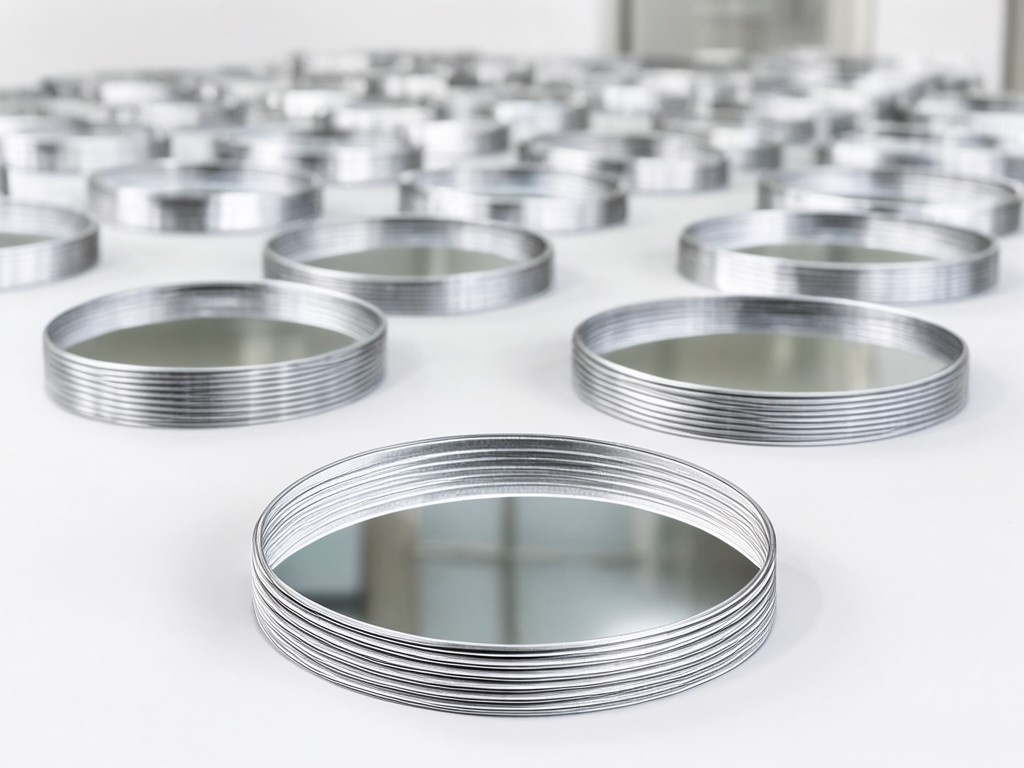
Customization focuses on the surface finish of the frame and the hardware configuration. Buyers can specify specific powder-coating colors, metallic finishes like brushed brass or champagne, or laser-etched logos on the corner of the mirror frame.
However, the glass diameter itself is usually limited by standard manufacturing molds. Requesting non-standard glass thicknesses or custom-cut curves significantly increases the tooling cost and lead-time. Standard circular diameters ranging from 400mm to 1000mm remain the most cost-effective for wholesale orders.
OEM and ODM Programme Structure
The OEM program allows brands to provide their own technical drawings for production on existing lines. This process requires a detailed CAD file to ensure the frame profile is compatible with current extrusion or cutting machinery.
The ODM approach utilizes existing factory designs with minor modifications like branding or colorway. This is the fastest path for retail buyers seeking a unique product without investing in new new tooling. discuss custom capabilities here.
How Consistency Is Held Across Batches
Batch matching is managed through rigorous silvering process controls. Variations in the chemical composition of the silver backing can cause slight tint shifts—greenish or bluish—across different shipments. The factory monitors the curing temperature of the silver coating to maintain a neutral reflection tone.
Frame color consistency is verified using spectrophotometers against an approved master sample. This ensures that a reorder placed six months later matches the finish finish of the initial shipment perfectly, preventing visual mismatches in large-scale retail installations.
What Gets Checked Before Shipment
Pre-shipment inspection begins with a dimensional check to ensure every circle is within a ±2mm tolerance of the specification. We then perform a light-box test to identify black spots, scratches, or desilvering in the glass surface.
- Hardware undergoes a load-test to verify the mounting brackets can support the full weight of the glass.
- Metal frames are inspected for coating adhesion using a cross-cut tape test.
- Each unit is subjected to a vibration test to simulate the stresses of sea-freight.
Ordering, Tooling and Lead-Time Questions
Standard orders typically have a lead time of 30 to 45 days depending on the volume. Custom frame profiles require an additional 15 to 21 days for mold creation and prototype approval.
Minimum Order Quantities (MOQs) vary based on the material. For custom wood-frame mirrors, the MOQ is usually 500 units, whereas standard aluminum frames can often be sourced at lower volumes of 200 units.
Frequently Asked Questions
What is the standard silvering thickness for export mirrors?
We utilize a multi-layer silvering process for export orders to ensure resistance against oxidation during humid maritime transit.
How are the mirrors protected during international transit?
Each mirror is wrapped in high-density polyethylene foam and placed in a reinforced cardboard crate to prevent impact-related breakage.
Can you provide custom sizes for specific hotel projects?
Yes, provided the diameter does not exceed 1200mm, we can cut custom glass sizes to fit specific frame requirements.
Ready to discuss your next wholesale mirror project?
Request a technical specification sheet and quote






