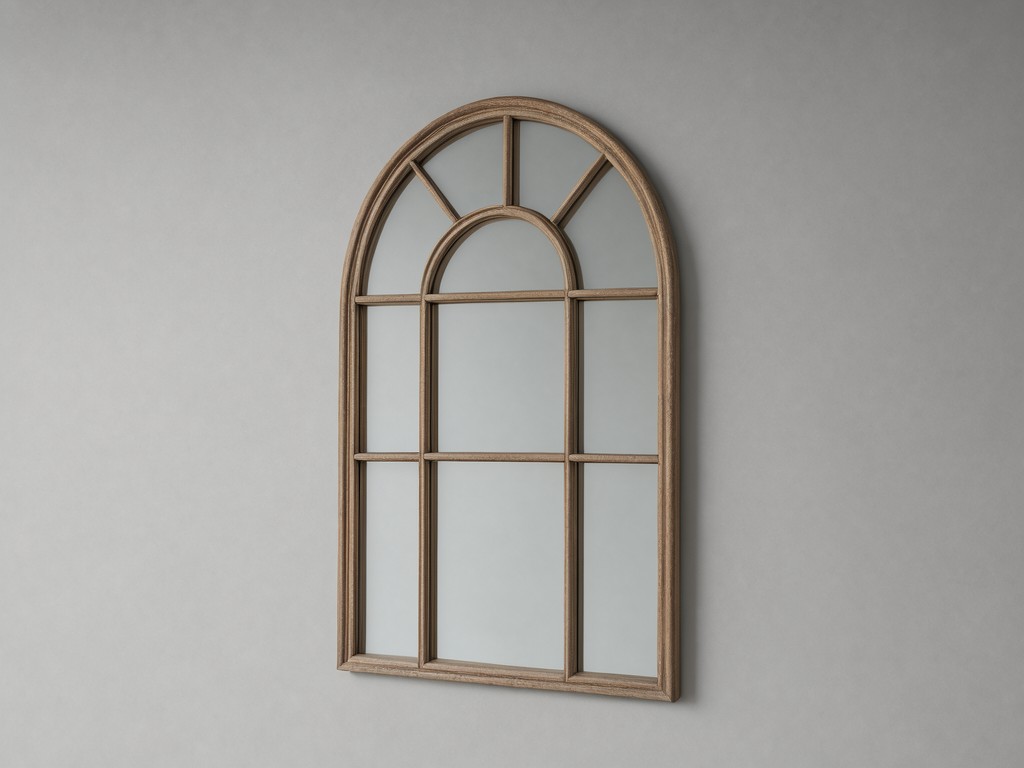
Direct Factory Large Gold Wall Mounted Mirror Exporter: Specification, Ordering and Quality Notes
Two suppliers quoting the same specification often hide the difference in their silvering line and frame shop until the mirrors arrive on site. The quotation sheet lists glass thickness and frame colour, but it does not show whether the silvering carries a copper backing or whether the frame joint was sealed before the gold coat was applied.
Before comparing quotations, confirm whether the glass carries conventional copper-backed silver or copper-free silvering with a moisture-resistant sealer. The distinction shows up as black edge within twelve to eighteen months in humid rooms, and it changes the reorder rate more than the unit price.
Unit price and service life diverge when tooling cost is amortised across a five-hundred-piece order instead of a fifty-piece trial. A frame profile die cut once for a large run adds almost nothing to each mirror, while a small run pays the full setup and waits longer for the first article inspection.
The Problem Buyers Keep Paying For
Finish and Colour Options
| Specification Element | Standard Build | Premium Build | Typical Field Failure |
|---|---|---|---|
| Glass silvering | Conventional copper-backed silver | Copper-free silvering with protective sealer | Black edge and spot oxidation within twelve to eighteen months in humid rooms |
| Frame finish | Gold spray paint over MDF | Gold leaf or foil over sealed hardwood | Scuffing and colour fade at handling points |
| Edge treatment | Standard mirror mastic seal | Polished bevel with moisture-resistant backing tape | Edge delamination and ghosting along the perimeter |
| Wall cleat | Pressed steel D-ring with screw eyes | Zinc-alloy French cleat with safety wire | Pull-out failure on plasterboard under mirror weight |
| Backing board | 3 mm MDF with paper seal | 5 mm MDF with aluminium foil barrier | Warping and bowing across 900 mm and wider sheets |
Buyers usually discover the mismatch after the first season, when the conventional silvering develops black edge along the lower third and the gold spray finish scuffs at the wall cleat. A large mirror also acts as a stiff diaphragm: any bow in the 4 mm glass shows as fun-house distortion under retail lighting, and the frame joint opens if the MDF was not sealed before the gold coat was applied.
The exporter’s real job is to hold the silvering adhesion and frame geometry steady across the full order quantity, not just on the approved sample. Batch traceability on the silvering line date and frame batch number lets the buyer isolate a problem to a specific run instead of rejecting the whole shipment.
How It Is Built and What That Changes
Float glass arrives at 4 mm or 5 mm thickness and is cut to size on a CNC bridge saw before entering the silvering line. Copper-free silvering deposits a reflective layer without the copper backing that causes oxidation, then a protective sealer is cured in an oven at a fixed temperature. Process capability on this line determines whether the coating thickness stays uniform across a 1200 mm by 900 mm sheet or thins at the edges.
The frame shop wraps MDF or hardwood with the chosen gold finish, then fits a backing board and wall cleat. Tooling for a frame profile is amortised over the order quantity: a run of three hundred pieces spreads the die cost across each unit, while a run of forty carries the full setup and adds five to eight days to the lead time. Volume also changes the first-article inspection frequency; large lots get a dimensional check on every tenth piece, small lots get a full check on the first three.
Humidity resistance depends on the edge seal and backing barrier rather than the glass itself. A mirror hung in a bathroom or a covered patio needs the perimeter sealed with moisture-resistant tape and a foil-backed MDF board; without that barrier, water vapour reaches the silvering layer and the gold frame finish lifts at the joints.
Matching the Product to the Buyer's Need
Gold Foil Over Hardwood
Higher material cost and longer frame-shop setup, but the finish resists scuffing in corridors and the hardwood substrate holds screw threads for repeated rehanging.

Gold Spray Over MDF
Lower unit cost and faster turnaround on repeat orders, but the MDF edge can swell if the seal fails and the spray layer shows handling marks during fit-out.
The buyer’s choice depends on the wall surface and the expected service life. A French cleat carries more weight than a pressed-steel D-ring, but it needs solid blocking or a plasterboard anchor rated for the mirror’s dead load. Gold foil over hardwood costs more up front and resists scuffing in a hotel corridor; gold spray over MDF meets a boutique budget but shows handling marks if the installation crew leans the mirror against the wall during fit-out.
Who Uses It and Where It Matters
Retail buyers and importers specify this mirror for fixed-wall installations where the glass must stay flat and the frame finish must survive cleaning cycles and handling during fit-out.
- Boutique hotel guestroom and corridor, exposed to daily wipe-down and humidity from adjoining bathrooms.
- Residential showhome walls, exposed to move-in impact and repainting touch-ups.
- Fashion boutique fitting rooms, subject to constant relamping and occasional contact from bags and hangers.
- Gym or yoga studio walls, subject to vibration, humidity, and cleaning spray drift.
In each setting the mirror has to survive the installation phase as much as the service phase. A large sheet that bows during handling will not flatten after it is hung, and a frame corner that chips on site cannot be touched up to match the original gold tone.
Segment-Specific Requirements
Usage Level Comparison
| Usage Level | Glass Thickness | Frame Material | Mounting Method | Inspection Focus |
|---|---|---|---|---|
| Light commercial | 4 mm | MDF with gold foil | D-ring and wall plug | Visual silvering check and edge seal |
| Heavy contract | 5 mm or 6 mm | Hardwood or reinforced MDF | French cleat with safety wire | Silvering adhesion, cleat torque, frame joint |
| Retail display | 4 mm | MDF | Security bracket or cleat | Frame finish scratch resistance and glass flatness |
Segment requirements change the acceptable tolerance for glass flatness and frame squareness. A fashion boutique can accept a slight lean because the mirror is decorative, but a gym installation needs the cleat torque checked against the wall substrate and the glass edges fully sealed against cleaning spray. Sample approval before the production run and batch traceability on the silvering date keep repeat orders consistent without reopening the tooling discussion.
Keeping Repeat Orders Supplied
Stock rule: repeat orders placed within ninety days of the first production run usually bypass the frame tooling charge and ship inside the standard lead time. Orders placed after that window carry a new setup fee and add five to eight days for die re-proving.
MOQ and lead time move together because the silvering line is scheduled in blocks and the frame shop cuts profile tooling once per design. A buyer who locks the artwork and branding at sample stage avoids a change order after the glass is cut, which is the most common cause of missed launch dates. The exporter should confirm the wall plug and screw rating for the destination market before the order is released.
Ready to confirm the gold finish and frame profile for your next shipment? Send your drawing or sample for an artwork-and-branding-review before the production slot is booked.
Request artwork-and-branding-review