Custom Gold Bow Vintage Mirror Supplier: What Buyers Check Before Ordering
Moving from sample orders to container loads changes the focus from aesthetic approval to batch-consistency. When scaling production of decorative mirrors, the primary failure point is the drift in the gold-finish tone and the structural integrity of the bow ornament attachment. A variance of even two microns in metallic coating thickness across 500 units can lead to rejection by retail buyers requiring uniform color matching across displays.
Procurement officers must evaluate the adhesion of the silvered glass to the back-substrate. If the moisture barrier is not properly applied, humidity fluctuations during sea freight cause black-edge oxidation within six months of consumer use. We utilize a vacuum-deposition process to ensure the silvering remains stable in high-humidity environments.
Scope of Supply and Physical Form
The physical profile of these mirrors depends on the glass-to-frame ratio and the mounting hardware. We offer standard 4mm float glass for most configurations to minimize the risk of frame bowing under heavy-duty mounting hardware.
| Dimension Range | Weight Range (kg) | Frame Thickness |
|---|---|---|
| 400mm x 600mm | 2.5 - 3.5kg | 15mm - 25mm |
| 600mm x 900mm | 6.0 - 8.0kg | 25mm - 40mm |
| Custom (up to 2000mm) | Upon request | Custom to spec |
Design Constraints Behind the Specification
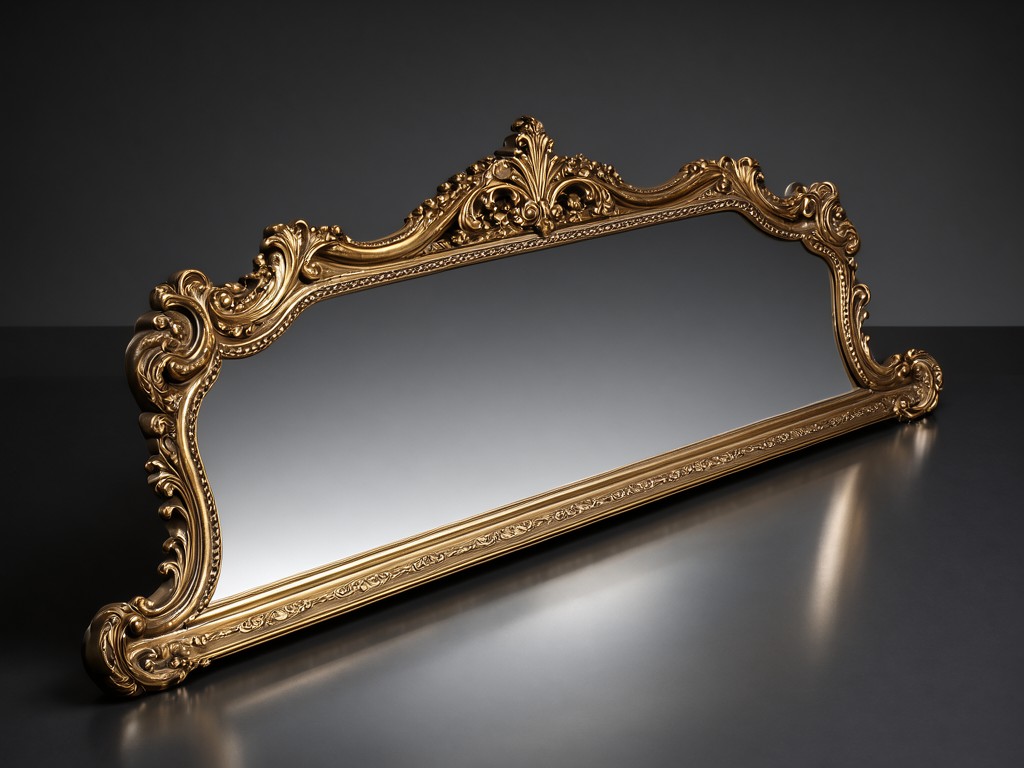
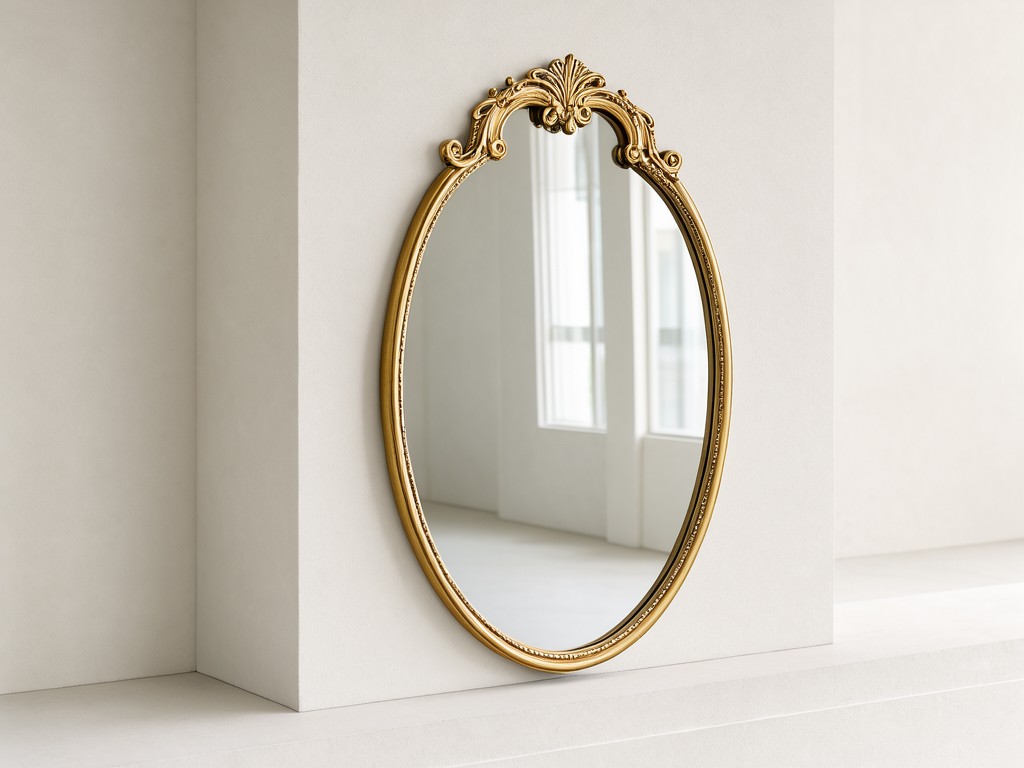
The gold bow element represents the most significant mechanical risk. Using simple adhesive bonding often results in delamination when the frame undergoes thermal expansion. To prevent this, we implement a mechanical recessed mounting system hidden behind the frame to ensure the bow remains fixed despite temperature shifts.
Technical Note: For mirrors exceeding 800mm in width, we require a reinforced MDF cross-brace to prevent the glass from flexing, which would otherwise crack the silvered coating.
What Can Be Customised and What Cannot
Customization is governed by the trade-off between decorative complexity and manufacturing throughput. The following logic dictates the selection process for bulk orders:
-
Select Frame Material:
- MDF: Best for high-volume retail where dimensional stability is a concern.
- Solid Wood: Required for premium boutique lines; must account for seasonal expansion tolerances.
-
Select Gold Finish:
- Electrostatic Powder Coating: High abrasion resistance for high-traffic areas.
- Gold Leaf Application: Highest visual depth; requires specialized protective packaging to prevent scuffs.
-
Select Bow Configuration:
- Molded Resin: Standard for most vintage styles.
- Hand-carved Wood: Increases lead time by 4 weeks minimum.
Who Uses It and Where It Matters
Private-label brands utilize these mirrors for residential decor lines where the "vintage" aesthetic is the primary selling driver. In this context, the consistency of the gold tone is critical for maintaining brand identity across different product drops.
Hospitality procurement officers prioritize the durability of the mounting hardware. For hotel-grade applications, the mirror must withstand frequent cleaning and high-moisture chemical cleaner exposure. We provide optional anti-oxidation coatings for these specific orders to prevent the finish from reacting with alkaline cleaning agents.
Capacity, Tooling and Scheduling
Tooling for custom bow-shaped ornaments is the bottleneck in the production schedule. Once a design is approved, the injection molds for the resin require 15-21 days for fabrication. Production runs of 1,000 units typically have a 30-day lead time following tooling approval.
To maintain consistent shipping dates, we batch the silvering process. This allows us to verify the optical clarity of the entire lot simultaneously, reducing the likelihood of individual unit replacement claims post-delivery.
Care, Storage and Service Life
The service life of a vintage mirror is largely determined by its environment. In direct sunlight, the silvered backing can degrade over 5 to 10 years. We recommend placement away from direct UV exposure to maintain the optical integrity of the reflection.
Storage during transit requires vertical orientation to prevent pressure points. Stacking mirrors horizontally can cause micro-fractures in the glass, leading to structural failure later in the product's lifecycle.
Questions Buyers Ask Before Ordering
How is the gold finish matched across different batches?
We use spectrophotometer-matched paint codes to ensure that the Delta-E color difference remains below 2.0 across all consecutive production runs.
Can the frames be used in humid bathroom environments?
MDF-based frames require a specialized moisture-resistant sealant to prevent edge swelling in bathrooms with relative humidity consistently above 65%.
What is the packaging standard for international shipping?
Each unit is encased in high-density foam inserts within double-walled corrugated cardboard boxes to withstand impact forces up to 1 meter during drop tests.
Ready to finalize your specifications?
Initiate an artwork and branding review