Custom Distressed Vintage Wall Mirror Company - Bulk Supply and Specification Guide
The build method decides the structural integrity of the frame under load-bearing stress. For large-scale OEM orders, the distinction between machine-applied distressing and hand-carved oxidation determines the return rate during international transit. Process choice shows up later as the rate of silvering de-amination in high-humidity retail environments.
Where Cheaper Alternatives Fall Short
| Parameter | Standard Commercial Grade | Custom Specification Grade |
|---|---|---|
| Dimensional Range (mm) | 400x600 to 1200x1800 | Custom 300x300 to 2400x2000 |
| Weight (kg) | 4kg - 18kg | 6kg - 45kg+ |
| Glass Thickness | 4mm Float | 5mm - 6mm Tempered/Low Iron |
| Frame Material | MDF / Resin | Solid Oak / Reclaimed Teak |
Consistency is set at the forming stage through controlled oxidation processes. Low-cost units often utilize spray-on films to simulate foxing, which peels after 12 months of exposure to standard cleaning agents. Our process uses chemical etching on the glass backing to ensure the distressed aesthetic is integral to the substrate. This prevents the visual "bubbling" effect seen in high-volume, low-margin imports.
Material Options and Their Trade-offs
Selection of frame material dictates the final freight weight and impact resistance. Solid wood frames provide the tactile density required for luxury retail segments but increase the shipping cost by 40% compared to polyurethane alternatives. Polyurethane frames offer intricate molding details at a lower price but remain susceptible to warping in high-temperature storage containers.
Note on Distressing
We offer two distinct paths for aging: manual acid-wash and mechanical abrasion. Mechanical abrasion creates varying physical depths in the wood grain, whereas acid-wash focuses on surface color shifts without compromising structural fibers.
Measured Performance in Real Use
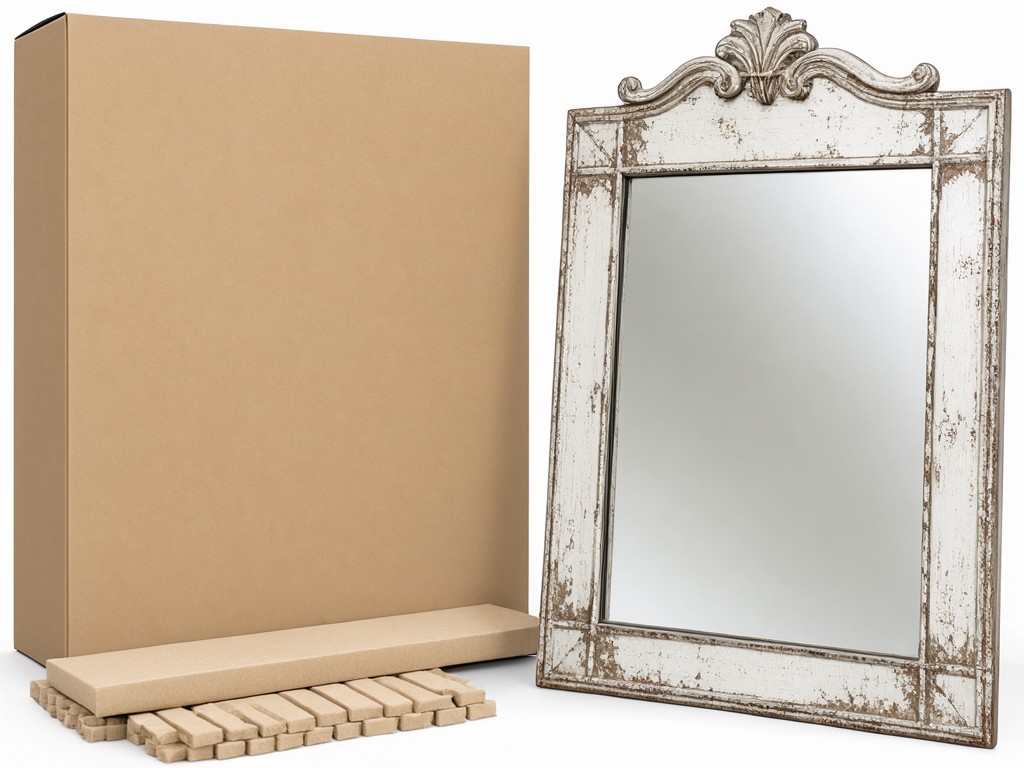
Manual Chemical Foxing
Each mirror undergoes individual reactive application to the silvering. This results in unique oxidation patterns that cannot be replicated across batches. Ideal for hospitality projects where visual variety is a primary design metric.
Digital Distressing Simulation
UV-printed distressed patterns are applied to the glass surface. This ensures 100% batch consistency across 5,000+ units. Best for retail chains where aesthetic uniformity is required for floor displays.
The mounting hardware is often the most overlooked point of failure in oversized mirrors. Standard wireand-clips frequently fail on units exceeding 20kg due to shear stress limits. We utilize heavy-duty Z-cleats for large-format pieces to ensure the load is distributed across the wall surface.
Matching the Product to the Buyer's Need
Retail buyers prioritize the ready-to-finish packaging that minimizes breakage-claims. In contrast, hospitality procurement officers focus on the durability of the frame finish against industrial-grade cleaners. If the application involves high-traffic public areas, a multi-layer polyurethane coating is mandatory to prevent finish-wear abrasion. You can discuss specific technical specification requirements with our engineering team.
Buying Mistakes That Lead to Returns
Ignoring the glass-to-frame tolerance leads to edge cracking when thermal fluctuations occur. A frame that is too tight does not allow for the natural expansion of the glass, resulting in stress fractures. Furthermore, failing to specify a moisture-resistant backing for coastal projects results in rapid black-spotting oxidation within the first fiscal year.
What Can Be Customised and What Cannot
- Frame profile depth ranging from 20mm to 85mm.
- Custom foxing density levels from light antique to heavy de-oxidation.
- Material selection between Reclaimed Oak, Pine, or high-density MDF.
- Glass thickness adjustments from 4mm to 6mm for safety compliance.
- Note: The base silvering chemistry is limited to standard chemical-reactive stability.
Questions Buyers Ask Before Ordering
What is the lead time for a custom-distressed run?
Standard orders of 500 units typically require 6-8 weeks to account for the multi-stage curing and distressing process.
Can you provide a sample for batch approval?
Yes, we produce full-scale master samples of the specific frame finish and foxing pattern before mass production begins.
How are the mirrors protected for overseas export?
We utilize reinforced plywood crates with custom-molded foam inserts to prevent glass-on-frame impact during sea transit.
Initiate Your Private-Label Production
Contact our technical department to review material tolerances and request a manufacturing quote.
Request Project Consultation






