Buy circle beaded gold wall mirror Factory: What Buyers Should Check Before Ordering
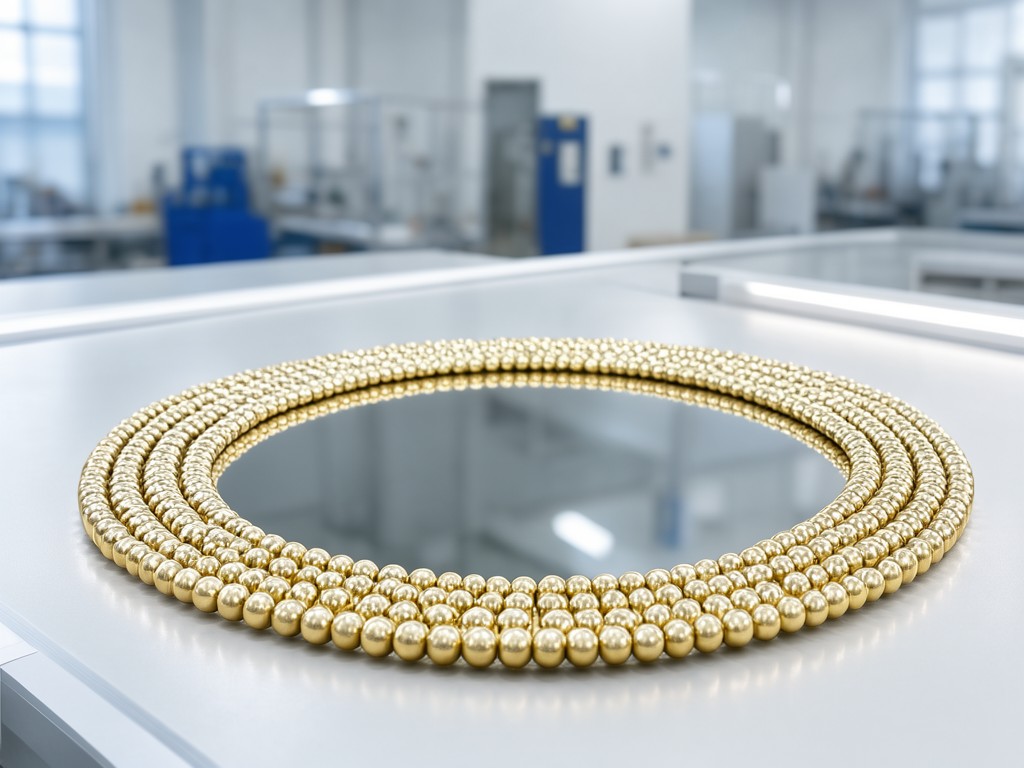
When a brand extends an existing range, the challenge shifts from aesthetic design to ensuring manufacturing consistency across new batches. Sourcing a secondary factory for circular beaded mirrors requires a deep dive into how the beads are secured and how the mirror-silvering is maintained. Discrepancies in bead weight or adhesive strength between different suppliers often lead to high return rates in high-volume retail environments.
Where Cheaper Alternatives Fall Short
Low-cost manufacturers often utilize thin-gauge glass that is susceptible to rapid oxidation when exposed to humidity. This process manifests as black spotting along the edges of the mirror within 12 months of installation. Furthermore, the use of standard-grade hot melt for the gold beads frequently results in detachment during thermal expansion. When the frame and the bead material expand at different rates, the bond fails, leaving loose decorative elements on the showroom floor.
Structural Integrity Risks
Budget-tier units use hollow MDF frames that lack the density to support the weight of heavy glass beads. This leads to frame warping over time, which causes the mirror insert to misalign and creates stress on the mounting hardware.
What Actually Determines Performance
The longevity of a beaded mirror depends on the chemical compatibility between the glass coating and the mechanical bond of the beads. A high-grade factory utilizes a multi-layered protective film to prevent moisture from reaching the silvered backing. The bead material itself—whether injection-cast resin or actual glass—dictates the overall weight and, consequently, the load rating for wall anchors.
Materials and Construction Trade-offs
Choosing between resin-cast beads and glass beads involves a balance between freight weight and perceived value. Resin beads offer a lower weight, reducing shipping costs, but are prone to chipping under impact. Glass beads provide a premium refractive quality and durability but require a more reinforced internal frame to prevent sagging.
- MDF vs. Solid Wood: MDF provides dimensional stability; solid wood offers better impact resistance.
- Metallic Finish: Electroplating provides superior scratch resistance compared to metallic spray paints.
- Adhesive Type: Structural epoxies offer higher shear strength than standard industrial glues.
Measured Performance in Real Use
In controlled testing, a properly manufactured beaded mirror maintains 98% of its bead adhesion after 500 cycles of simulated vibration. The glass-thickness-to-diameter ratio is typically 5mm for commercial use, whereas 3mm glass usually shows signs of edge fatigue within the half-life of the product.
Option Comparison by Usage Level
To select the correct specification for your inventory, follow this technical logic:
- Identify the primary installation environment:
- If high-humidity (bath/spas), then specify anti-corrosive silvering and 5mm glass thickness.
- If standard residential, 4mm glass with resin beads suffices for cost-optimization.
- Determine the retail-price-point sensitivity:
- For luxury segments, prioritize glass-beads and solid-wood frames.
- For mass-market segments, utilize injection-cast resin and reinforced MDF.
Requirements by Buyer Segment
Distributors require high SKU turnover and flat-pack capability to minimize cubic-meter costs. Private-label buyers often focus on the consistency of the gold-tone finish across batches, requiring that the color matching (Delta E) remains stable across a production run of 5,000 units.
Working as a Production Partner, Not a Catalogue Supplier
A factory partner manages the tooling amortisation for custom bead patterns or frame shapes. When volume scales, the per-unit cost drops as the fixed costs of CNC molds and glass-cutting jigs are distributed over larger quantities. We can review our production line capabilities here.
Export Packaging and Handling Protection
| Component | Protection Method | Risk Mitigated |
|---|---|---|
| Mirror Surface | High-density PE foam edges & cardboard sleeve | Prevents impact fractures and scratches |
| Beaded Frame | Individual air-cell bubble wrap | Prevents bead loss and friction |
| Outer Crate | Double-wall corrugated with pallets | Ensures stack stability during sea freight |
Need to review technical specifications for your next order?
Request a specification-review and quote






