OEM Geometric Frame Mirror Factory: What Buyers Should Check Before Ordering
The complaint that repeats across reorders often involves frame misalignment or silvering degradation at the glass edges. Geometric frames concentrate mechanical stress at the vertices where metal segments meet. If the weld depth varies across a batch, the frame deforms during the mounting process, which results in optical distortion in the glass. Consistent 3mm penetration on welds ensures the geometric integrity remains square across the entire production run.
Surface treatment dictates the longevity of the mirror in high-traffic environments. While electroplating provides a metallic luster, it lacks the abrasion resistance of a polyester powder coating when subjected to frequent cleaning cycles. A 60-micron powder coat provides a barrier against moisture and chemical-based agents. Selecting the correct finish depends on whether the mirror is installed in a dry lounge or a humid bathroom.
Scope of Supply and Physical Form
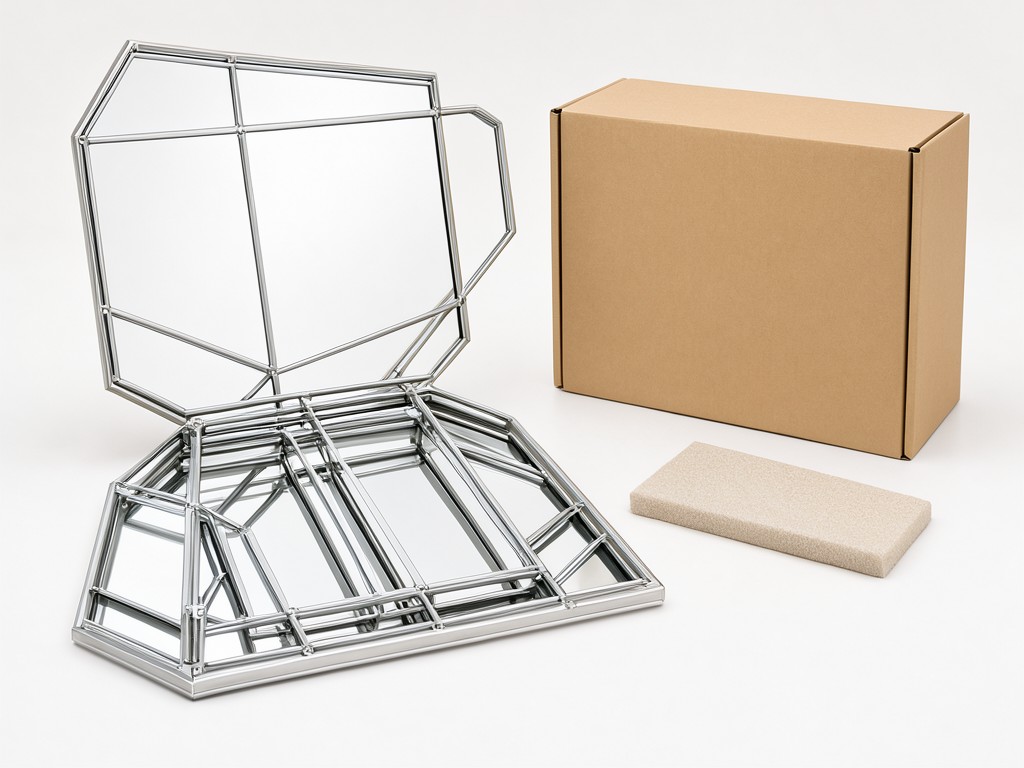
The production line covers various geometric configurations from standard hexagons to complex asymmetrical polyhedra. Each unit utilizes precision-cut metal profiles extruded to maintain consistent tolerances across the series. Mounting hardware includes heavy-duty D-rings or French cleats, depending on the specific weight of the glass assembly.
- Custom-milled aluminum or steel frame profiles.
- Tempered silvered glass with 4mm to 6mm thickness.
- Integrated channels for adhesive to prevent glass shifting.
- Customized mounting brackets for flush-level installation.
Construction Method and Its Effect on Consistency
TIG welding offers the structural rigidity required for large-format geometric mirrors compared to mechanical fastening. However, this method requires meticulous post-weld grinding to ensure a flat surface for the glass-bonding adhesive. Using a jig-based welding process ensures that the angles remain within a 0.5-degree tolerance across all units.
Size, Weight and Specification Range
| Parameter | Standard Range | Custom Options |
|---|---|---|
| Frame Width | 300mm - 2000mm | Up to 3000mm (with reinforcement) |
| Glass Thickness | 4mm - 6mm | 8mm low-iron glass |
| Material Grade | Aluminum, Steel, Iron | Brass, Titanium alloys |
Who Uses It and Where It Matters
Commercial developers and hospitality buyers utilize these mirrors to define architectural focal points in open spaces. In gym environments, the mirror must withstand aggressive cleaning agents and physical impact. Retail environments require a focus on the aesthetic consistency of the frame finish to prevent chipping during frequent handling.
Aluminum Frames
Ideal for large-scale installations where weight reduction is a priority. Naturally resistant to corrosion in coastal or humid hotel environments.
Steel Frames
Provides maximum stiffness for thin-profile geometric designs. Requires powder coating to prevent oxidation over time.
Requirements by Buyer Segment
Wholesale buyers prioritize batch-level color matching to ensure that retail displays remain uniform across multiple locations. Club and academy managers focus on the durability of the mounting hardware and the resistance of the glass to high-impact scenarios. Private-label brands require specific branding integration, such as laser-cut logos or custom frame profiles that align with their existing identity.
| Usage Factor | Risk Factor | Mitigation Strategy |
|---|---|---|
| Chemical Exposure | Silvering rot edges | Edge-sealed glass & epoxy bonding |
| Mechanical Impact | Glass shattering | Tempered glass specification |
| UV Exposure | Finish fading | UV-stabilized powder coatings |
Working as a Production Partner, Not a Catalogue Supplier
Our manufacturing process focuses on the translation of complex geometric designs into scalable production units. By addressing the material limits at the design phase, we reduce the likelihood of structural failure in the field. We provide detailed technical documentation for every custom run to ensure your installation team understands the specific load requirements.
Contact our engineering team for an artwork and branding review.







