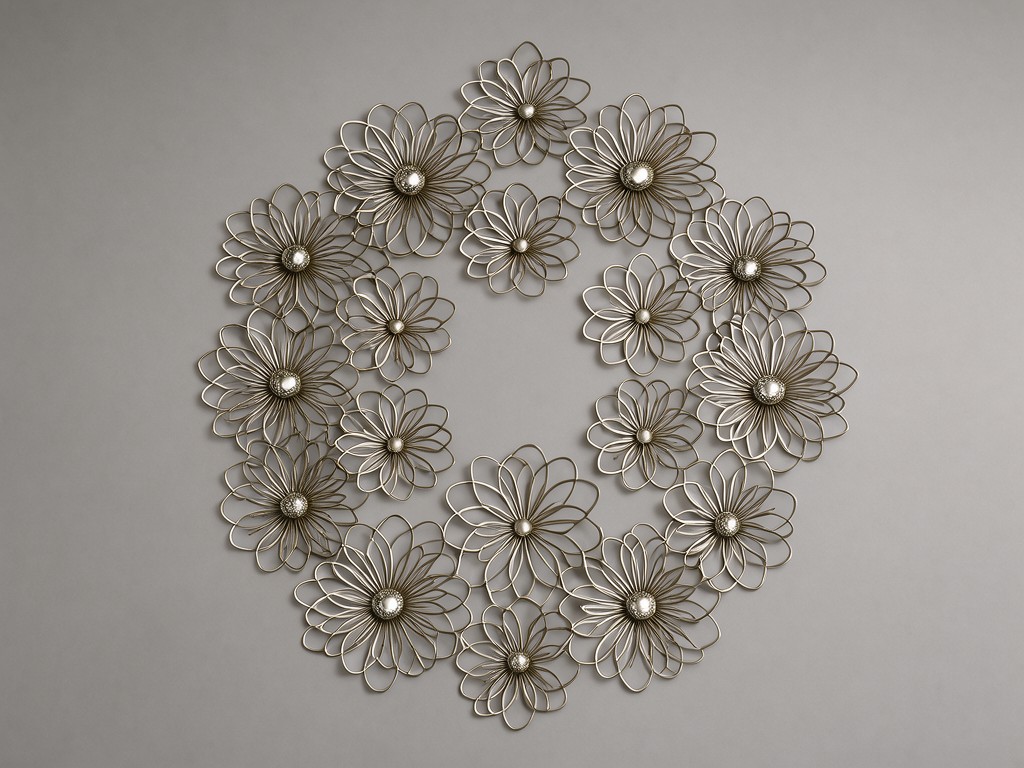
custom metal flower wall decor mirror Company: Specification, Ordering and Quality Notes
During a private-label launch with a fixed ship date, the primary risk to procurement is the variance between the approved sample and the mass production run. When ordering metal decorative mirrors with floral motifs, a 2mm drift in the laser-cut tolerance can lead to misalignment of the mirror inserts, resulting in high rejection rates at the retail level. Our facility focuses on the dimensional stability of the steel frames and the optical clarity of the glass to ensure that every unit in a container matches the initial technical specification exactly.
How It Is Built and What That Changes
The structural integrity of a floral metal mirror begins with the selection of cold-rolled steel. Unlike thinner-gauge aluminum which may flex under the weight of the glass, a 2mm steel frame provides the necessary rigidity to keep the mirror surface flat over time. We utilize fiber laser cutting for the intricate flower patterns, ensuring that the edges remain sharp within a 0.1mm tolerance. This precision prevents the glass edges from chipping where they meet the metal filigree.
Welding processes are performed using MIG welding to minimize heat-affected zones, which prevents the metal from warping during the subsequent curing phase. After assembly, the frame undergoes a multi-stage degreasing process before the coating is applied. This sequence is vital to prevent later oxidation from appearing under the decorative finish. The mirror itself is typically 5mm silvered-backed glass, which eliminates the "funhouse mirror" distortion often seen in 3mm retail-grade alternatives.
Option Comparison by Usage Level
The choice of finish dictates the longevity of the product in specific environments. High-traffic retail environments require finishes that can withstand physical abrasion and frequent cleaning cycles, whereas residential boutique settings may prioritize the aesthetic depth of an electroplated finish despite its lower impact resistance.
| Finish Type | Durability Rating | Best Use Case |
|---|---|---|
| Matte Powder Coat | High (UV & Scratch) | Commercial Retail / Outdoor |
| Electroplated Gold/Silver | Medium (Aesthetic) | Luxury Hotel / Residential |
| Antiqued Bronze | High (Wear Mask) | Boutique Interior Decor |
Buying Mistakes That Lead to Returns
Returns in the decorative mirror category often stem from color drift between production lots. If a manufacturer does not use standardized powder batch tracking, the "bronze" finish in the second order may appear significantly more red-toned than the first. We mitigate this through spectrophotometer matching to ensure the Delta E value remains within acceptable limits across 5,000 units.
Another common failure is the use of low-quality mirror adhesives. When the adhesive fails due to temperature fluctuations during shipping, the mirror shifts within the metal frame, causing rattling. We utilize mechanical clips in combination with neutral-cure silicone to ensure the glass remains bonded to the metal floral-work regardless of humidity levels.
Who Uses It and Where It Matters
Wholesale buyers for hospitality chains often require these mirrors for large-scale installations where consistency in weight is paramount. In these scenarios, the weight of the mirror is a critical factor for the wall-mounting specifications. Retail buyers, conversely, focus on the visual complexity of the flower pattern and how it catches light under standard showroom conditions.
- Hospitality: Requires safety-backed glass and heavy-duty mounting hardware for commercial compliance.
- Retail Chains: Prioritizes high-impact finishes and flat-pack-optimized packaging.
- Interior Design Firms: Demands custom finish matching to align specific architectural color palettes.
Segment-Specific Requirements
Commercial-grade mirrors must meet specific safety standards to prevent shattering in the event of impact. This often involves a laminated safety film applied to the back of the glass. For high-end residential segments, the focus shifts to the tactile feel of the metal—ensuring all weld seams are ground and polished so that no sharp edges snag on fabric.
Working as a Production Partner, Not a Catalogue Supplier
Moving from sample orders to container loads changes the requirements for tooling durability. We provide a detailed tooling review to ensure that the dies and jigs used for your floral patterns will not degrade over high-volume runs. If your brand is extending an existing range, we utilize your existing CAD files to maintain aesthetic and structural consistency across your entire product line.
Contact our engineering team for a tooling review and specification audit







