Specifying china satin round brass mirrors factory for Wholesale and OEM Orders
Where Cheaper Alternatives Fall Short
Low-cost alternatives often utilize zinc alloy with thin-film plating instead of solid brass. While these materials lower the initial unit cost, they lack the structural mass and corrosion resistance required for high-humidity environments. Zinc-based frames frequently exhibit oxidation at the edges where the satin coating thins, especially after repeated steam exposure.
Technical Trade-off: Material Density
Solid brass provides a higher density-to-weight ratio, which prevents frame warping over time. Large-diameter round mirrors (600mm+) constructed from inferior alloys are prone to structural bowing under the weight of the glass- itself.
| Usage Condition | Typical Failure Mode | Preventative Specification |
|---|---|---|
| High-humidity bathroom zone | Pitting and surface corrosion | PVD coating or 3-5 micron electroplating |
| Frequent mechanical cleaning | Satin finish abrasion/peeling | Hard-coat clear lacquer layer |
| Long-term moisture exposure | Mirror delamination (black spots) | Copper-free silver-backed glass |
Specification Range and Customisation Limits
Production lines typically support diameters from 300mm to 1000mm. Custom diameters require bespoke tooling, which impacts the lead time and minimum-order quantity. The thickness of the brass frame usually varies between 5mm and 15mm depending on the desired aesthetic profile.
| Finish Option | Application Method | Visual Characteristic |
|---|---|---|
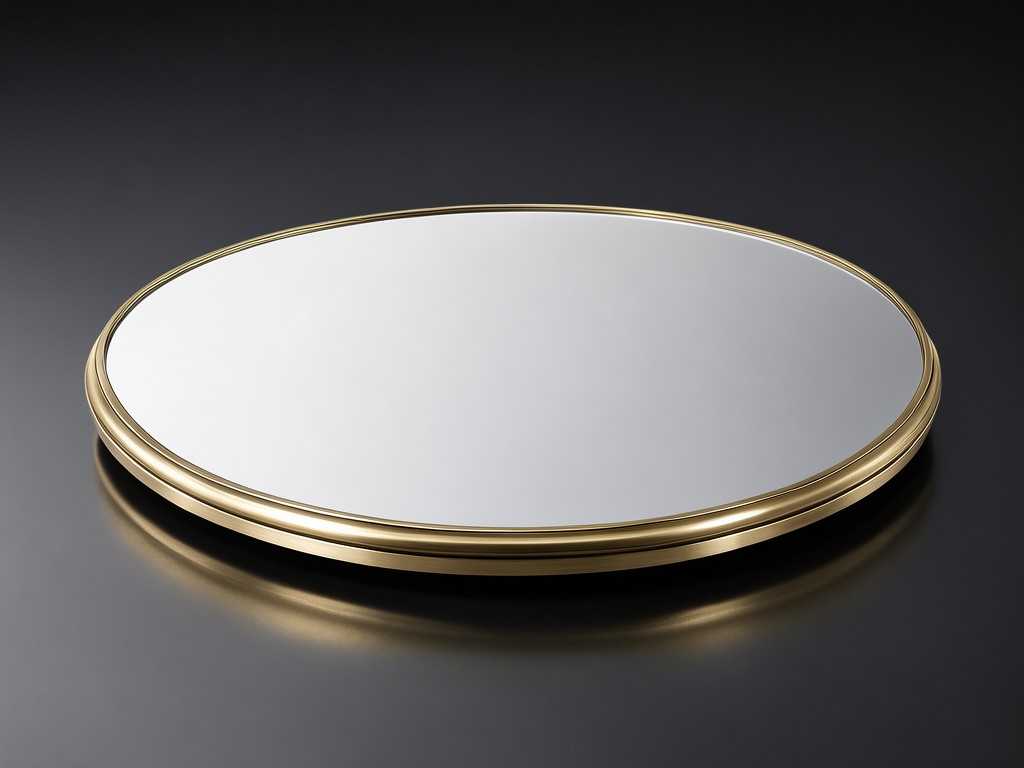
| Satin Gold | Physical Vapor Deposition | Warm, brushed-tone hue |
| Matte Black | Electrostatic Powder | Deep, non-reflective surface |
| Satin Nickel | Brushed Plating | Cool, metallic grey |
Who Uses It and Where It Matters
Hospitality procurement officers prioritize these mirrors for hotel projects where guestroom turnover is frequent. In these settings, the finish must withstand abrasive cleaning agents without losing its satin luster. Residential developers select solid brass variants to provide a tactile weight that plastic-based alternatives cannot replicate.
- Large-scale hotel renovations requiring high-durability hardware.
- Luxury retail showrooms needing custom-sized metal accents.
- Commercial office spaces with specific fire-rated glass specifications.
Working as a Production Partner, Not a Catalogue Supplier
A factory-focused approach allows for the integration of specific hardware requirements into the manufacturing flow. Instead of selecting from existing stock, buyers can specify back-frame profiles or integrated mounting hardware. This process amortizes the cost of custom molds over large volumes, reducing the price per unit.
How Consistency Is Held Across Batches
Consistency is set at the forming stage through precision casting and extrusion controls. We utilize CNC machining to ensure that the round radius remains uniform across thousands of units. Batch-level testing ensures that the satin texture density matches the approved master sample.
| Test Method | Metric | Purpose |
|---|---|---|
| Salt Spray Test | 48-720 hours | Predicting corrosion resistance |
| Adhesion Test | Grade 0 Cross-cut | Verifying finish-to-metal bond |
| Dimensional Check | ±0.5mm tolerance | Ensuring uniform frame fit |
Volume Planning and Lead Time
Lead times fluctuate based on the raw material availability of brass ingots. Standard orders of 500 units typically ship within 30-45 days, while orders exceeding 2,000 units benefit from optimized production cycles and reduced tooling-related per-unit overhead.
Ready to finalize your hardware specifications?
Request a formal specification review and quote






