Specifying b2b industrial iron frame wall mirror factory for Wholesale and Orders
Technical Trade-off: Mass vs. Structural Stability
Construction options diverge as soon as weight matters. Selecting a 2-gauge cold-rolled steel frame ensures structural rigidity for large-format glass but increases per-unit weight by 25% compared to 3-gauge alternatives. Buyers must weigh the reduction in material costs against the increased risk of frame deflection and glass-edge stress fractures during high-vibration transit.
Scope of Supply and Physical Form
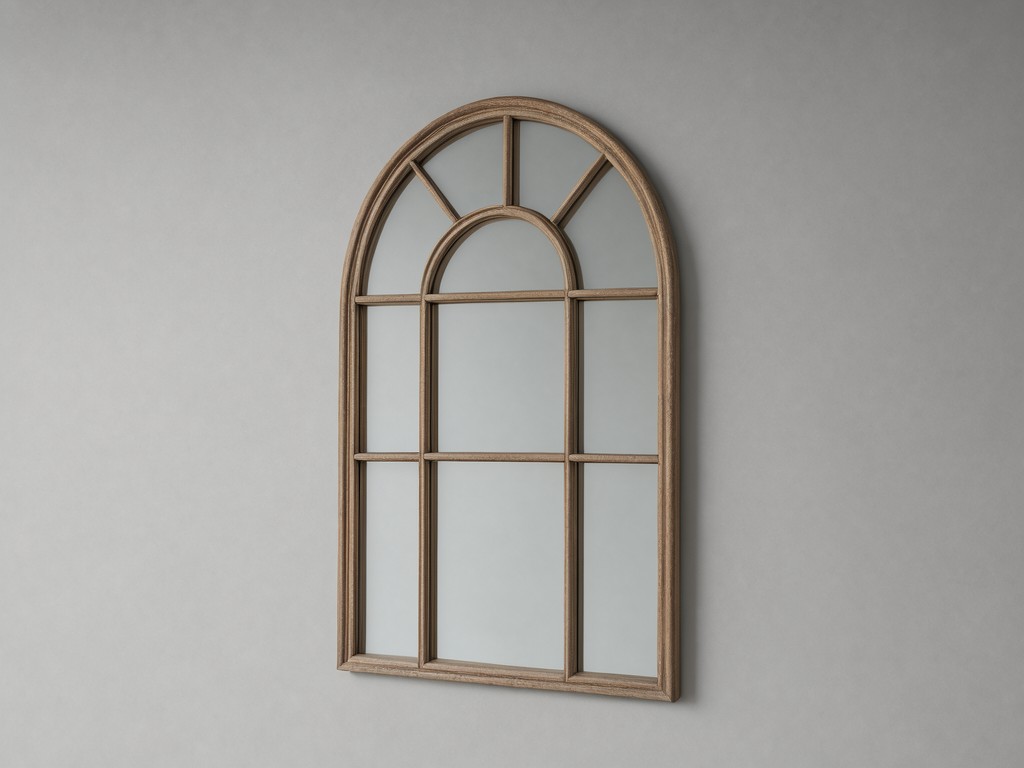
The production output focuses on modular iron-frame assemblies designed for high-traffic commercial environments. Each unit utilizes either 4mm or 6mm float glass with a copper-backed silvering process to mitigate the common failure mode of edge oxidation. The frames are constructed via MIG welded joints, which are ground flush to ensure the geometric profile remains square under the load of heavy-duty mounting hardware.
Surface finishes are applied through multi-stage electrostatic powder coating, typically reaching a thickness of 60-80 microns. This thickness provides the necessary barrier against atmospheric moisture in high-humidity environments. For projects requiring specific corrosion resistance, we offer a zinc-rich primer prior to the topcoat to prevent subsurface rusting at weld points where the coating may be compromised.
Assumptions Buyers Should Stop Making
Cost and durability pull in opposite directions once the environment is considered. Many distributors assume that a standard "industrial look" can be achieved with thin-walled hollow tubing, however, low-gauge steel often fails to account for the thermal expansion coefficients of the glass relative to the metal. This mismatch leads to stress pressure on the glass edges, resulting in cracking or optical distortion of the mirror surface.
Another common misconception involves the permanence of the mirror surface. Standard-grade silvering often degrades within 24 months when exposed to aggressive cleaning agents or high ammonia concentrations. Our-grade specifications utilize a specialized silvering process that seals the back edge of the glass more effectively, extending the service life of the reflective layer in hospitality or gym-based settings.
Who Uses It and Where It Matters
Where chlorine, sweat or UV exposure is routine, the integrity of the frame coating becomes the primary concern. Fitness centers and public pool areas require frames that can withstand constant chemical exposure without the powder coating peeling or delamination. In these scenarios, the bond strength between the coating and the iron substrate is more critical than the aesthetic uniformity of the metal finish itself.
Retail showrooms and hotel chains prioritize visual consistency across large batches. If the frame dimensions drift by more than 2mm between lots, installation alignment becomes impossible, increasing labor costs on-site. Our We maintain a dimensional tolerance of ±1.5mm across all frames to ensure multi-unit installations remain seamless in large-scale architectural projects.
Requirements by Buyer Segment
Private-label buyers typically require retail-ready packaging that utilizes high-density foam inserts to prevent corner chipping during last-mile delivery. Conversely, wholesale distributors focus on pallet-load ratios and the strength of the outer crates to minimize freight damage per unit.
- Custom frame-profile geometry for brand-specific architectural integration.
- Reinforced mounting points designed for heavy-load applications in commercial dry-wall installations.
- UV-resistant coatings for mirrors placed near direct-sunlight façades.
- Batch-traceable documentation to ensure color-matching across large-scale reorders.
Working as a Production Partner, Not a Catalogue Supplier
A factory-level partnership requires a focus on lot-to-lot consistency. When a buyer reorders a SKU six months later, they expect the powder coat hue and the frame thickness to match the original shipment exactly. We achieve this through standardized material-batch tracking and controlled curing cycles, preventing the "color drift" that often triggers high return rates.
We provide technical data sheets that outline the tensile strength of the iron and the impact resistance of the glass. This allows procurement officers to calculate the load-bearing requirements for specific installation hardware without guessing. For custom engineering requirements, our technical team is available consultation.
Stock Availability and Reorder Planning
| Parameter | Standard Specification | Heavy-Duty Option |
|---|---|---|
| Frame Material | 3-Gauge Cold-Rolled Steel | 2-Gauge Reinforced Iron |
| Glass Thickness | 4mm Float Glass | 6mm Tempered Glass |
| Coating Finish | Standard Powder | Zinc-Primer + Marine Grade |
| Production Lead Time | 21-30 Days | 45-60 Days |
Reorder planning must account for the curing time of the industrial-grade coatings. For large-scale projects, we recommend a 60-day lead window to ensure that material batches for the iron and glass are synchronized, preventing slight variations in frame weight or mirror reflective index.
Discuss your project-specific requirements with our engineering team.
Request Technical Consultation