irregular wavy standing wall mirror factory: Specification, Ordering and Quality Notes
Scope of Supply and Physical Form
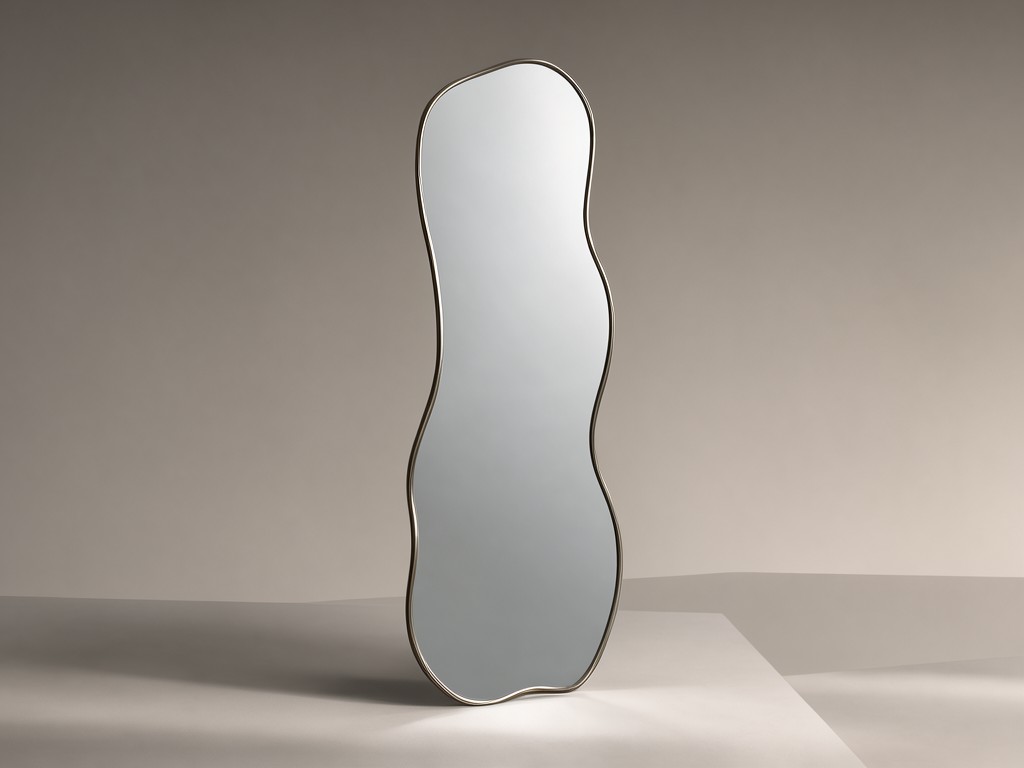
Repeat loading drives the failure. Irregular geometries create specific stress points at the curves where the glass meets the frame. We typically utilize 6mm float glass for standing units to prevent micro-fractures during transport or when leaning against vertical surfaces. The structural integrity of the wavy profile depends on the radius of the curves; sharper angles increase the risk of thermal stress fractures.
CNC-cutting technology allows for the execution of complex organic shapes that manual hand-cutting cannot replicate consistently. Each unit is cut from a digital template to ensure the backing board aligns perfectly with the glass edge. This alignment prevents frame warping during the adhesive-cure process.
What the Design Has to Balance
| Feature | Technical Risk | Factory Mitigation |
|---|---|---|
| Edge Radius | Optical distortion at focal zones | Minimum 50mm radius for CNC pathing |
| Glass Thickness | Flexure under vibration | Standard 6mm for free-standing mirrors |
| Backing Material | Oxidation of silver edges | Moisture-resistant PVC backing |
Matching the Product to the Buyer's Need
Material Selection for Environment
Weight and stiffness trade off against each other. High-density MDF frames provide better stability for large mirrors but increase the volumetric shipping cost. For high-humidity environments, moisture-resistant backing is mandatory to prevent oxidation of the silver edges.
Retail-grade mirrors prioritize lightweight frames and high-impact polymers to reduce breakage during transit. Commercial-grade specifications require reinforced metal-channel frames to ensure the wavy profile remains plumb during high-traffic floor cleaning cycles.
Buying Mistakes That Lead to Returns
Improper edge sealing leads to rapid blacking at the boundaries. If the irregular edge is not fully sealed, moisture penetrates the glass edge, causing irreversible mirror failure over time. Buyers often overlook the edge polish-depth; a flat polish is insufficient for wavy shapes where a beveled or rounded edge is required to hide stress lines.
Standard adhesive application on irregular surfaces can result in delamination if the pressure is not uniform. We utilize vacuum-pressure silicone bonding systems to ensure the backing remains bonded to the glass across the entire surface area of the wavy geometry.
How Consistency Is Held Across Batches
| Finish Type | Application | Maintenance |
|---|---|---|
| Standard Silvering | Vacuum-deposition process | Soft-cloth wipe only |
| Bronze/Grey Tint | Chemical-reactive metal coating | Avoid ammonia-based cleaners |
| UV Coated Frame | Electrostaticstatic powder coating | Abrasion-resistant |
Ordering, Tooling and Lead-Time Questions
What is the tooling requirement for custom wavy shapes?
Custom irregular shapes require the creation of a dedicated CNC jig and digital cutting-path file. This tooling phase typically adds 7-10 days to the initial lead time before the first production run begins.
How do you ensure silvering consistency across large orders?
We monitor the chemical composition of the silvering solution and vacuum temperatures daily. This ensures that the reflectivity index and tint remain uniform from the first unit to the thousandth.
What is the standard packaging for standing wavy mirrors?
Irregular edges require high-density foam inserts and custom-molded cardboard corners within reinforced wooden crates. This setup prevents the wavy perimeter from striking the outer box during sea-ocean transit.
Ready to review your technical specifications and branding-artwork?
Request an artwork and branding review






