Specifying large full length wall mirror manufacturer for Wholesale and OEM Orders
Before comparing quotations, the cost of a full-length mirror is dictated by the ratio of glass thickness to the structural integrity of the frame. 4mm float glass reduces shipping weight but increases the risk of warping over spans exceeding 1800mm without adequate lateral reinforcement. Retail buyers often opt for 6mm glass to eliminate optical distortion, though this increases the per-unit weight and requires higher load-rated wall-mounting hardware.
Large-scale retail installations demand mirrors that resist silvering oxidation. If the manufacturer fails to apply a moisture-resistant backing paint, the edges will develop black spots within 12 months in high-humidity bathroom environments.
What the Design Has to Balance
The tension between frame material and glass weight determines the return rate from transit damage. Lightweight MDF-based frames offer a lower price point but are prone to delamination if the moisture-edge is not properly sealed. Conversely, extruded aluminum profiles maintain dimensional stability under weight but require precise corner joinery to ensure the glass load is distributed evenly across the entire surface.
Technical Specification Rule
For mirrors exceeding 2000mm in height, a dual Z-bar mounting system is mandatory to replace standard tension clips. This configuration prevents the "bowing" effect where the glass sheet curves outward under its own gravitational pull.How Choose Before Requesting a Quote
Unit price settles the question only after the edge-proofing process is defined. Standard flat-polished edges are cost-effective for framed retail units, but beveled or chamfered edges increase production time due to the additional mechanical grinding cycles. You must specify the glass tolerance level; a ±2mm variance is standard for wholesale, while high-end boutique specifications may require ±1mm to ensure seamless frame fitting.
| Feature | Standard Wholesale Grade | Premium Retail Grade |
|---|---|---|
| Glass Thickness | 4mm Float Glass | 6mm Touhened Glass |
| Backing Protection | Standard Paint Layer | Anti-Corrosion Epoxy Coating |
| Hardware | Plastic Tension Clips | Heavy-duty Metal Z-Bars |
Customisation Options and Their Limits
Customization is primarily limited by the curing time of frame finishes and the availability of specific glass molds. While powder coating is easily applied to aluminum, wood-grain finishes on MDF require a multi-stage hand-applied lacquer process to avoid visible brush strokes, which adds 7-10 days to the production cycle.
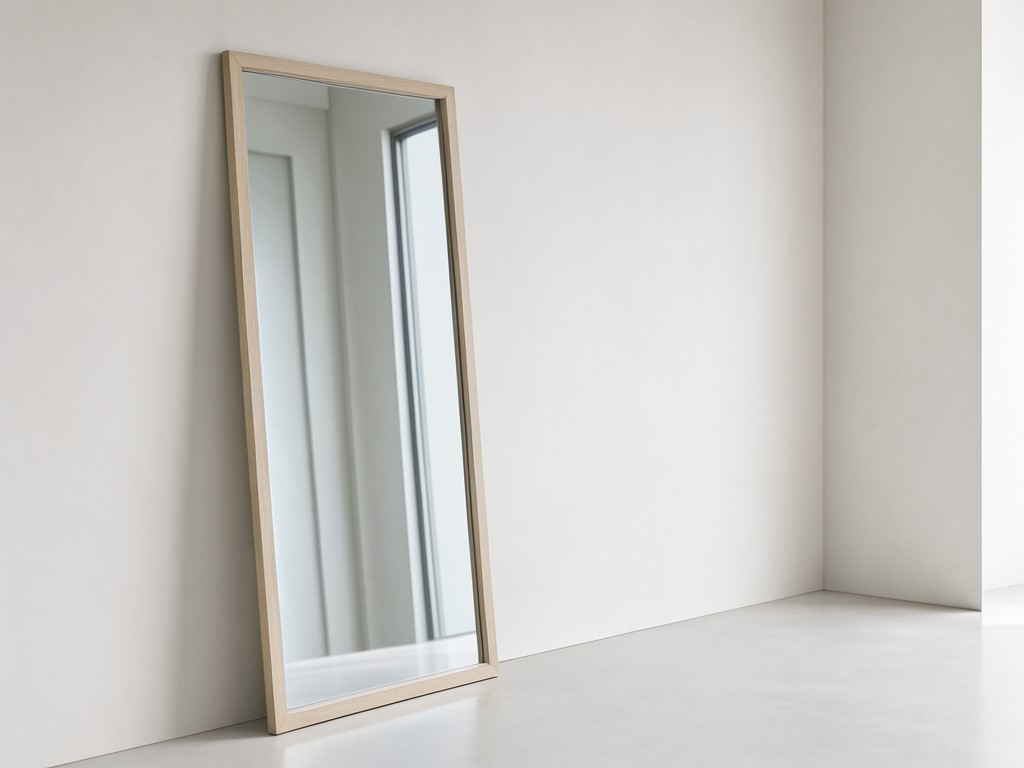
MDF Frames
MDF allows for intricate CNC molding at low cost. However, it lacks the impact resistance of solid wood and can crack if dropped on a hard corner.
Aluminum Frames
Extruded aluminum offers waterproof and lightweight options. The trade-off is a limited geometric profile compared to carved wood.
How Consistency Is Held Across Batches
Unit price and service life diverge when the silvering process is inconsistent. Inconsistent chemical layers lead to black-edge oxidation within 12 months of coastal-air exposure. To prevent this, a professional manufacturer utilizes a vacuum-deposited silvering process that ensures the reflective coating is uniform across 5,000+ unit runs.
- Batch-matched color spectrometry for frame finishes to ensure dye consistency across different reorder cycles.
- Dimensional checks on every 50th unit to verify frame-to-glass tolerances.
- Standardized packaging crates using foam-foam inserts to prevent edge fractures during sea freight.
Capacity, Tooling and Scheduling
Production volume is often gated by the glass-cutting CNC's capacity. For custom frame profiles, a tooling lead time of 30 days is required for the steel extrusion molds. Once the tooling is active, the factory can typically output 500 units per week depending on the complexity of the assembly line requirements.
Stock Availability and Reorder Planning
Retailers should maintain a 15% buffer stock on high-turn dimensions to mitigate supply chain fluctuations. Custom-sized mirrors usually carry a 45-day lead time because they require bespoke glass-cutting patterns that increase raw material inventory waste.
Ordering, Tooling and Lead-Time Questions
What is the lead time for a custom-branded order?
Standard OEM orders require 30-60 days. This includes the artwork approval phase, frame production, and the final assembly quality inspection.
Can you provide samples before the full run?
Yes, a pre-production sample is produced after 14 days to verify optical clarity and finish quality before mass manufacturing begins.
How is the glass protected during shipping?
We utilize corrugated cardboard outer-boxing with PE foam corner protectors specifically designed to mitigate impact-induced breakage during long-distance transit.
Need to verify technical tolerances for your specific retail line?
Request a Technical Sample and Bulk Quote






