Specifying direct factory wall mounted full dressing mirror factory for Wholesale and OEM Orders
During a private-label launch with a fixed ship date, manufacturing focus shifts from aesthetic appeal to batch consistency. Large-scale procurement of full-length mirrors requires strict dimensional tolerances to prevent optical distortion across thousands of units. When the glass substrate varies by more than 1.5mm across the vertical plane, the resulting "funhouse effect" renders the product unsuitable for premium retail environments.
Scope of Supply and Physical Form
| Parameter | Standard Specification Range | Technical Impact |
|---|---|---|
| Glass Substrate | 4mm to 6mm Float Glass | Thicker glass increases load-weight but reduces warping. |
| Mirroring Type | Copper-free Anti-corrosive | Prevents black edge oxidation in high-humidity zones. |
| Frame Material | Anodized Aluminum / Treated MDF | Affects freight weight and edge impact resistance. |
| Mounting Hardware | Z-bar / Industrial D-rings | Ensures level-set load-bearing distribution. |
The construction method dictates the long-term return rate in retail settings. Using a 4mm glass thickness reduces unit weight by approximately 20% compared to 6mm, but increases the risk of stress-fractures during transit. For high-traffic commercial applications, the 6mm substrate provides the necessary rigidity to ensure the mirror surface remains perfectly flat when mounted on non-ideal wall surfaces.
Technical Trade-off: Flatness vs. Weight
Large-format mirrors are prone to deflection. A rigid frame construction maintains tension across the glass, keeping optical distortion below 0.5%,, but increases shipping costs by 12-15% per unit.
How It Performs in Use
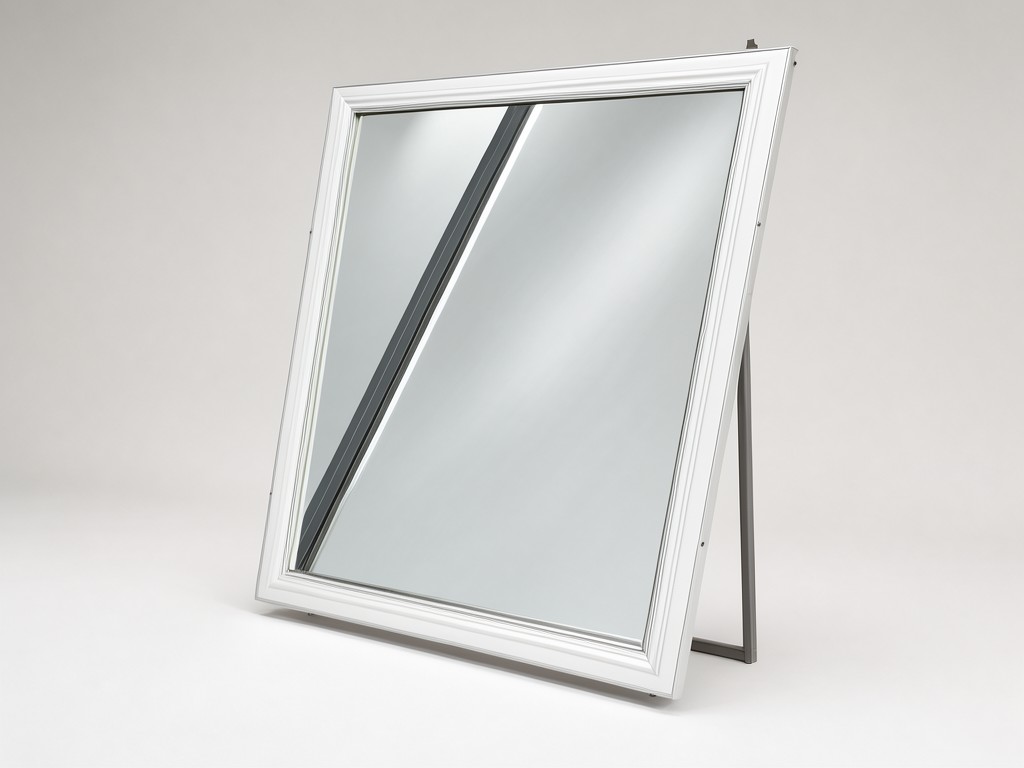
Optical stability depends on the integrity of the silvering layer and the protective backing. Standard aluminum silvering often fails within 24 months when exposed to bathroom environments or coastal humidity. Our factory process utilizes a copper-free silvering followed by a multi-layer epoxy paint, which extends the service life of the reflective surface in varying moisture conditions.
Mounting mechanics are the primary failure point for full-length units. If the D-rings concentrate the weight on two points, the glass may experience shear stress over time. Utilizing a horizontal Z-bar mounting system distributes the load across the entire width of the mirror, reducing the point stress on the glass edges.
Measured Performance in Real Use
Standard Silvering
- Lower unit cost for dry-environment retail.
- Susceptible to edge-blackening.
- Standard reflectivity for bedroom use.
Premium Anti-Corrosive
- Higher ROI for hotel/bathroom.
- Resistant to chemical cleaners.
- High-clarity retention over time.
Testing data shows that mirrors with reinforced epoxy-backed edges maintain 98% of their reflectivity after 500 hours of salt-spray exposure. In contrast, ungrade units show visible oxidation at the corners within 150 hours, leading to high-volume warranty claims for importers in hospitality sectors.
Requirements by Buyer Segment
Retail brand managers prioritize the finish and packaging protection. For these orders, the factory focuses on beveled edges or encapsulated frames to prevent glass chipping during unboxing. Procurement officers for commercial projects, however, demand the load-rating of the hardware and the safety-certification of shatter-resistant glass.
Importers focus on volume-efficiency. We offer flat-pack configurations that increase container density by 300% compared to pre-assembled frames, provided the internal foam inserts are sufficient to prevent impact damage during sea-freight.
Inspection Items and Test Methods
- Dimensional Flatness: Using a straight-edge across the surface to ensure no deflection exceeds 1mm over 2-meter spans.
- Load-Bearing Test: Mounting hardware subjected to 1.5x the rated weight to verify bracket integrity and screw torque.
- Impact Resistance: Pendulum impact testing on glass edges to evaluate the effectiveness of safety film application.
- Adhesion Test: Cross-hatch testing on the backing paint to ensure no delamination under thermal stress.







