china long wall mirror for bedroom factory: Specification, Ordering and Quality Notes
Buyers reorder bedroom mirrors when the first batch arrives without silvering failure at the edges or frame joints that loosen after six months on a wall.
A long wall mirror is sold by the piece, but profit is determined by the unit that survives freight and hangs flat. A 1800 mm tall panel in a 5 mm glass build carries meaningful dead weight, so the cleat and wall substrate matter as much as the reflection.
Factories quote on glass thickness, backing chemistry and frame joinery because those are the variables that show up in claims data.
Scope of Supply and Physical Form
A bedroom long wall mirror ships as three linked parts: glass with reflective coating, a perimeter frame, and a wall cleat or D-ring set.
The glass is cut to length, edges ground and polished, then coated on a silvering line before the frame is mitred or butt-jointed around it. Packing is part of the specification, not an afterthought: corner protectors and master carton layout decide how many units arrive without edge chips.
How It Is Built and What That Changes
The interface between parts determines whether a mirror hangs straight or sags at the bottom corner within a year.
Aluminium extrusion carries a die cost that falls as volume rises, while MDF foil wrap avoids tooling but chips more easily at the mitre. Copper-free backing adds cost per square metre but removes the black-edge failure that drives returns in humid bedrooms. Order volume changes the unit cost because setup on the silvering line and frame saw are fixed across the MOQ.
A buyer choosing between a 4 mm and 5 mm panel is really choosing between freight weight and wall fixing strength, not between good and bad glass.
Specification Range and Customisation Limits
Balance and load analysis shows a 5 mm glass panel adds roughly 12.5 kg per square metre, which changes the wall fixing specification before it changes the retail price.
| Option | Glass | Backing | Frame | Suggested substrate | Cost driver |
|---|---|---|---|---|---|
| Standard retail | 4 mm float | Silver | Aluminium extrusion | Drywall with cleat | Tooling amortised at 100+ units |
| Contract / hospitality | 5 mm float | Copper-free | MDF foil wrap | Masonry or reinforced drywall | Backing chemistry and pack reinforcement |
| Bevelled edge | 5 mm float | Silver | Aluminium extrusion | Decorative bedroom wall | Edge grinding time per unit |
| Frameless with safety film | 4 mm float | Copper-free | None | Full-wall adhesive mount | Film lamination and edge polish |
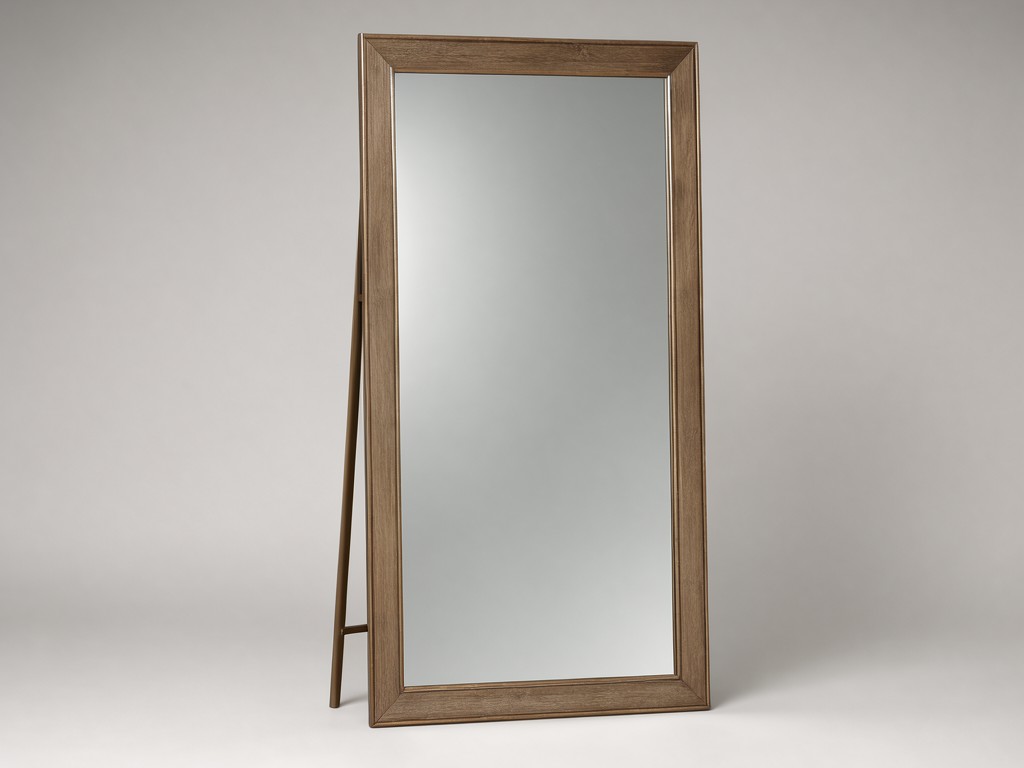
Customisation stops where the silvering line width and frame die inventory begin. A custom frame colour is possible above the MOQ because the foil or paint run has a setup cost; below that volume the buyer selects from stock finishes. Packaging artwork follows the same logic: custom print plates are amortised over the master carton run, so reorders keep the art file locked to avoid plate charges.
Matching the Product to the Buyer's Need
Consistency depends on matching the mounting hardware to the wall substrate, not on the frame finish.
Drywall carries less than masonry. A cleat screwed into a stud holds the full mirror weight; a cleat in plasterboard alone relies on anchors that can pull out under sustained load. Match the fixing to the substrate before the mirror reaches the site.
Wholesale buyers track damage per thousand units, private-label buyers confirm packaging artwork and barcode placement, and brand product managers set distortion limits for reflected straight lines. Each role prices a different failure mode.
Private-label buyers should confirm artwork bleed and corner-protector placement before the first sample run — start the artwork review.
Stock Availability and Reorder Planning
Order volume changes the unit cost because frame die tooling and silvering line setup are fixed costs spread across the MOQ.
Stock availability runs on standard sizes and finishes; anything outside the grid requires a sample approval cycle and a new lead-time window. Batch traceability follows the production run, so a reorder can match the previous glass batch and backing lot within tolerance.
Lead time moves with frame stock: mill-finish aluminium extrusion ships faster than anodised or foil-wrapped options because the supplier holds the raw profile.
Care, Storage and Service Life
Silvering failure usually begins at the edge where moisture meets the backing paint.
Store mirrors vertically with edge protection, or flat on a level surface with nothing resting on the glass. Clean with a dry microfiber cloth; ammonia or abrasive cleaners attack the backing paint at the edge seal. Humidity above normal bedroom levels accelerates silvering breakdown, so ventilation matters after installation.
Service life ends when the reflection distorts, the edge blackens, or the frame joint opens under repeated handling. Those are the rejection criteria a warehouse team can check at goods-in.
| Check point | Method | Pass limit | Check frequency |
|---|---|---|---|
| Visual distortion | Reflected straight-edge at 1 m | No visible wave | Every batch |
| Silvering adhesion | Adhesive tape pull at edge coating | No flaking | First article and lot sample |
| Edge chip resistance | Controlled drop onto corner | No edge spalling | Weekly process check |
| Corner impact in pack | Master carton drop on corner | No glass fracture | Per shipment style |
| Wall cleat pull-out | Load to failure in stud | Holds four times mirror weight | New frame design only |
Inspection happens at goods-in, not after the mirror is on the wall. A rejected unit costs the freight both ways, so the pass limit is set at the factory gate, not the customer's bedroom.
Ready to lock in frame tooling and backing specification?







