china arched gold full length floor mirror supplier - Bulk Supply and Specification Guide
Frame finish and glass thickness move in opposite directions on cost. A 4 mm silvered float glass sheet with a powder-coated metal arch carries less freight weight than a 5 mm MDF-backed equivalent, but the thinner glass shows bowing across a 1600 mm height unless the frame rail stiffness is increased. Buyers sourcing for hotel rooms or rental units typically accept 4 mm with a reinforced profile; full-length retail display units usually require 5 mm to keep distortion under spec.
Design Constraints Behind the Specification
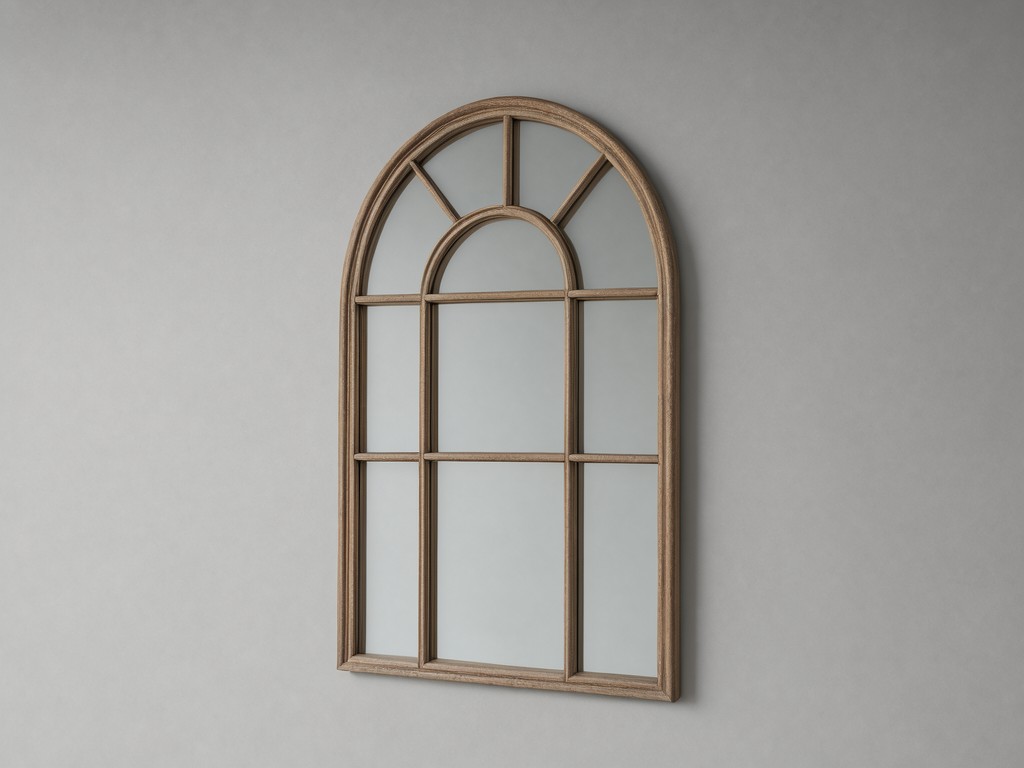
Arched tops concentrate stress at the crown and the two shoulder joints where the curved rail meets the stile. A floor mirror carries its own weight through the frame, so the glass is not simply glued into a pocket; it is supported by a backer and restrained by clips or a channel. When the arch radius is tightened to 150 mm or less, the glass must be tempered or laminated to survive the edge pressure during packaging, or the corners chip on the first pallet drop.
The most common field complaint is not breakage in transit but silvering failure at the bottom edge within twelve months.
Moisture enters through an unsealed backer edge and attacks the silver layer, producing black spots that start at the floor line and spread upward. A sealed MDF backer with edge tape, or a polymer backer with a foil barrier, moves that failure point out by years. The trade-off is weight: a sealed MDF backer adds roughly 1.8-2.4 kg to a 1600 x 500 mm unit.
Why the arch geometry changes the spec
A rectangular mirror distributes panel weight evenly across the top rail. An arched unit shifts more load to the side stiles, which means the stile gauge or wood species must increase before the frame sags in the middle. Gold finish choice also matters here: electroplated brass on steel holds colour under handling but adds cost per frame metre; gold foil over MDF scuffs at the stile corners where cartons rub during warehouse storage.
What Actually Determines Performance
Performance for a floor mirror is judged on reflectivity, flatness, and finish retention, not on load ratings. Reflectivity drops when the silver layer is too thin or the copper protective coat is omitted; the buyer sees a grey cast instead of a clear image. Flatness is measured across the diagonal: a 5 mm float glass panel should hold under 2 mm of bow over a 1600 mm height, otherwise the arch accentuates a funhouse effect at the edges.
Frame finish wear shows first at the top corners and the floor contact point. Gold paint that chips at the floor edge exposes the base metal or MDF, and the chip spreads during routine moving. A powder-coated finish resists that abrasion better than a spray-applied metallic paint, but the curing line adds tooling cost that only pays off above 300 units per SKU.
| Usage level | Glass thickness | Frame material | Backer | Expected service interval |
|---|---|---|---|---|
| Residential, low traffic | 3 mm | MDF with gold foil | Standard MDF | 24-36 months before finish touch-up |
| Hospitality, contract furnishing | 4 mm | Powder-coated steel | Sealed MDF with edge tape | 36-60 months |
| Retail display, high handling | 5 mm | Extruded aluminium or hardwood | Polymer backer with foil barrier | 60+ months |
Material Options and Their Trade-offs
Glass comes in three practical thicknesses for this product. Three millimetre float glass keeps landed cost low but requires a rigid frame to prevent visible bowing; it suits short-term rental stock. Four millimetre is the middle ground for most importers, balancing freight weight against edge strength. Five millimetre is specified when the mirror is moved weekly or leaned against a wall without a stand, because the extra thickness resists edge chips during handling.
Frame substrates split between MDF and metal. MDF holds a gold foil or paint finish evenly and costs less to tool, but it swells if the backer seal fails and the unit sits in a humid corridor. Steel takes powder coating well and carries the arch load with thinner profiles, yet it adds roughly 30-40 percent to the frame weight compared with MDF. Aluminium is the lightest option but the gold anodise or paint layer shows scuffs more readily than powder-coated steel.
MDF frame + gold foil
Lower tooling cost, even finish, higher swelling risk if backer seal fails.

Steel frame + powder coat
Higher freight weight, better arch stiffness, resists corner scuffing in warehouse handling.
Working as a Production Partner, Not a Catalogue Supplier
OEM work starts with the arch radius and the gold shade. A supplier that only holds catalogue SKUs cannot adjust the radius from 200 mm to 300 mm without new tooling, which forces the buyer to change the retail design to fit the frame. Private-label buyers need the backer printed with their barcode and country-of-origin mark before the glass is seated, otherwise a second handling step adds labour cost and breakage risk.
Packaging is where unit economics are won or lost. A single-wall carton with corner pads works for LCL shipments to a nearby port, but FCL containers on multi-week voyages need double-wall cartons with interleaving foam between units. The added packaging weight raises ocean freight per unit, yet it cuts damage claims from the 8-12 percent range down to under 2 percent, which lowers the true cost per unit sold.
| Height (mm) | Width (mm) | Glass (mm) | Unit weight (kg) | Packed weight (kg) |
|---|---|---|---|---|
| 1500 | 450 | 4 | 11-13 | 14-16 |
| 1600 | 500 | 4-5 | 14-18 | 17-22 |
| 1800 | 600 | 5 | 20-25 | 24-30 |
How Consistency Is Held Across Batches
Batch drift appears first in the gold shade. One run comes out warm brass, the next leans pale yellow, and the retail floor rejects the mismatch. Holding consistency means controlling the paint or foil lot number and keeping the curing temperature within a narrow band across the production shift. Glass flatness is the second variable: a change in float glass supplier can introduce a 1 mm bow that was not present in the approved sample.
We manage this by locking the silvering bath chemistry and the frame finish recipe to the approved sample, then running a first-article check before each new PO. Dimensional checks on the arch shoulder and the overall height catch die wear before a whole batch ships with uneven corners. Traceability is kept on the backer label so a complaint can be traced to a specific press run and silvering tank.
What Gets Checked Before Shipment
Every unit is checked for reflectivity at the centre and at both lower corners, where silvering defects usually start. The frame join at the arch shoulder is flex-tested by hand pressure; any movement indicates an under-cured joint or an undersized stile. Dimensions are verified against the tolerance block, and the backer seal is inspected for gaps that would admit moisture.
Packaging inspection includes a shake test on a sample carton: units are tilted and inverted to confirm the glass does not shift in the channel. Corner protectors are checked for presence and fit. Weight is recorded per carton so the importer can reconcile the bill of lading against the packing list before the container is sealed.
Request a specification review for your arch radius, frame substrate, and gold finish requirements.