wholesale modern accent wall mirrors Company - Bulk Supply and Specification Guide
Moving from sample orders to container loads changes focus from aesthetic preference to structural consistency and dimensional tolerance across thousands of units. When scaling for retail distribution, the variance in the silvering process and the stability of the backing coating determine the long-term return rate. Procurement officers must prioritize the chemical stability of the mirror surface to prevent edge oxidation, which remains the primary failure point in high-humidity hospitality environments.
Scope of Supply and Physical Form
The production range encompasses various geometric configurations, from minimalist frameless rectangles to complex architectural framed units. For high-volume OEM orders, we typically utilize 4mm or 6mm float glass substrates. The 6mm option is specified for reduce optical distortion in larger-than-standard installations where the physical rigidity of the glass prevents bowing under its own weight.
Technical Configuration Trade-off
Frameless mirrors require precision flat-polished edges to prevent chipping during installation, whereas framed units utilize the aluminum or wood profiles to provide mechanical protection for the glass perimeter against impact during international transit.
How It Is Built and What That Changes
Manufacturing begins with the automated cleaning of the glass surface to remove microscopic particulates that interfere with adhesive bonding. We apply a copper-free silvering process followed by a multi-layer protective coating. This specific chemical sequence reduces the risk of "edge rot"—the black oxidation that occurs when moisture reacts with standard silvering layers over time.
The edge treatment dictates the final retail profile and cost. A standard flat-polish edge provides a clean, modern aesthetic but offers less than a 25mm or 30mm beveled edge adds weight and increases machine time. For private-label brands, the choice of edge profile often aligns with the perceived value point and the weight requirements of the mounting hardware.
- Copper-free silvering for enhanced atmospheric resistance in coastal regions.
- Acrylic-based backing paint to prevent delamination from the glass substrate.
- Standardized French cleat hardware for rapid commercial-site mounting.
Specification Range and Customisation Limits
Standard production dimensions are optimized for palletization to minimize shipping air costs. Custom shapes outside the standard diameter range require bespoke tooling, which impacts the minimum order quantity (MOQ) and lead times.
| Parameter | Standard Specification | Premium Option |
|---|---|---|
| Glass Thickness | 4mm | 6mm / Tempered |
| Edge Profile | Flat Polish | Beveled (25mm-50mm) |
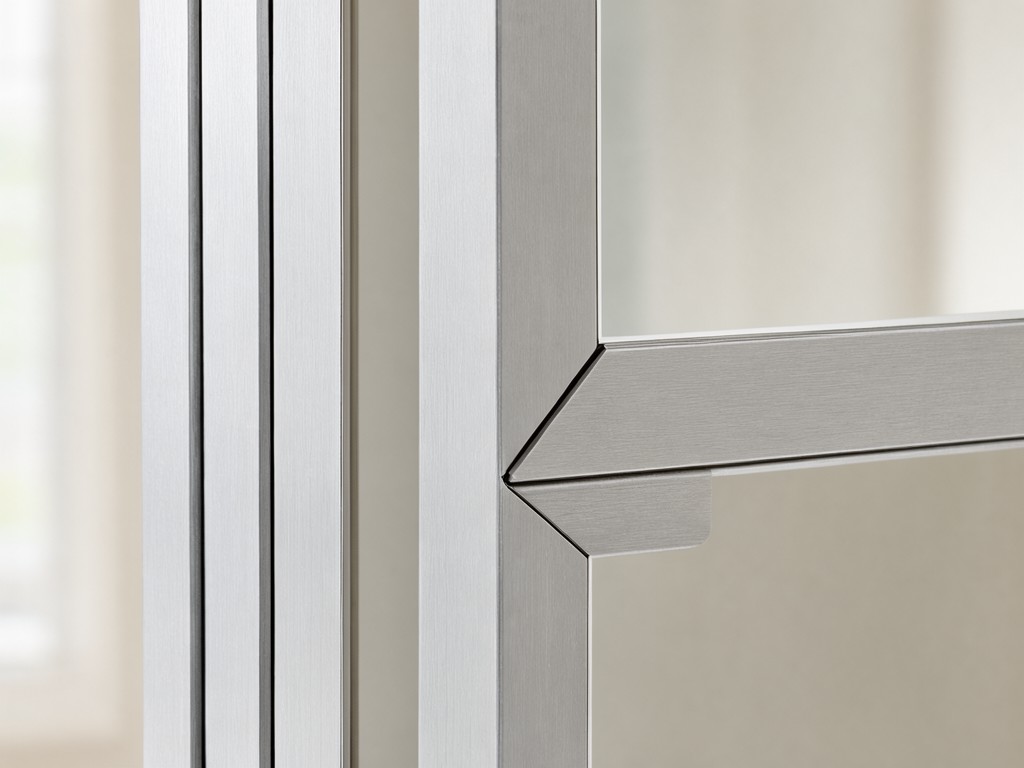
| Frame Material | Anodized Aluminum | Solid Wood / Wrapped Metal |
| Backing | Standard PVC | Anti-Fog / Moisture Barrier |
Who Uses It and Where It Matters
Hospitality chains and hotel developers select these mirrors for large-scale renovations where batch consistency is critical. In these settings, the mirror must withstand frequent cleaning cycles without the silvering degrading. Retail distributors utilize the-wholesale-ready specifications for high-turnover inventory where cost-per-unit is the primary driver of selection.
Interior design firms specifying for commercial office projects require specific dimensional certifications. For these clients, the focus shifts to the tolerance of the mounting brackets to ensure multiple units installed in a grid align perfectly without manual field adjustments.
How Consistency Is Held Across Batches
Quality control is managed through standardized testing protocols at each stage of the production line. We monitor the adhesion strength of the silvering and the thickness uniformity of the backing coating to ensure optical reflectivity remains constant across the entire production run.
| Usage Condition | Potential Failure | Preventive Specification |
|---|---|---|
| High humidity bathrooms | Edge rot / Desorption | Copper-free silvering + sealed edges |
| Large-format wall mount | Optical warping | 6mm minimum glass thickness |
| International transit | Edge chipping | Tempered glass or reinforced frame edges |
Volume Planning and Lead Time
During a private-label launch with a fixed ship date, early engagement regarding glass stock and frame materials is essential. Standard lead times for container orders range from 6 to 8 weeks, while custom-specification projects may require 12 weeks to accommodate tooling and specialized coating curing.







