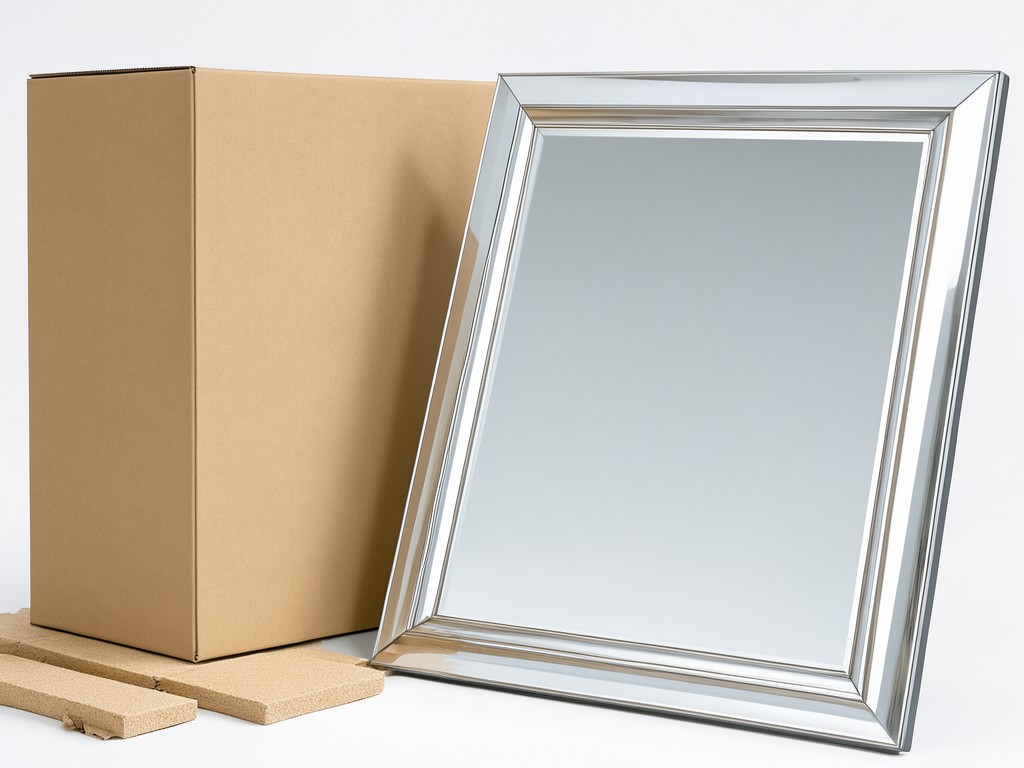
Wholesale beveled accent wall mirror Manufacturer - Bulk Supply and Specification Guide
Technical Trade-off: Thickness vs. Freight Logistics
Bulk procurement beveled mirrors requires balancing glass thickness against shipping weight costs. While 4mm glass reduces unit weight by approximately 30% compared to 6mm, it offers lower resistance to impact fractures during high-velocity transit. Selection of the correct thickness directly impacts the breakage rate and the final landed cost per square meter.
How It Performs in Use
First-article tooling determines the precision of the bevel-cut edge. When sourcing a secondary supplier, the consistency of the CNC grinding equipment dictates the dimensional tolerance across a batch of a thousand units. Precision grinding ensures that the bevel angle remains uniform across the entire perimeter, which prevents visual misalignment when installed in multi-mirror gallery configurations.
The optical clarity of the mirror depends on the electrolytic silvering process. A high-density vacuum-deposited coating prevents oxidation in high-humidity environments like hotel bathrooms or fitness centers. If the back-coating is thin, moisture penetrates the silver layer, leading to "edge rot" or black spotting within twelve months of installation.
Specification Range and Customisation Limits
Standard production lines typically handle glass sizes from 300mm to 2400mm. Bevel widths vary from 10mm for subtle accents to 50mm for high-end decorative focal pieces. Larger bevels increase the manufacturing cycle time on the grinding machines, which reflects in the unit price-tier.
Custom cutouts for architectural integration are possible via waterjet cutting but increase the scrap rate. Non-standard geometric shapes require a detailed specification-review to ensure structural integrity at the stress points.
Comparing Two Standard Configurations
| Parameter | Standard Grade (4mm) | Premium Grade (6mm) |
|---|---|---|
| Glass Thickness | 4mm ±0.2mm | 6mm ±0.3mm |
| Bevel Width | 10mm / 25mm | 25mm / 50mm |
| Impact Resistance | Standard Residential Use | Commercial/Heavy Duty |
Buying Mistakes That Lead to Returns
Procurement officers often prioritize unit price over edge-polishing quality. Poorly finished beveled edges create micro-fractures that propagate through the glass during the final packaging or mounting process. This results in high rejection rates at the retail level.
- Neglecting the back-coating thickness, which leads to rapid oxidation in humid climates.
- Accepting inconsistent dimensional tolerances that prevent frame-fitting in bulk.
- Failing to verify the protective film-layer specifications for long-haul transit.
Volume Planning and Lead Time
Manufacturing capacity fluctuates based on the availability of raw float-glass sheets. Orders exceeding 5,000 units typically require a 4-6 week lead time to account for the sequential CNC grinding and silvering cycles. Staggered orders mitigate the risk of supply chain disruptions during peak seasons.
Stock Availability and Reorder Planning
Batch traceability is essential for maintaining color consistency across different orders. We track the glass batch numbers to ensure that the tint and light reflection index remain identical across multiple shipments. Maintaining a buffer stock of standard sizes reduces the reorder lag for high-volume distributors.
Request a technical data sheet for your procurement project.
Initiate specification-review






