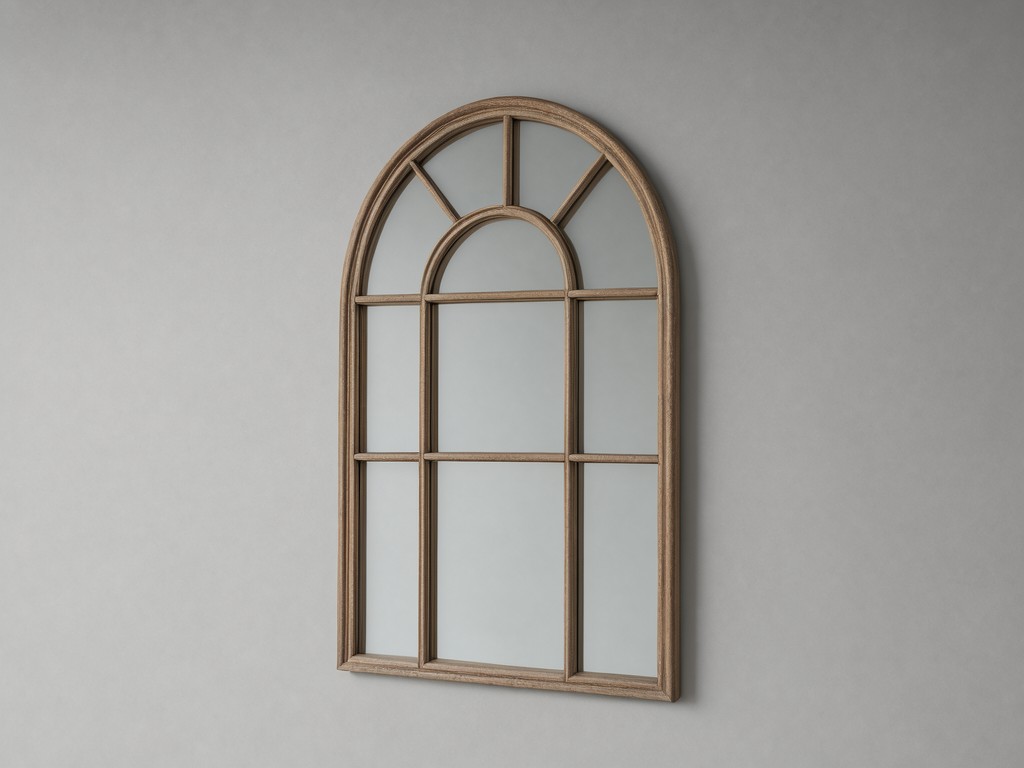
OEM Farmhouse Entryway Decorative Mirror Exporter: What Buyers Should Check Before Ordering
Moving from sample orders to container loads changes the focus from individual aesthetic appeal to batch-level dimensional consistency. A 2mm variance in frame width across 500 units can lead to misalignment issues during retail-level assembly. Buyers must prioritize manufacturers who utilize CNC-cut joinery to ensure every mirror remains perfectly square across the entire shipment.
How It Is Built and What That Changes
The frame utilizes either solid pine or high-density MDF with a wood-grain veneer depending on structural requirements. Solid wood offers higher resistance to impact but is prone to moisture-induced expansion if not properly sealed.
We employ a mechanical cleating system rather than adhesive to secure the glass, which prevents delamination during temperature fluctuations in sea freight. This method ensures that the glass can shift slightly without cracking the frame. For high-humidity climates, mechanical fastening is the standard for long-term structural integrity.
Measured Performance in Real Use
4mm float glass reduces optical distortion compared to standard 3mm alternatives, though it increases the unit weight by approximately 150g per meter. The silvered backing undergoes an anti-corrosion treatment to prevent oxidation in high-humidity coastal environments.
Heavy-duty D-ring hardware ensures the load capacity exceeds 15kg without shearing the frame. Standard hardware often fails under the constant tension of large entryway mirrors. Specifying reinforced-steel hardware mitigates the risk of warranty claims related to dropped units installations.
Comparing Two Standard Configurations
-
Is the target market high-volume retail?
- Select the MDF-base variant with a distressed finish to minimize landed costs.
-
Is the requirement premium-boutique durability?
- Choose the solid oak frame with hand-rubbed oil for tactile material quality.
-
Is shipping cost the primary margin constraint?
- Utilize the lightweight aluminum-core farmhouse frame to reduce volumetric weight charges.
Usage Scenarios and Buyer Segments
Hotel Procurement Chains
Hotel procurement chains require high-finish durability to withstand frequent cleaning cycles across multiple guest rooms. The focus is on the chemical resistance of the frame coating against industrial cleaning agents.
Retail Private-Label Brands
Retail private-label brands focus on flat-pack compatibility to reduce carbon-footprint and de-boxing costs. This requires reinforced corner joints that do not split during the final assembly process.
Stock Availability and Reorder Planning
Managing inventory requires understanding lead-time buffers to avoid stockouts during peak seasonal demand. Consistency in production cycles ensures that the finish color-tone remains identical across different purchase orders.
| Inspection Standard | Test Method | Tolerance Range |
|---|---|---|
| Dimensional Accuracy | Digital Caliper Measurement | ± 1.5mm |
| Finish Consistency | Spectrophotometer Delta | Delta E < 2.0 |
| Glass Clarity | Light Box Distortion Test | No visible waviness at 3m |
| Configuration | Lead Time | MOQ |
|---|---|---|
| Standard MDF Frame | 30-45 Days | 200 Units |
| Solid Wood Frame | 60-75 Days | 50 Units |
Request technical specification sheets and batch-specific pricing data.
Request a quotation-review