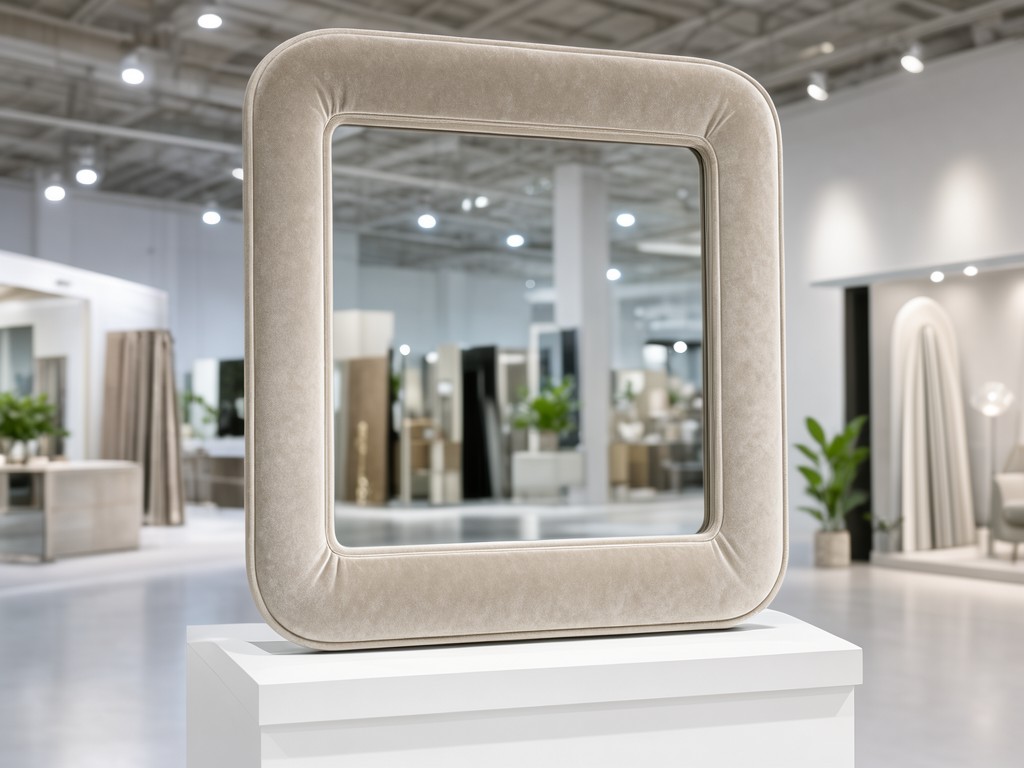
Low Price beige velvet accent mirror Hot Sale - Bulk Supply and Specification Guide
Returns usually trace back to the same weak point: the adhesive bond between the textile covering and the rigid substrate. In high-volume production, standard hot melts often fail under temperature fluctuations, leading to peeling velvet at the corners of the accent mirror. We utilize a high-melt-point pressure sensitive adhesive to ensure the beige velvet remains adhered to the MDF frame across varying humidity levels common in sea-freight shipping containers.
The choice of core material dictates the long-term dimensional stability of the mirror. High-density MDF (HDF-grade) provides a flatter surface for the velvet application compared to particle board, which reduces the risk of visible rippling in the fabric frame. However, for weight-sensitive wholesale orders, a lightweight foam core reduces freight costs but requires reinforced impact dampening to prevent glass fracture during mechanical handling.
Material Options and Their Trade-offs
Textile Composition
Polyester-based velvet offers higher resistance to pilling and moisture compared to cotton-blend variants. For retail-grade mirrors, a 300 GSM weight ensures the frame maintains its structural integrity after multiple cleaning cycles, which impacts the reorder rate for the end consumer.
Mirror glassing typically utilizes a 4mm silvered glass to prevent oxidation edges in high-humidity environments. While a 3mm glass reduces unit cost, it increases the likelihood of surface distortion if the frame is not perfectly planar. The 4mm specification is the standard for hospitality-grade accent mirrors to ensure optical clarity without the warping effects seen in thinner-gauge alternatives.
Where This Product Beats Standard Alternatives
Standard plastic-molded frames often suffer from scuffing and stress whitening at the mounting points. The velvet-wrapped construction acts as a natural buffer, absorbing minor impacts that would otherwise crack rigid plastic frames. This design reduces the need for secondary bubble-wrap in the packaging, potentially lowering the total landed cost per unit.
Unlike metal-framed mirrors that may show fingerprints or scratches over time, the beige velvet finish maintains a consistent aesthetic despite frequent handling. This is particularly relevant for private-label buyers targeting the budget-luxury segment where visual "freshness" is a primary driver of customer satisfaction.
Option Comparison by Usage Level
| Usage Grade | Frame Material | Fabric Spec | Target Market |
|---|---|---|---|
| Standard Retail | Recycled MDF | 200 GSM Polyester | E-commerce Bulk |
| Boutique | HDF Core | 400 GSM Velvet | High-end Retail |
| Hospitality | Solid Wood Frame | Flame Retardant Fabric | Hotels/Resorts |
Matching the Product to the Buyer's Need
Wholesale buyers often prioritize the weight-to-volume ratio to optimize container utilization. A hollow-core MDF frame allows for larger visual dimensions without a proportional increase in shipping weight. For private-label brands, the ability to specify the exact beige tone—ranging from sand to deep champagne—is critical for maintaining seasonal color consistency across different product lines.
Hardware Compatibility
We offer D-ring hangers or French sawtooth brackets depending on the intended mounting surface. For high-traffic commercial environments, reinforced D-rings are preferred as they distribute the load across the frame back, preventing the velvet from tearing over time.
Usage Scenarios and Buyer Segments
In residential retail, these mirrors serve as focal points in bedrooms or dressing areas where the soft texture of the velvet complements bedding and upholstery. In the hospitality sector, the durability of the fabric-covered frame ensures that the mirror survives the frequent movements and cleaning cycles common in guest room turnover.
OEM and ODM Structure
Our OEM program allows for custom fabric weaves and logo embossing on the rear MDF panel. We can also integrate bespoke frame dimensions to fit specific architectural requirements for interior design projects. The process begins with a material sample approval to ensure the colorfastness properties of the beige velvet match the buyer's brand standards.
Care, Storage and Service Life
To prevent the MDF from warping, mirrors should be stored in a dry environment with relative humidity below 65%. The velvet surface requires only a low-vacuum attachment for maintenance; harsh chemical cleaners can degrade the fibers and the adhesive bond. Under standard residential use, the silvering on the glass is expected to last 10+ years provided the mirror is protected from direct impact.
For specific artwork specifications or a custom branding review, please contact our technical team to discuss your bulk requirements.







