Direct Factory Green Velvet Accent Mirror For Sale: Specification, Ordering and Quality Notes
Sourcing upholstered accent mirrors requires an understanding of the structural tension between the textile overlay and the substrate. In factory-level production, the integrity of the green velvet finish depends on the adhesive application method and the rigid internal frame. This specification outlines the technical parameters for velvet-framed mirrors designed for high-volume distribution.
Scope of Supply and Physical Form
| Parameter | Specification | Tolerance/Range |
|---|---|---|
| Frame Substrate | 18mm MDF or Solid Pine | ±0.5mm |
| Glass Type | High-clarity Silvered Glass | 4mm - 6mm |
| Upholstery | Polyester Velvet | 280 - 350 GSM |
| Mounting Hardware | Reinforced D-rings / Wire | Up to 15kg load |
The unit assembly consists of a primary mirror inset, border-left: 4px solid #78350f; background-color: #f8fafc; padding: 16px 20px; margin-bottom: 24px;">The green velvet is applied via industrial heat-set spray adhesive to prevent bubbling, common in lower-grade hand-wrapped units.
The Problem Buyers Keep Paying For
Retail buyers often report returns due to delamination of the fabric from the frame edges in high-humidity environments. When the MDF substrate is not properly sealed before upholstery, it absorbs moisture, causing the adhesive to pull the velvet away at the corners. This results in visible seam lines that compromise the aesthetic value of the accent piece.
Another frequent failure point is the pilling of the velvet surface. Low-density fabrics with a low Martindale rating degrade quickly under friction during shipping or frequent handling. We specify a short-pile polyester blend to ensure the fabric maintains its luster after over 20,000 abrasion cycles.
Design Constraints Behind the Specification
The weight of the glass dictates the minimum thickness of the internal frame. A 5mm glass inset provides optical stability but requires a rigid support structure to prevent bowing over time. To counteract this, we utilize a French cleat system that distributes the load across the entire perimeter of the velvet-covered frame.
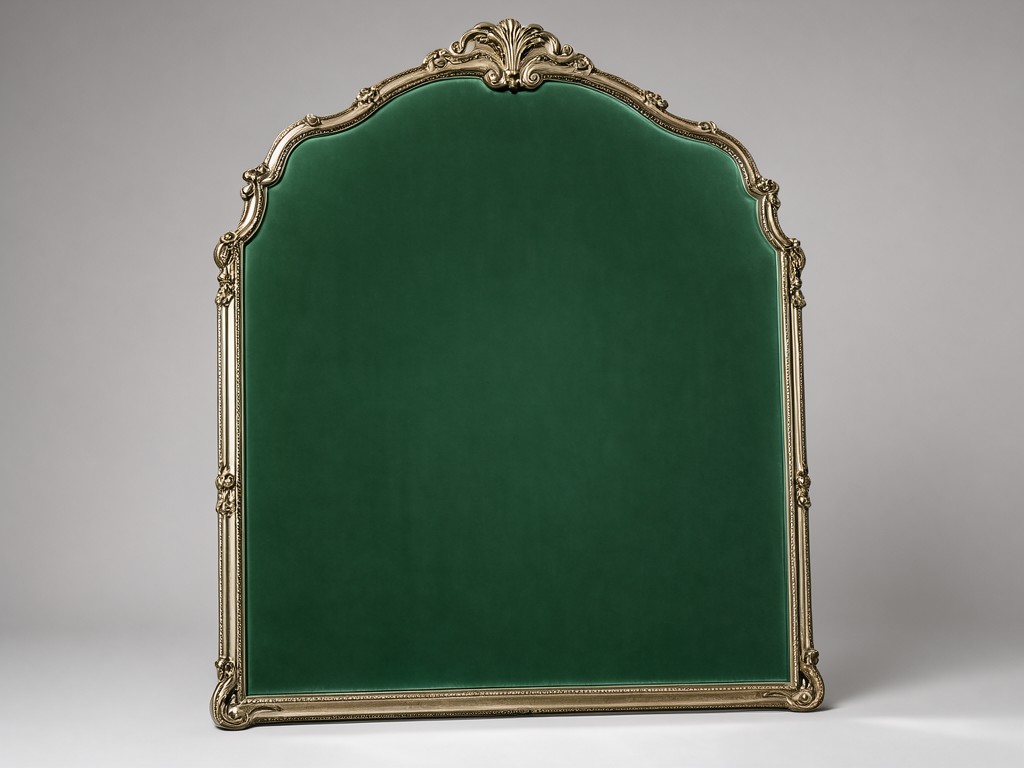
Color consistency in the green velvet is also constrained by dye-lot availability. Large orders require batch-tracking to avoid shade variations across multiple retail units. For OEM clients, we provide shade-matching reports to lock the specific hue before the production run.
Option Comparison by Usage Level
Retail Grade
- 4mm glass weight reduction
- 250 GSM standard velvet
- Standard MDF frame
- Basic D-ring hardware
Hospitality Grade
- 6mm high-clarity glass
- 350 GSM heavy-duty velvet
- Solid wood reinforced frame
- Reinforced French cleat mounting
Customisation Options and Their Limits
Customization is limited to fabric composition, frame geometry, and backing-material. However, changing the frame thickness beyond 25mm significantly increases the lead time due to the specialized tooling required for the upholstery-molding process.
We can offer custom dye-lots for specific branding, but this requires a minimum order of 500 units to offset the chemical setup costs for the dye vat.
Usage Scenarios and Buyer Segments
For residential decor, these mirrors serve as focal points where visual texture is the primary driver. In boutique hotel environments, the focus shifts to the resistance of the velvet against chemical cleaning agents and physical impact resistance.
Wholesale distributors typically utilize these mirrors for seasonal furniture rotations where cost-to-aesthetic ratio is the most critical metric.
Segment-Specific Requirements
Contract projects often require fire-retardant certifications for the velvet fabric. We provide FR-certified fabric options that meet local building safety codes without altering the hand-feel of the green textile.
OEM and ODM Programme Structure
Our OEM program allows for private-labeling on the rear backing board and custom hardware inserts. This ensures that the brand identity is maintained while leveraging the factory-direct efficiency of the velvet mirror production.
To discuss technical tolerances for your specific line, request a tooling review and sample specification.