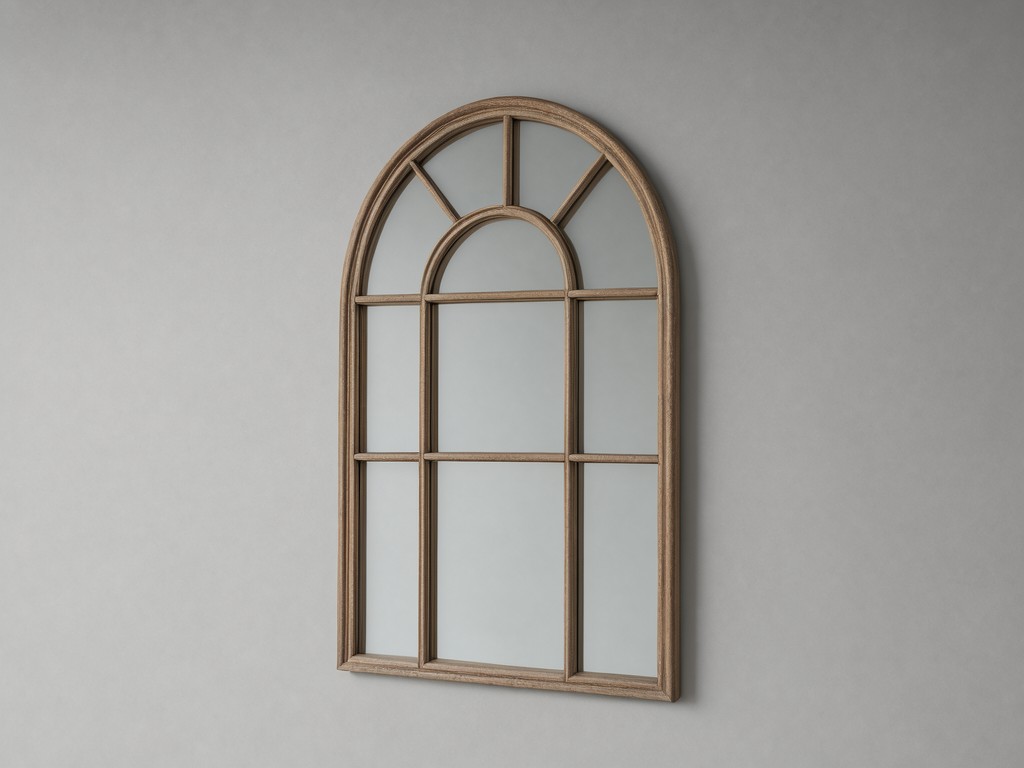
custom large decorative accent mirror manufacturer - Bulk Supply and Specification Guide
Construction Method and Its Effect on Consistency
| Parameter | Industrial Specification | Performance Impact |
|---|---|---|
| Glass Substrate | 4mm to 6mm Floated Glass | Prevents optical ripple in large spans. |
| Silvering Agent | Copper-free vacuum silvering | Eliminates oxidation in high-humidity zones. |
| Backing Material | Double-layered PVC film | Protects edges from moisture ingress. |
| Edge Profile | Machine-polished flat-beveled | Increases structural integrity at corners. |
Large-format mirrors are prone to thermal expansion if the glass thickness is insufficient. Using thin 4mm glass reduces shipping weight but increases the risk of surface distortion under its own mass. Select 6mm tempered glass for spans exceeding 2 meters to maintain planar flatness.
The bonding method between the glass and the frame determines the long-term failure rate of the unit. Standard adhesives often fail under seasonal temperature shifts, leading to edge delamination or cracking. Mechanical fastening with silicone-buffered gaskets ensures the glass can expand without stress-induced fractures fractures.
Where This Product Beats Standard Alternatives
Standard Mass-Market Units
- Single-layer silvering prone to rapid black spotting.
- Adhesive-only frame mounting causing warping over time.
- Standardized sizes with high optical distortion.
Industrial-Grade Production
- Copper-free silvering for 10+ year corrosion resistance.
- Mechanical-locking frame systems for dimensional stability.
- Precision-cut tolerances for zero-ripple reflection.

Mass-produced mirrors often utilize low-grade backings that react with atmospheric moisture. This results in visible edge-start "de-silvering" within eighteen months of installation. Our process utilizes a vacuum-sealed moisture barrier to maintain a consistent reflective index across the entire surface.
Size, Weight and Specification Range
Dimensional tolerances are critical when calculating the mounting hardware for heavy accent pieces. A 2000mm x 1000mm mirror can exceed 40kg, requiring specialized heavy-duty cleat systems. Specify the load-bearing requirements during the tooling phase to prevent catastrophic wall-mount shear failure.
Weight-to-thickness ratios vary based on the frame material chosen. Aluminum extrusions offer the highest structural strength-to-weight ratio, while solid wood frames provide higher thermal mass. Choose aluminum for high-traffic environments where impact resistance is a primary concern.
Requirements by Buyer Segment
Retail buyers prioritize the aesthetic finish and ease of installation for the end-consumer. This necessitates pre-beveled edges and integrated hanging hardware that does not require on-site modification. Prioritize shatter-resistant coatings to reduce return rates at the retail level.
Wholesale distributors focus on batch uniformity and transit-durability. Standardized palletization with reinforced foam inserts is mandatory to maintain low breakage rates during cross-ocean shipping. Implement batch-traceability to ensure color-matching consistency across multiple purchase orders.
Quality Control and Batch Consistency
| Test Method | Acceptance Criteria |
|---|---|
| Salt Spray Test (48h) | No visible pitting or oxidation. |
| Dimensional Check | +/- 1.5mm variance of master template. |
| Jod Impact Test | No surface fractures or delamination. |
Consistency across large orders is maintained through rigorous calibration of the silvering bath temperature. Variations in chemical concentration can lead to slight tint shifts between different production runs. We monitor ion levels hourly to ensure that every unit in a bulk shipment matches the approved master sample.
Capacity, Tooling and Scheduling
Manufacturing lead times are primarily dictated by the complexity of the frame profile tooling. Custom-extrusions require dedicated die fabrication, which adds 3-4 weeks to the initial production cycle. Standardized profiles allow for rapid-turn deployment for high-volume wholesale contracts.
Production capacity is limited by the surface area of the tempering furnaces. Large-scale projects require a phased scheduling approach to ensure uniform heat treatment across the entire batch. Schedule orders 60 days in advance to secure slotting in the glass-processing line.
Ready to review your technical specifications?
Request a tooling review and bulk quote