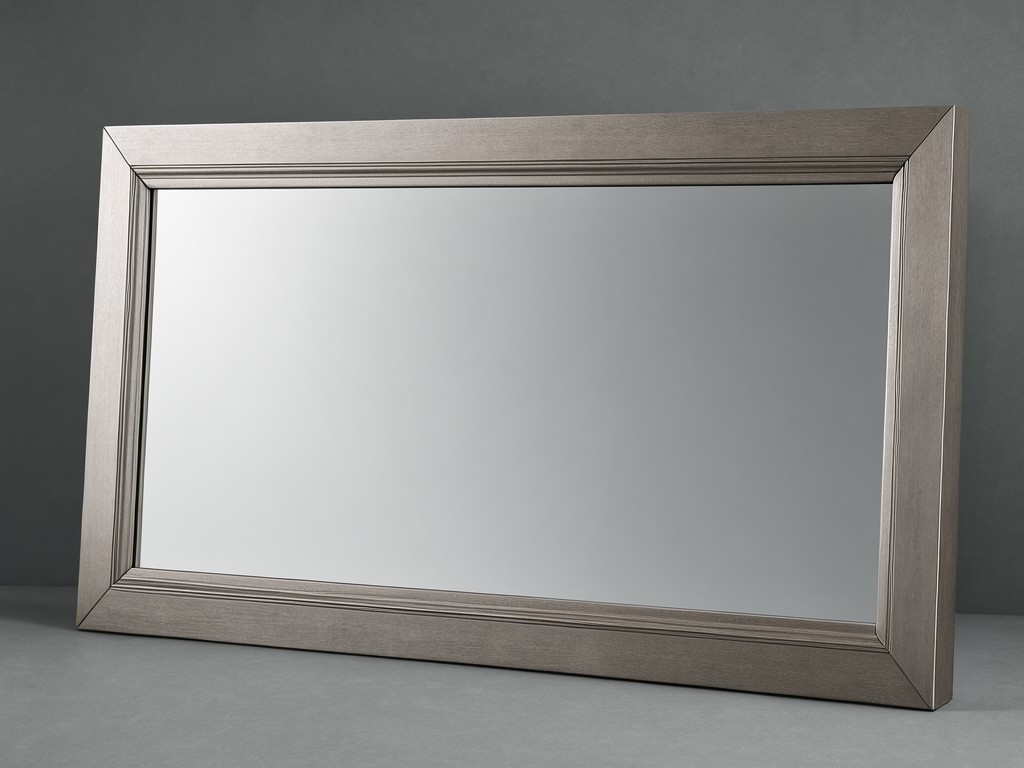
Custom Dining Room Accent Wall Mirror Company - Bulk Supply and Specification Guide
Moving from sample orders to container loads changes the focus from aesthetic appeal to structural integrity and transit survival. When scaling production for global distribution, the primary failure modes involve silvering oxidation at the edges and frame delamination caused by humidity fluctuations in dining environments. Distributors require units that utilize copper-free silvering to prevent the black spotting commonly seen in lower-grade mirrors exposed to varied climates.
Technical Specification Note
Large-scale mirror production demands precise glass-to-frame ratios. A 6mm glass substrate reduces optical distortion in large spans compared to 4mm alternatives, though it increases freight costs and requires heavy-duty mounting hardware.
Materials and Construction Trade-offs
Selection of backing material directly dictates the long-term flatness of the mirror. Medium Density Fiberboard (MDF) offers a consistent surface but remains prone to warping if the moisture-resistant coating fails during transit. Solid wood backing or plywood provides superior dimensional stability in high-humidity regions but increases the unit cost significantly. For high-volume retail contracts, moisture-resistant MDF with a PVC edge band balances cost-efficiency with environmental resistance.
Frame materials present a trade-off between weight and perceived value. Aluminum extrusion profiles offer high strength-to-weight ratios and corrosion resistance but lack the tactile quality of wood. Solid wood frames require specialized joinery like domined joints to prevent splitting during seasonal temperature changes. Relying solely on adhesive for frame-to-glass attachment often leads to failure as materials expand and contract at different rates.
How It Is Built and What That Changes
The edge-treatment method determines the final finish quality and durability. Flat-polished edges are cost-effective but leave the raw glass edge vulnerable to impact. Beveled edges provide a premium aesthetic but increase the cycle time per unit due to the multi-stage grinding process. The manufacturing sequence involves CNC-controlled cutting to ensure uniform bevel angles across the entire batch, which is critical for matching sets in large dining configurations.
Mechanical fasteners replace simple glue lines in high-grade custom orders. Using Z-clips or mechanical tension clips allows the glass to move independently within the frame. This design flexibility reduces the rate of stress-cracking caused by thermal shifts, which is a common point of warranty claims for large-format accent mirrors.
Comparing Two Standard Configurations
| Inspection Parameter | Standard Retail Grade | Premium Hospitality Grade |
|---|---|---|
| Surface Flatness | Tolerance ±2mm over 1m | Tolerance ±0.5mm over 1m |
| Edge Oxidation Resistance | Standard silvering | Copper-free silvering |
| Frame Attachment | Adhesive-only | Mechanical clips + adhesive |
| Impact Resistance | 1kg drop test (1m) | Tempered glass option |
How to Choose Before Requesting a Quote
- Identify the installation environment:
- High-humidity kitchens or coastal areas require copper-free glassing to prevent premature edge corrosion.
- Dry interior residential allows for standard silvering to optimize unit price.
- Determine the span dimensions:
- Spans exceeding 2000mm require 6mm thickness to prevent optical bowing and distortion.
- Smaller accent pieces can utilize 4mm glass to reduce weight and shipping surcharges.
- Select the frame mounting strategy:
- High-turnover commercial projects benefit from mechanical clips that allow easy glass replacement.
- Standard retail orders often utilize permanent adhesive for a slimmer, seamless profile.
Segment-Specific Requirements
Hospitality-grade mirrors prioritize impact resistance and ease of cleaning. These units often feature safety-backed glass to prevent shattering upon impact in high-traffic dining areas. Residential-focused lines focus on visual variety, such as intricate beveled patterns and varied wood finishes. For bulk distributors, the consistency of the frame finish across batches is the most critical metric for maintaining brand integrity online.
Capacity, Tooling and Scheduling
Tooling amortization is the primary driver of unit cost in custom orders. Unique frame profiles require dedicated CNC jigs or injection molds, which introduce costs typically amortized over orders exceeding 500 units. Standard profile frames utilize existing extrusions, allowing for lead times of 30-45 days. Custom-shaped glass cuts require a 60-90 day window to account for initial template development and testing of the glass-cutting software.
Setup, Use and Replacement
Maintenance of large-format mirrors requires non-abrasive cleaners to protect the silvering layer. Even minor micro-abrasions can lead to clouding over time. Replacement parts are simplified when mechanical mounting is used, allowing the distributor to swap the glass without destroying the frame assembly. We provide heavy-duty French cleats for all mirrors over 15kg to ensure secure load distribution.







