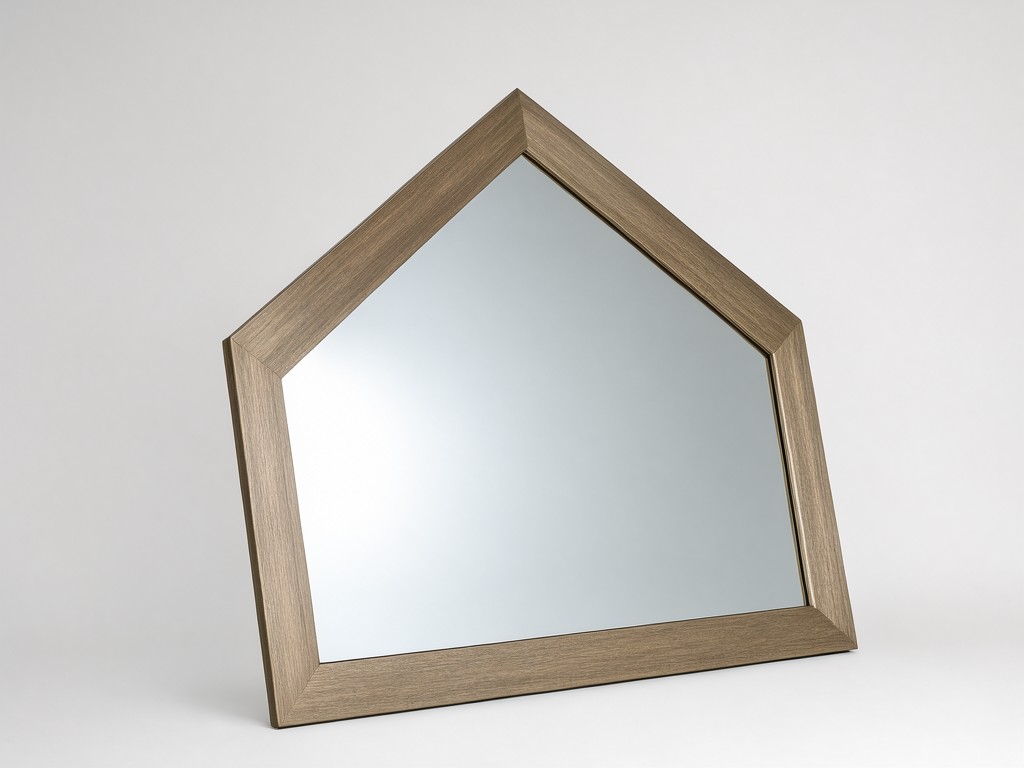
Custom beautiful contemporary entryway mirror Supplier: Specification, Ordering and Quality Notes
Selection trade-off: Thicker glass and copper-free backing raise the unit price but cut silver-edge corrosion and warranty claims; a lighter frame eases wall mounting but shifts more load to the fixing hardware. Quote frame material and backing type together, not glass thickness alone.
The Problem Buyers Keep Paying For
Before comparing quotations, check what the previous batch failed on. Most entryway mirror returns trace back to silver-edge corrosion, frame joint separation, or packaging shock rather than the glass itself.
Two suppliers quoting the same specification can land very different total cost of ownership. One factory may use a standard silvered backing with a paint coat that lifts after six months in a heated hallway; another may skip the safety film and rely on the frame edge to contain a break. Unit price and service life diverge because the failure modes are invisible at sample approval and show up only after wall installation or repeated handling in distribution.
What the Design Has to Balance
A contemporary entryway mirror has to hold a flat reflective plane while supporting its own weight on a wall cleat or D-ring. Glass thickness drives both optical stiffness and dead weight. Four millimetre glass suits smaller decorative pieces under 600 mm; six millimetre is the practical floor for full-length units over 1 600 mm. Frame choice changes the centre of gravity, with solid timber moving mass toward the perimeter and aluminum keeping the balance closer to the glass.
How It Performs in Use
Light passes through the glass substrate and reflects off the metalized layer at the back. Performance limits are set by backing adhesion and edge seal. In use, the mirror faces humidity from adjacent bathrooms or entryway condensation, mechanical shock during move-in, and cleaning chemicals at the edges. Black edge corrosion starts where the silver layer meets moisture at a cut or drilled hole; delamination of the backing appears as cloudy patches near the frame rebate. Optical bowing shows up as a distorted reflection in full-length panels when the frame pulls unevenly on the glass.
How to Choose Before Requesting a Quote
Specify backing, glass thickness, frame material, edge finish, and safety film as a single package rather than asking for a generic mirror price.
| Specification | Options | Effect on unit cost and service life |
|---|---|---|
| Glass thickness | 4 mm, 5 mm, 6 mm float glass | 4 mm keeps freight weight down but bows above 800 mm height; 6 mm adds roughly 15 kg/m² and resists deflection in floor-standing sizes. |
| Reflective backing | Standard silver, copper-free lead-free | Standard silver costs less but develops black edge in humid halls; copper-free backing doubles corrosion resistance at a 12–18 % price premium. |
| Frame material | MDF veneer, solid timber, aluminum extrusion | MDF holds paint and keeps weight moderate; solid timber increases dead load and joint stress; aluminum is lightest but needs a deeper rebate for secure glass retention. |
| Edge finish | Flat polish, pencil polish, bevel | Bevel adds decorative depth and a 3–5 mm thickness step that complicates frame seating; flat polish is the default for rebated frames. |
| Safety backing | None, vinyl safety film | Film holds fragments if the glass breaks and is required for some retail and hospitality specs; it adds a thin visible layer at the rear and slight cost. |
| Mounting hardware | D-rings, wall cleat, French cleat | D-rings suit lighter MDF frames; cleat systems distribute weight over two wall points and reduce torque on any single fixing. |
Request a sealed sample for the exact size and backing combination before releasing the PO; batch consistency on silver adhesion and frame squareness is what separates a reorder from a return wave.
Who Uses It and Where It Matters
Retail buyers place these mirrors in bedroom and hallway sets where the finish must match adjacent console tables within a single season. Distributors move full pallets through regional warehouses, so carton stacking strength and corner protection determine whether the product arrives sellable. Private-label buyers need batch traceability on the backing lot and frame finish so a warranty claim can be tied to a production run, not written off as supplier variance.
Segment-Specific Requirements
The retail segment cares about shelf-ready packaging, UPC labelling, and a damage rate under 2 % at store level. Distributors need export-grade cartons, interlayer foam, and pallet configurations that survive container vibration without glass shift. Private-label buyers require approved artwork on the backing paint, a signed-off sample for frame colour, and inspection reports on silver adhesion and frame squareness before each shipment. Total cost of ownership here means warranty claims and returns measured against the unit price quote.
Ready to discuss your entryway mirror specification? Send your drawing or sample requirements for a project-discussion quote.







