China Elegant Entryway Hallway Mirror B2B Supplier: Specification, Ordering and Quality Notes
Moving from sample orders to container loads requires a shift from aesthetic focus to structural consistency and shipping logistics. For a distributor managing a retail launch, the primary concern is the breakage rate during transit and the reliability of the silvering process under high-volume production. Ensuring that each unit maintains the same dimensional tolerances across a batch prevents returns and protects the retail brand reputation.
What the Design Has to Balance
Large entryway mirrors often face a conflict between visual weight and load-bearing on wall hardware. A thinner frame reduces the freight cost per unit but increases the stress on the glass-edge points when the unit is bumped during installation. Designers must weigh the thickness of the glass against the tensile strength of the frame to prevent warping over years of seasonal temperature changes in indoor environments.
Structural Integrity Note
The ratio of glass surface area to frame width determines the center of gravity. A wider frame provides stability but increases the risk of misalignment if the mounting is not perfectly level.
How It Performs in Use
High-traffic hallways expose mirrors to frequent cleaning with potentially alkaline-based solutions. Low-grade silvering develops black oxidation spots at the edges when exposed to humidity or harsh cleaning agents. Using a moisture-resistant backing prevents this degradation, which maintains the optical clarity over several years of commercial use in residential or hospitality sectors.
Material Options and Their Trade-offs
- If the market demands high-humidity resistance:
- Select MDF-based frames to prevent swelling from moisture.
- This increases the unit weight compared to solid wood alternatives.
- If the priority is premium safety de-market retail:
- Utilize 5mm tempered glass.
- This raises the unit cost but significantly increases impact resistance and safety.
- If cost-efficiency is the primary driver:
- Use 4mm clear glass.
- This lowers shipping costs but limits the size to smaller entryway dimensions.
How It Is Built and What That Changes
The assembly method dictates the longevity of the joints. Mitered joints reinforced with mechanical fasteners provide more stability than simple adhesive-only bonds, which fail under thermal expansion and contraction. The choice of mounting hardware—from French cleats to heavy-duty D rings—determines the maximum allowable weight the buyer can safely install on standard drywall types.
Size, Weight and Specification Range
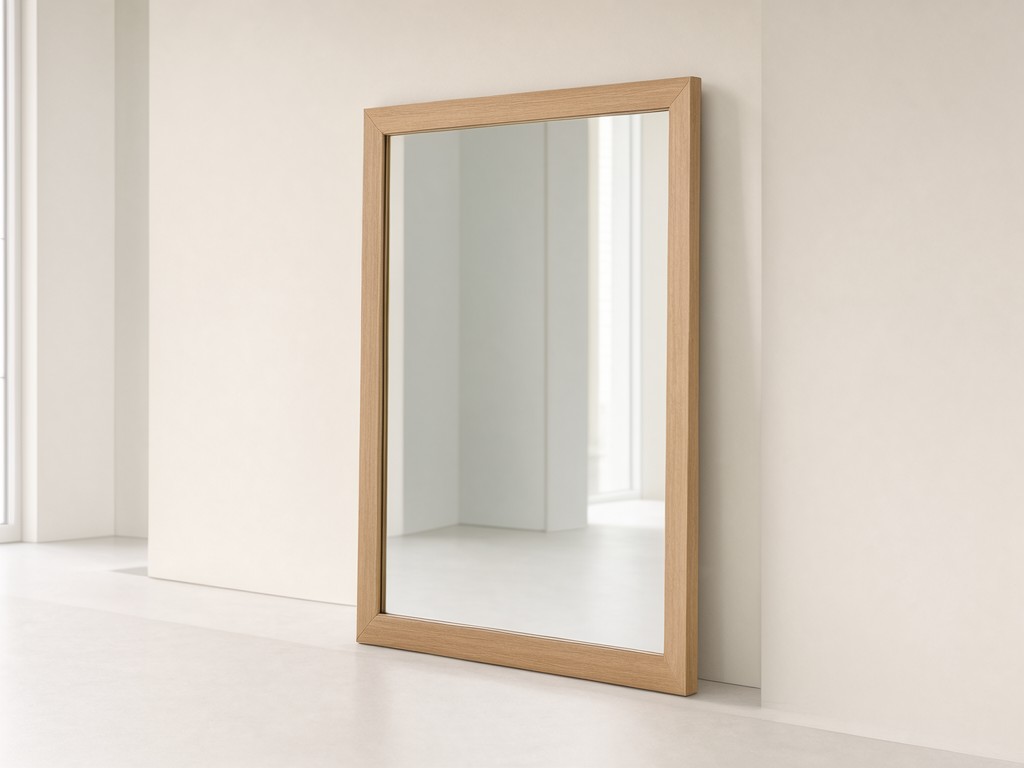
Standard sizes typically range from 40x60cm to full-length wall panels exceeding 200cm in height. Weight varies significantly based on frame density; a solid oak frame will weigh 40% more than a hollow-core alternative of the same dimensions. Procurement officers must account for this weight when calculating pallet loads for 40ft containers to avoid de-stacking fees or shipping over-weight surcharges.
What Can Be Customised and What Cannot
Custom frame finishes and logo embossing allow for brand-specific de-branding. However, the glass thickness is usually fixed by the production line capacity to maintain quality control standards. Requesting non-standard glass thicknesses often results in lead-time increases due to specialized tempering oven requirements.
Inspection Items and Test Methods
| Test Parameter | Method | Acceptance Criteria |
|---|---|---|
| Optical Clarity | Visual inspection under 500 lux light | No distortion, bubbles, or oxidation spots |
| Edge Flatness | Square gauge measurement | Deviation ±0.5mm over 1m length |
| Finish Corrosion | Salt spray chamber (metal frames) | No visible rust or paint peeling after 48h |
| Impact Resistance | Drop test from 1m onto hard surface | No fractures or silvering failure |
Ready to secure your inventory for the next season?
Request a sample and technical quote