best price window style wall accent factory - Bulk Supply and Specification Guide
Material choice starts with the conditions the product will meet. For window-style accent mirrors, the stability of the glass silvering determines the lifespan of the unit in high-humidity residential environments. Low-grade silvering often lacks the copper-based protective layers required to prevent the common back-side oxidation that manifests as black spots along the edges within 24 months.
The Problem Buyers Keep Paying For
Procurement officers often encounter hidden costs through lot-to-lot dimensional drift in frame profiles. When the frame width varies by more than 1.5mm between production runs, the window-pane inserts fail to align during the final assembly stage. This inconsistency leads to high return rates at the retail level and increased labor costs for end-users.
Another failure mode involves the delamination of the MDF backing from the mirror surface. In climates with fluctuating temperatures, the backing expands at a different rate than the glass, causing the adhesive bond to shear. Factories that utilize standard solvent-based adhesives instead of moisture-resistant polyurethues mitigate this specific structural failure.
| Usage Condition | Typical Complaint | Specification Prevention |
|---|---|---|
| High-humidity Bathrooms | Black-edge oxidation (spots) | Copper-doped silvering coating |
| Commercial Gym Exposure | Frame warping or rust | Extruded aluminum frames |
| Retail Display Assembly | Pane misalignment | ±0.5mm dimensional tolerance |
What Actually Determines Performance
Optical Clarity and Frame Rigidity
Construction options diverge as soon as weight matters. While injection-molded PVC frames offer a lower price point, they lack the rigidity required for large-format mirrors without bowing. Extruded aluminum profiles ensure that the window-pane geometry remains flat, preventing the funnel effect seen in cheaper plastic installations.
Surface Treatment and Paint Adhesion
The finish applied to the frame dictates its resistance to impact and chemical cleaning. Powder coating with a pre-treatment of conversion coating provides a mechanical bond that standard spray-painted finishes cannot match. This is critical for mirrors intended for high-traffic hospitality sectors where frequent cleaning with alkaline agents is standard.
How It Is Built and What That Changes
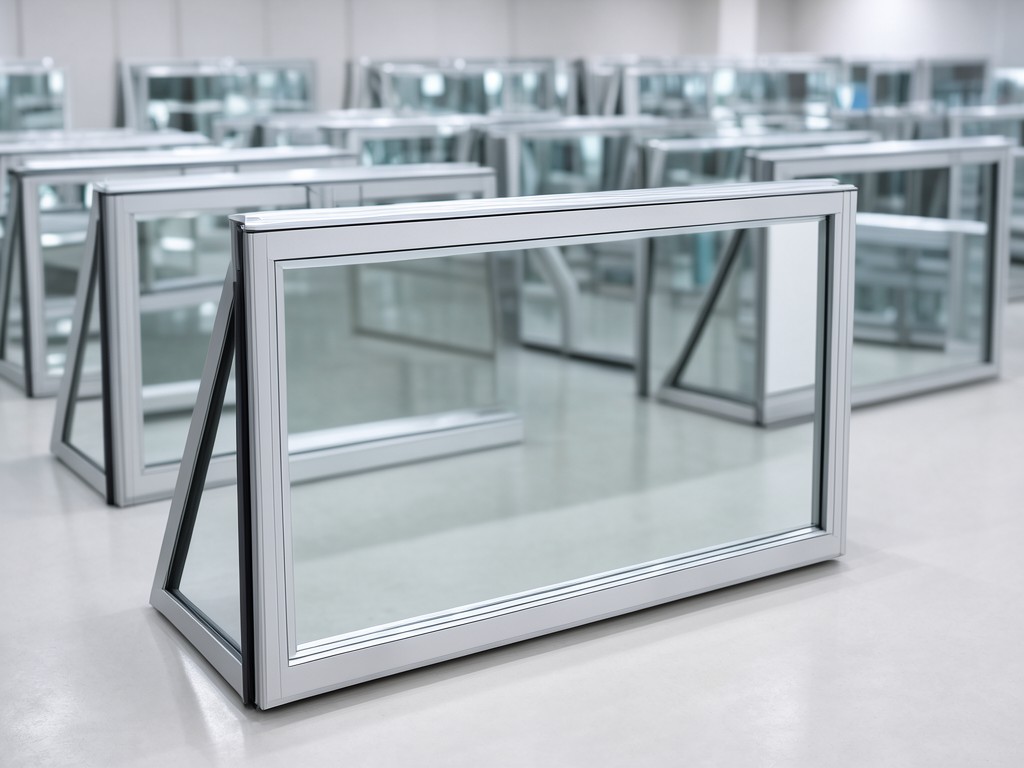
Where chlorine, sweat or UV exposure is routine, the manufacturing process begins with the precision cutting of float glass. The silvering process then occurs in a vacuum chamber to ensure the metallic layer is applied with a uniform thickness. This prevents the microscopic voids that lead to peeling over long-term UV exposure.
- CNC-routed frame channels ensure the window-pane dividers sit flush against the glass surface.
- Mechanical fasteners replace glue in high-end models to prevent thermal expansion failure.
- Double-sided acrylic tape provides a shock buffer between the glass and the frame.
Usage Scenarios and Buyer Segments
Retail and Boutique
Distributors serving the home decor market prioritize aesthetic variety and lightweight frames. The focus here is on edge-finish quality and ease of installation for DIY-oriented consumers.
Hospitality and Commercial
Procurement officers for hotels require durability-grade specifications. Aluminum frames and impact-resistant silvering are mandatory to withstand commercial cleaning cycles and accidental impacts.
Volume Planning and Lead Time
| Order Volume | Standard Lead Time | Customization Options |
|---|---|---|
| 50-200 Units | 14-21 Days | Standard frame colors |
| 500+ Units | 30-45 Days | Custom extrusion & bespoke sizing |







