b2b large decorative sunburst wall mirror supplier - Bulk Supply and Specification Guide
What This Product Is and Where It Fits
Unit price and service life diverge when sourcing sunburst mirrors at scale. These units consist of a central silvered glass surrounded by radiating "rays" typically constructed from wood, metal, or MDF. For distributors and hospitality procurement officers, the product serves as a focal point in high-volume interior projects where visual impact determines perceived property value.
Retail chains often utilize these mirrors to anchor entryway spaces in hotel corridors or high-traffic zones. The structural complexity of the ray configuration dictates the assembly time and, in turn, influences the final landed cost per unit. A private-label buyer must evaluate the weight-to-volume ratio to ensure shipping costs do not erode the target retail price point.
Design Constraints Behind the Specification
Material selection trade-offs
MDF frames reduce material costs while solid hardwood increases structural rigidity and resistance to warping in environments with fluctuating humidity. Metal rays offer thinner profiles but require precision powder coating to prevent oxidation over a 5-year service life cycle.The attachment method for the rays is a primary failure point in budget decorative mirrors. If the rays are only glued to the backing, thermal expansion can cause the adhesive to fail. High-grade specifications utilize mechanical fasteners or high-shear-strength industrial adhesives to ensure the geometry remains symmetrical during transit and installation.
Glass thickness directly impacts the safety profile and shipping weight. While 4mm glass is standard for smaller units, 5mm or tempered options are often required for large-format sunbursts to mitigate catastrophic breakage risks in commercial settings.
Segment-Specific Requirements
Market demands vary based on the intended environment. Commercial-grade mirrors prioritize durability and impact resistance, whereas residential units prioritize lightweight construction and aesthetic finish.
| Size Category | Typical Material | Weight Range (kg) |
|---|---|---|
| Accent (40-60cm) | MDF / Plastic rays | 1.5 - 4.0 kg |
| Standard (60-100cm) | Polywood / Metal | 5.0 - 12.0 kg |
| Statement (100cm+) | Solid Wood / Cast Metal | 15.0 - 35.0+ kg |
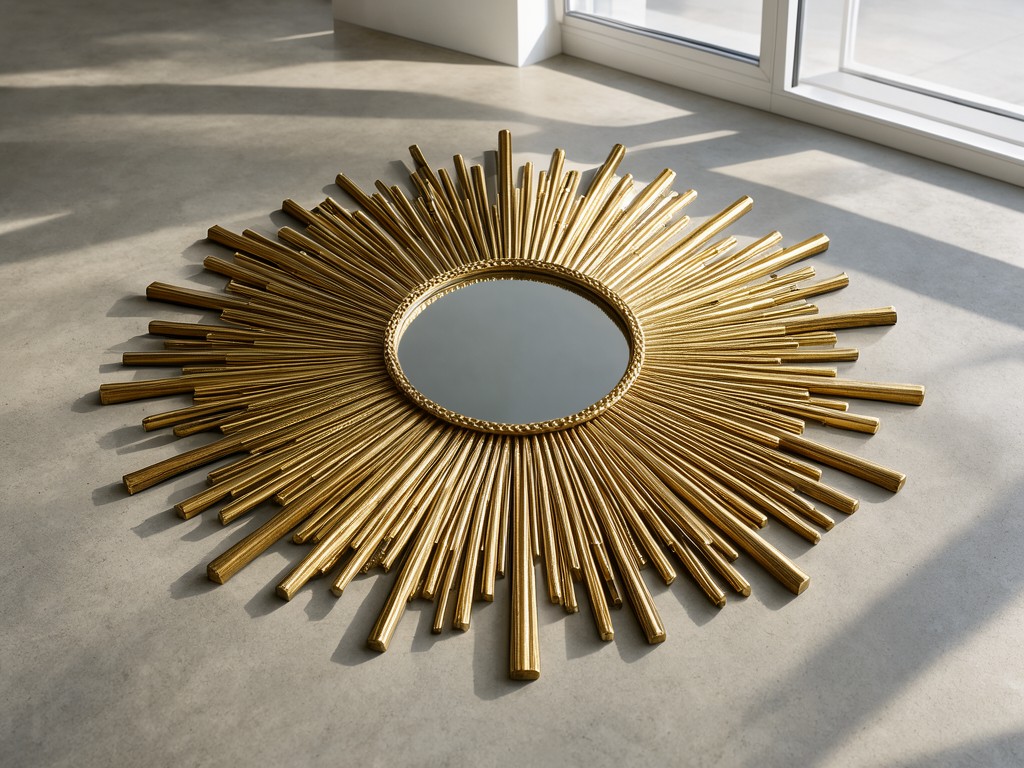
Large orders for hospitality projects require reinforced hardware. Standard D-rings often fail for mirrors exceeding 20kg; procurement should specify dual-point mounting or integrated French cle systems to prevent wall-mount shear failure.
Inspection Items and Test Methods
Quality control at the factory level focuses on the silvering integrity and the mechanical stability of the rays. The following parameters ensure the batch meets the technical agreement:
| Usage Condition | Potential Failure | Preventive Spec |
|---|---|---|
| High Humidity | Frame warping/molding | Sealed MDF or moisture-resistant hardwood |
| Impact transport | Glass shattering | 5mm glass with vibration-stabilized backing |
| Long-term hanging | Hardware pull failure | Reinforced D-ring brackets or French cleat |
Lead times for bulk orders depend on the complexity of the ray finish. Hand-applied leaf finishes require 45-60 days, whereas standard powder-coated metal frames can be produced in 30-35 days for MOQs of 200 units.
Setup, Use and Replacement Parts
Installation of large sunburst mirrors requires precise load-bearing calculations for the wall surface. Because the sunburst's center of gravity may be offset from the geometric center, the mounting hardware must be perfectly leveled to prevent tilting over time.
Maintenance is limited to avoiding ammonia-based cleaners, which chemically react with the mirror silvering and lead to black oxidation at the edges. For private-label brands, providing a microfiber cloth and specific pH-neutral cleaning instructions in the packaging can reduce warranty claims related to surface damage.
Review full technical specifications and request a production quote.






