wholesale wood and metal arched wall mirror supplier: What Buyers Should Check Before Ordering
The Structural Trade-off
The primary cost driver in arched mirrors is the ratio of frame weight to dimensional stability. While MDF-based frames offer a flat substrate for complex moulding, they risk edge swelling if environmental humidity exceeds 65% RH. Conversely, extruded aluminum provides high rigidity with lower shipping weight but increases the unit price due to tooling for custom profiles.
Scope of Supply and Physical Form
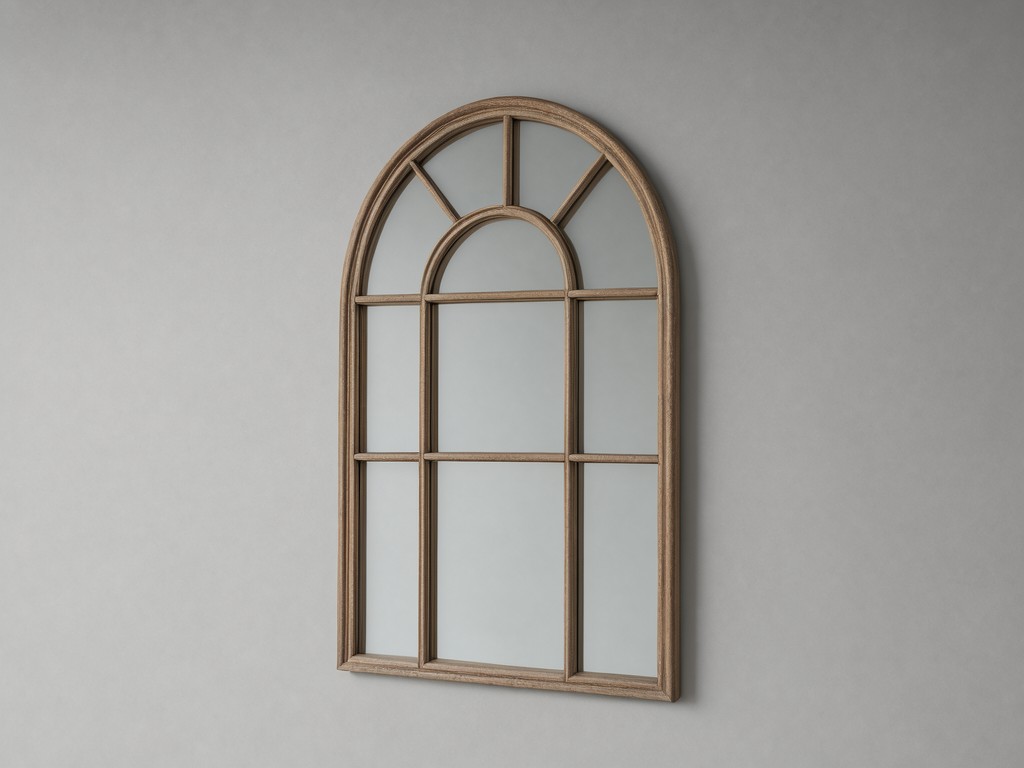
Arched mirrors require specific geometric precision to ensure the radius remains consistent across the top span. Our production line covers semi-circle arches, elongated "cat" arches, and rounded corners. The frame depth typically ranges from 20mm to 50mm, impacting the shadow gap created against the wall and the hardware mounting requirements.
Standard units utilize 4mm or 5mm silvered glass. For large-format mirrors exceeding 1200mm in height, 6mm glass is specified to prevent the optical distortion effect that occurs when thinner glass flexes under its own weight.
What the Design Has to Balance
The center of gravity shifts upward in arched designs compared to rectangular frames. This distribution affects the tension points at the curve, requiring the mounting hardware to distribute the load evenly to prevent leaning over time. If a frame uses a single central French-cleat, the torque on the top joints can lead to fatigue-related failure.
Visual weight is another factor for retail buyers. A thin 15mm metal frame creates a minimalist aesthetic but offers high tension, whereas a 40mm wood-look frame provides a more substantial presence in high-traffic environments like hospitality lobbies.
Material Options and Their Trade-offs
| Material | Primary Benefit | Failure Mode | Cost Profile |
|---|---|---|---|
| MDF / Composite | Flat surface for paint | Moisture swelling/delamination | Entry-level |
| Solid Wood | Structural durability | Joint expansion/cracking | Premium |
| Extruded Metal | Weight-to-strength ratio | Surface scratches/coating peel | Mid-range |
How It Is Built and What That Changes
Construction methods dictate the longevity of the mirror-frame bond. We utilize mechanical clips rather than adhesive-only mounting to allow the glass to expand and contract with temperature shifts. Adhesive-only methods often fail at the edges when mirrors experience thermal shock, leading to black spotting or oxidation of the silvering layer.
For metal frames, joints are MIG-welded and reinforced with internal brackets. This prevents the "racking" of the frame, which is a common complaint in low-grade- mass-produced arched units.
Size, Weight and Specification Range
| Category | Dimensions (mm) | Avg Weight (kg) | Glass Thickness |
|---|---|---|---|
| Accent Arch | 400 x 600 | 4-6kg | 4mm |
| Standard Floor | 600 x 1800 | 12-18kg | 5mm |
| Large Statement | 1000 x 2100 | 35kg+ | 6mm |
Who Uses It and Where It Matters
Retail buyers prioritize these units for residential entryway styling where the arch creates a focal point. In bathroom applications, the resistance of the silvering to moisture is the critical metric; here, we specify humidity-resistant coatings to prevent edge-start black rot.
Hospitality clients focus on the durability of the frame finish. High-traffic hotel corridors require powder-coated metals that can withstand aggressive cleaning agents without chipping or exposing the substrate metal.
OEM and ODM Structure
Customization is primarily limited to frame profile and finish selection. We offer bespoke RAL-matched powder coating for metal and various wood stains for solid frames. For high-volume orders, we can develop CNC-milled profiles to match specific retail brand aesthetics, though this requires an upfront tooling investment for the molds.
Export Packaging and Handling Protection
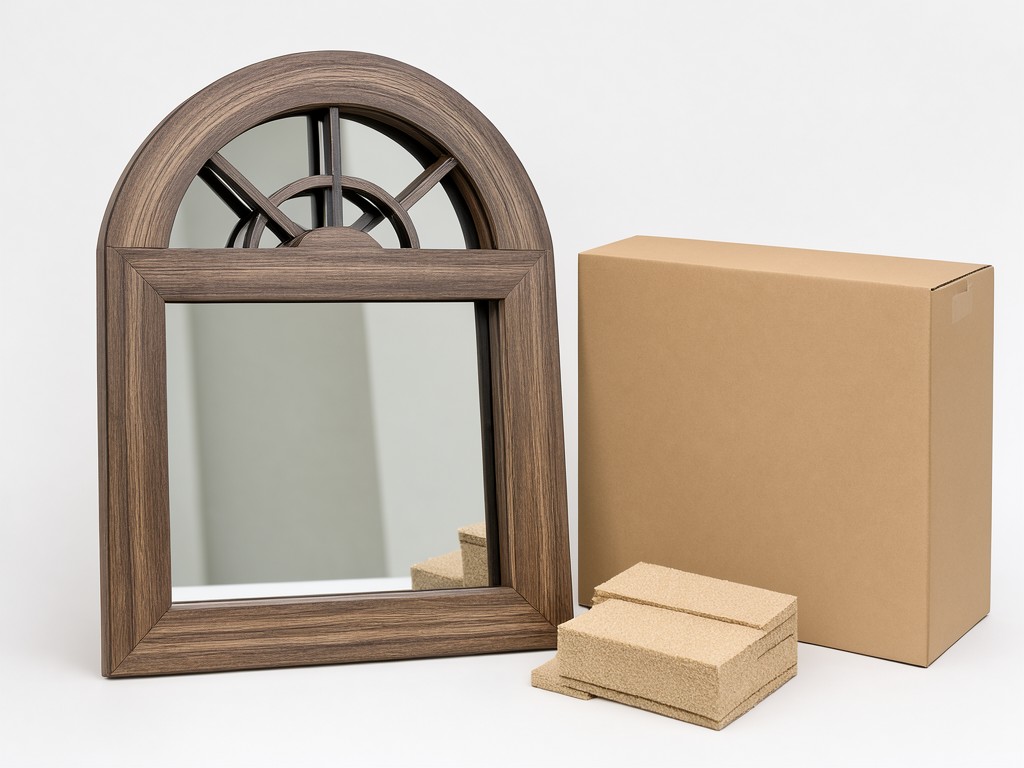
Glass breakage is the leading cause of returns in wholesale shipments. We utilize high-density foam inserts that provide a 50mm buffer on all edges. For international export, mirrors are packed in reinforced corrugated crates with internal bracing to prevent the frame from shifting during sea-fre transit.
Each unit is wrapped in protective PE-shrink film to prevent scratches on the frame surface during the compression process within the crate.
Request technical specifications or material samples for your inventory planning.
Inquire About Samples