oem vintage arched floor standing mirror factory: Specification, Ordering and Quality Notes
During a private-label launch with a fixed ship date, the primary challenge lies in the geometric precision of the arched frame across thousands of units. If the CNC routing for the arc deviates by more than 0.5mm, the glass experiences uneven mechanical stress, leading to hairline fractures during transit or structural failure over time. We utilize tension-stabilized cutting jigs to ensure the curvature remains consistent across the entire production run, preventing the optical distortion common in cheaper, manually curved surfaces.
Structural integrity depends on the frame-to-glass weight ratio and the reinforcement of the rear-stabilizing bracket assembly.
How It Is Built and What That Changes
Manufacturing begins with the selection of the substrate, typically either high-density fiberboard (HDF) for cost-efficiency or solid hardwoods for premium-tier retail lines. The choice of material directly dictates the final weight of the mirror and its stability profile; solid wood offers higher impact resistance but requires precise moisture control to prevent warping in high-humidity environments. Once the frame is carved and treated with an abrasion-resistant coating, the glass is bonded using a neutral-cure silicone adhesive that prevents the silvering from delaminating due to temperature fluctuations.
Customization Options Matrix
| Feature | Specification | Technical Impact |
|---|---|---|
| Frame Material | Solid Oak / Reinforced MDF / Metal Alloy | Affects weight load capacity and freight costs. |
| Glass Thickness | 5mm or 6mm Silvered | Reduces optical distortion and impact risk. |
| Finish Type | Electrostatic Leaf / Powder Coat | Determines resistance to abrasion and UV oxidation. |
Where This Product Beats Standard Alternatives
Mass-produced arched mirrors often utilize thin-gauge glass and hollow-core frames, which result in bowing under the weight of the glass itself. Our process employs a reinforced rear-channel mounting system that distributes the load across the entire perimeter of the arch. This prevents the "sagging" effect seen in lower-tier imports after only six to twelve months of floor display.
Technical Advantage: While standard mirrors use 4mm glass, our 5mm-6mm specification provides a 25% increase in flexural rigidity, ensuring the reflection remains perfectly flat even in large-format free-standing configurations.
Matching the Product to the Buyer's Need
Retail buyers must balance aesthetic appeal with the durability requirements of the end-user environment. For high-traffic commercial spaces, we recommend reinforced MDF frames with a multi-layer polyurethane coating to withstand scratches from cleaning equipment. Conversely, residential-focused brands where weight is not a concern benefit from solid wood construction, which offers a natural tactile quality that justifies a higher retail price point.
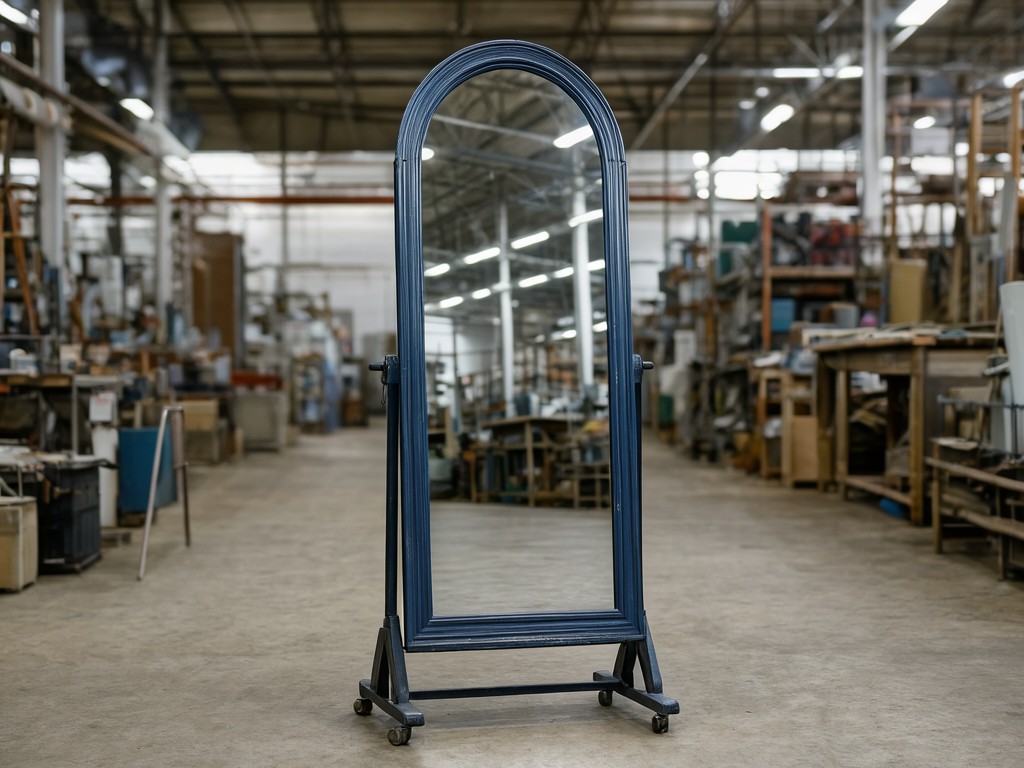
- Moisture-resistant backing is essential for mirrors intended for bathroom-adjacent hallways.
- Adjustable floor-feet hardware allows for leveling on uneven hardwood or tile flooring.
- Tempered glass options reduce the risk of catastrophic shards in child-oriented retail environments.
How Consistency Is Held Across Batches
Consistency is maintained through rigorous batch-testing of the silvering process and adhesive adhesion strength. Every production run undergoes a dimensional check to ensure the arch radius matches the master template within a ±0.2mm tolerance. We also monitor the color-matching Delta of the frame finishes to ensure that a reorder six months later matches the existing inventory of previous orders.
| Order Volume | MOQ | Lead Time | Tooling Note |
|---|---|---|---|
| Sample/Prototype | 1-5 units | 14-21 days | Manual jig setup. |
| Small Batch | 50-200 units | 30-45 days | Standard CNC molds. |
| Container Load | 500+ units | 60-75 days | Full-scale amortization. |
Setup, Use and Replacement Parts
Installation of floor-standing arched mirrors requires attention to the center of gravity to prevent tipping. Our units include a dual-point anti-tip bracket system that can be anchored to wall studs, ensuring safety in residential environments. For maintenance, the glass should be cleaned only with non-abrasive microfiber cloths and pH-neutral cleaners to avoid etching the surface of the silvered coating over time.
Ready to discuss technical specifications for your next mirror line?
Request Samples and Technical Quotes






