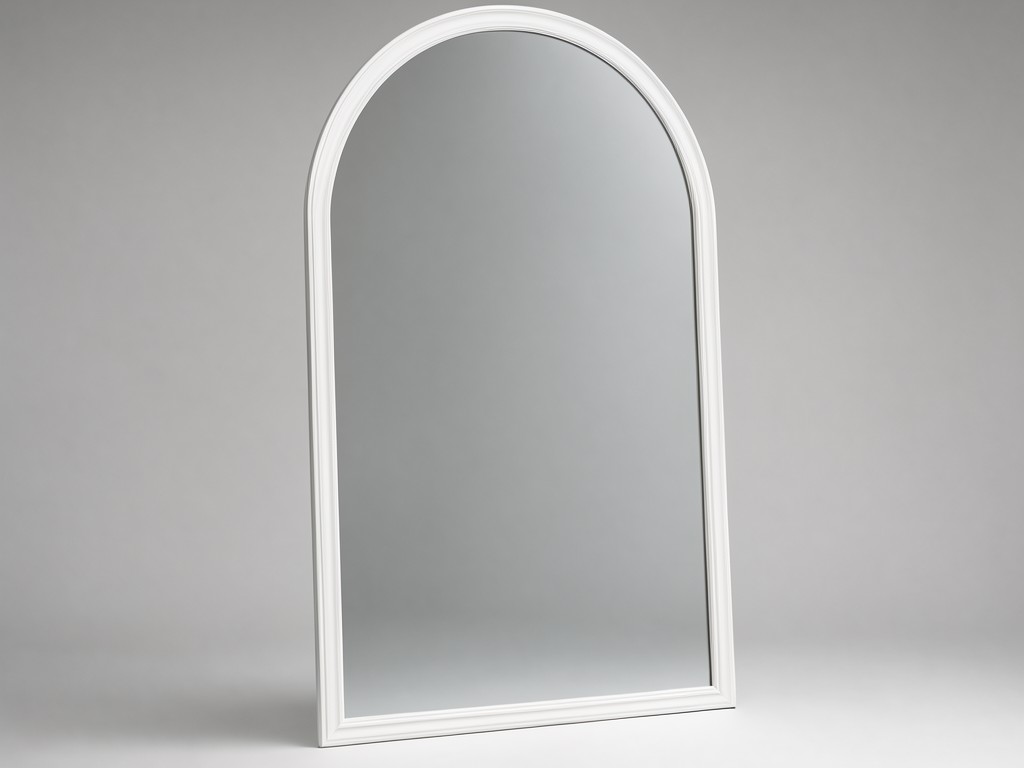
Specifying oem large arched window wall mirror factory for Wholesale and OEM Orders
Before comparing quotations, the buyer must confirm whether the quoted arch radius and glass thickness match the installation cleat or D-ring layout already specified in the fit-out package.
Two suppliers quoting the same specification can still deliver different field results if one line holds radius tolerance at plus or minus two millimetres and the other allows drift across a production run. For a large arched wall mirror, that drift shows up as mismatched pairs in a hotel corridor or a visible gap where the arch meets a rectangular surround. Unit price settles the question only after the buyer has priced the cost of rework, return freight, and lost installation time against the per-unit difference on the quote sheet.
Requirements by Buyer Segment
A hospitality buyer ordering fifty identical arched mirrors for guest bathrooms is not buying the same product as a furniture importer bringing in framed arched mirrors for retail display.
The hospitality segment prioritizes edge safety and silvering consistency because a mirror in a wet room fails by desilvering at the edge, not by frame warping. A retail importer cares about carton dimensions, pallet configuration, and whether the arch radius repeats across a container load so that retail display units line up. Contract fit-out buyers add a third requirement: mounting hardware placement must match architectural drawings within one millimetre, or the installer cannot hang the unit level.
Hospitality and Wet-Room Buyers
Priority: copper-free backing, edge sealant, and D-rings positioned to suit standard cleat heights. Failure mode: black edge migration within the first year in steam-heavy bathrooms.
Retail and Contract Importers
Priority: carton cube, pallet pattern, and radius repeatability across one hundred or more units. Failure mode: visible arch mismatch between adjacent units on a retail wall.
Working as a Production Partner, Not a Catalogue Supplier
A catalogue supplier ships what is in stock. An OEM partner adjusts glass thickness, backing type, edge finish, and hanging hardware to match the buyer's wall substrate and installation crew.
The trade-off is lead time. A standard silvered float glass unit with polished edges moves through the line faster than a copper-free, safety-backed arched mirror with custom D-ring placement. The latter costs more per unit and adds production days, but it avoids callback costs in high-humidity installations and reduces breakage during fit-out.
Tooling for the arch itself is a one-time cost that amortizes across repeat orders. The template must be signed off before the first production run because re-cutting an arch mid-batch scrapes the glass edge.
A buyer switching sources should ask whether the new factory can cut the arch from a template matching the original radius, or whether a new template must be cut and approved before production starts.
For template and backing review, contact our engineering team before tooling is committed.
Volume Planning and Lead Time
Lead time moves with order tier because the arch cut, silvering line, and drying oven each have fixed cycle times. A pilot order of twenty units clears the line in weeks, while a container load requires batch scheduling across the silvering oven and packing station.
| Mirror Build | Glass Thickness | Edge Finish | Backing Type | Typical Field Failure Avoided |
|---|---|---|---|---|
| Standard wall mirror | 4 mm float glass | Polished | Conventional silver | Edge desilvering in dry interiors |
| Bathroom arched mirror | 5 mm float glass | Polished and sealed | Copper-free silver | Black edge migration in humid rooms |
| High-traffic hospitality mirror | 6 mm tempered glass | Polished with safety film | Safety-backed silver | Fragment risk on impact |
Lot-to-lot consistency is the hidden variable in reorder pricing. If the first shipment holds radius at plus or minus two millimetres but the second drifts to plus or minus five, the buyer pays for installer callbacks and retail display rejection, not just glass replacement.
Export Packaging and Handling Protection
Large arched mirrors fail in transit at the corners and along the silvered edge, not in the centre of the glass. Packaging must therefore protect the most vulnerable geometry before it protects the pallet.
| Usage Condition | Typical Field Failure | Factory Specification That Prevents It |
|---|---|---|
| Long-haul sea freight, palletized | Corner chipping and silver scratching | EPE foam corner guards, interleaving paper, carton edge protectors, banded pallet |
| Hotel bathroom, high humidity | Desilvering at cut edge, black spot growth | Copper-free silver backing, sealed edge paint, moisture barrier |
| Contract fit-out, cleat mounting | Crooked hang, D-ring misalignment | D-ring position tolerance plus or minus one millimetre from top edge, placement jig |
| Retail display, repeated handling | Face scuffs, frame finish wear | Shrink-wrap over face, protective corner cardboard, upright packing |
Carton dimensions and pallet configuration are quoted per order because an arched mirror cannot be stacked flat like a rectangular sheet.
Questions Buyers Ask Before Ordering
Can the arch radius be matched across an order of one hundred units?
Yes, provided the factory cuts from a fixed template and checks radius on every tenth unit. Tolerance is typically plus or minus two millimetres on standard production and plus or minus one point five millimetres on a matched-pair order.
What glass thickness should I specify for a wall mirror over two metres tall?
Five millimetre float glass is the baseline for wall-hung mirrors of that size. Six millimetre tempered glass is specified where the mirror sits above a bed, in a gym, or in any location where impact risk changes the failure mode from cosmetic chip to safety incident.
Is copper-free backing worth the added cost?
It is worth the cost in bathrooms, steam rooms, and any exterior-adjacent wall where condensation reaches the silver layer. Conventional silver backing shows black edge migration within twelve to eighteen months in those conditions; copper-free backing delays it materially.
How are D-ring or cleat positions controlled?
Position is set with a jig and checked against the top edge of the arch.
What is the MOQ for a custom arched mirror with OEM branding on the backing?
Minimum order quantity depends on glass thickness and backing type, usually starting at fifty units for a custom arch template. Smaller quantities are possible at sample pricing, but the per-unit cost does not drop until the batch covers the oven cycle.
Ready to compare a second source? Send your current specification, annual volume, and destination port for a quotation review.
Request quotation review






