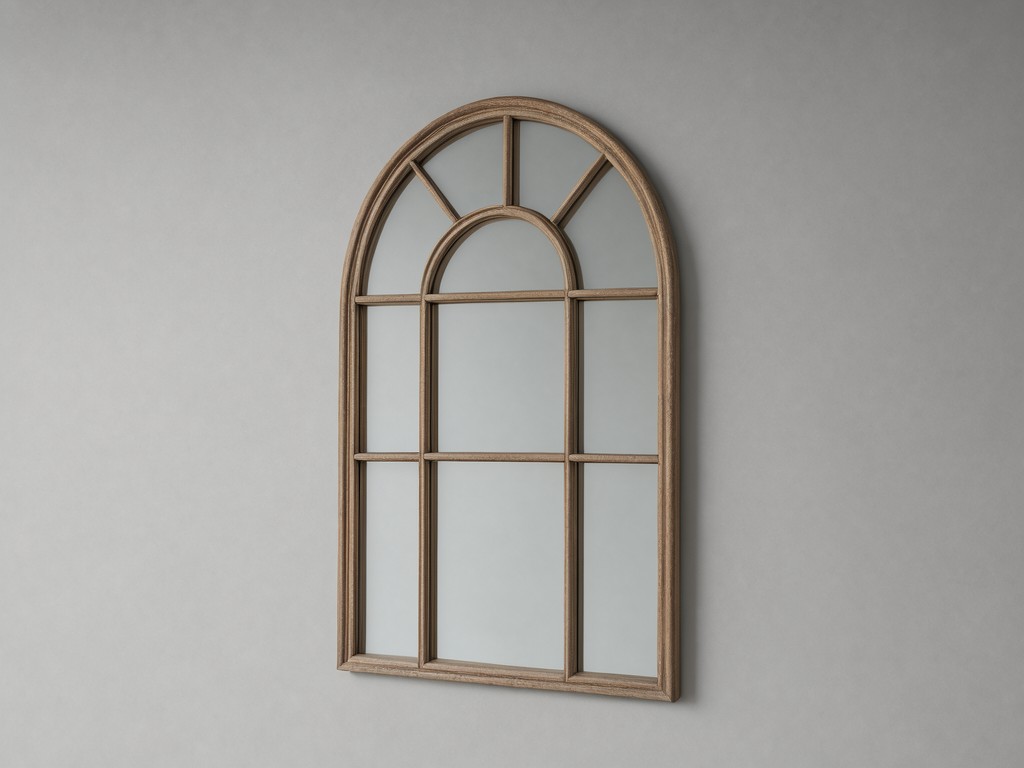
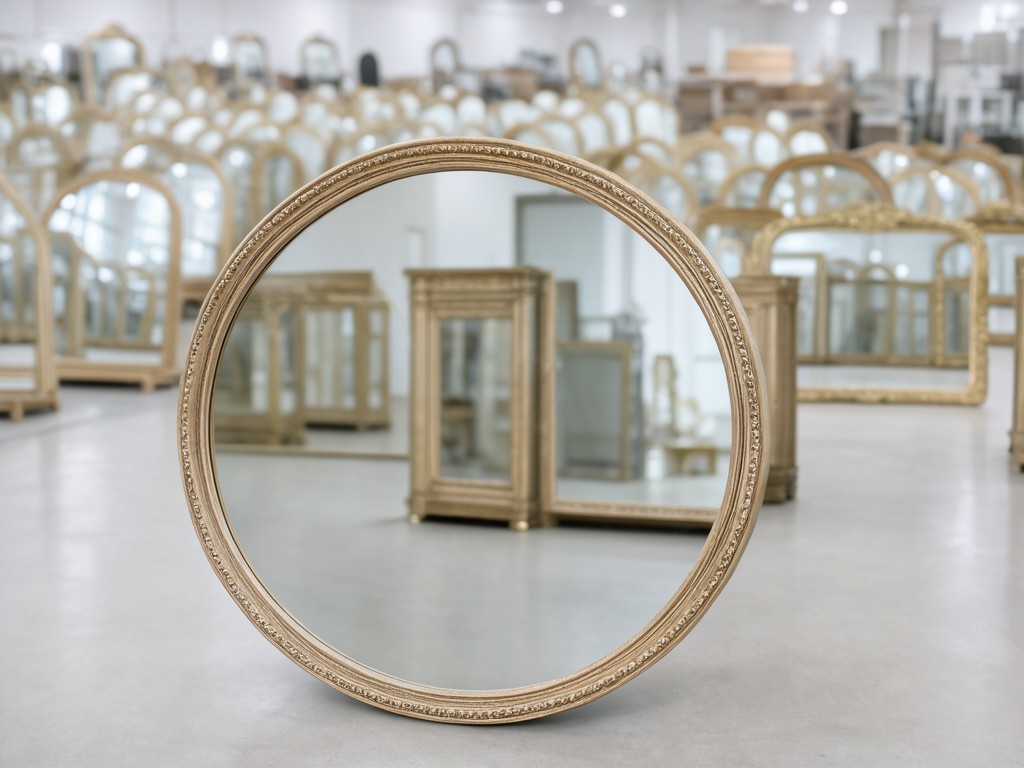
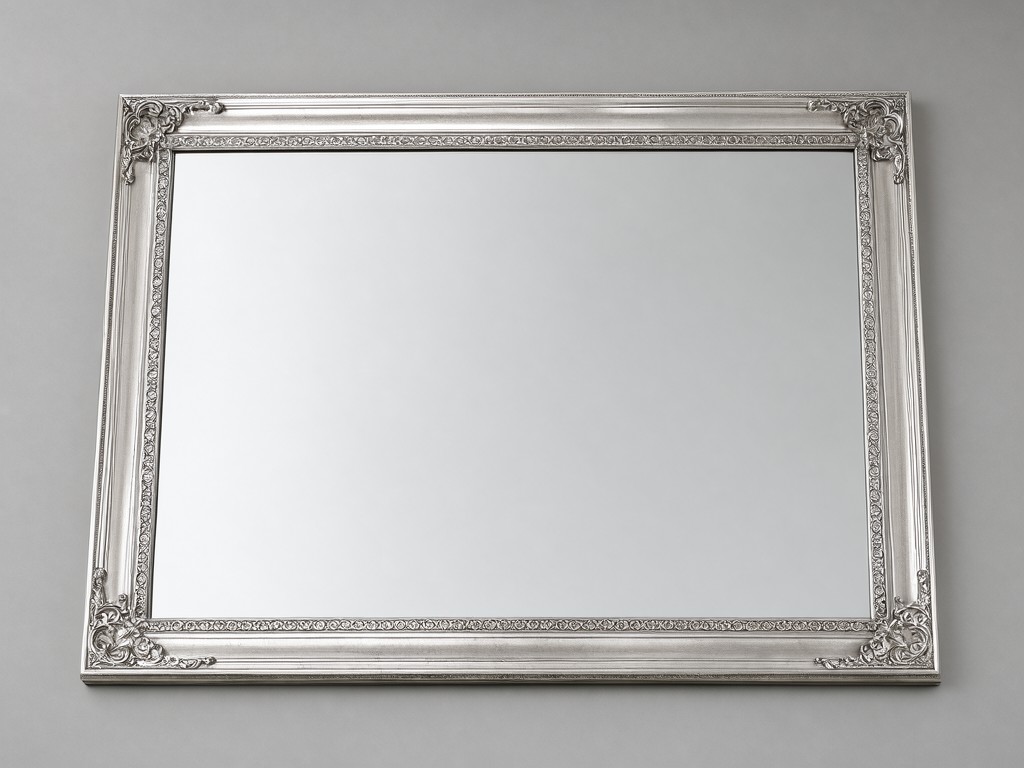
China cheap arched gold mirror Factory: What Buyers Should Check Before Ordering
Most quality disputes start with a consistency gap: the first sample arrives with an even gold leaf and flat glass, but the production run shows uneven coating at the arch crown, wavy reflection, or frame joints that open after six weeks on a hotel wall. For a private-label buyer qualifying a second source, that gap is not a cosmetic issue. It is a reorder risk.
What the Design Has to Balance
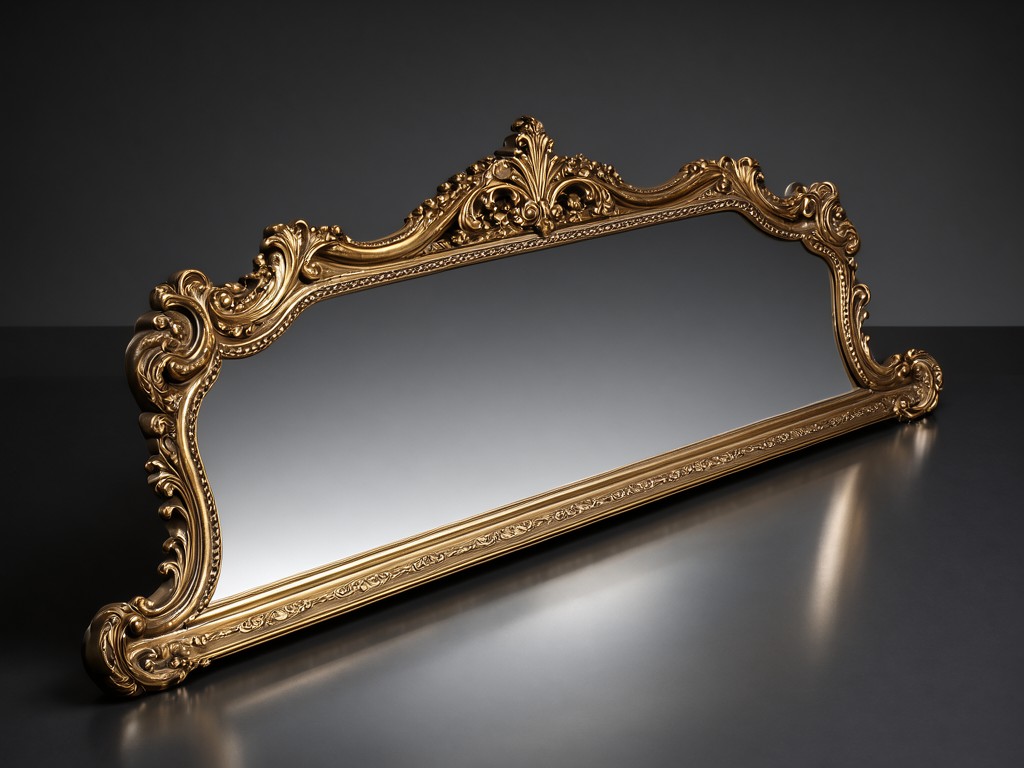
An arched mirror trades flatness for profile. The curved top concentrates stress at the miter joints, and any glass waviness becomes obvious the moment a guest stands three feet away.
The frame must carry the glass dead load without twisting at the arch tangent, while the finish has to stretch over the radius without cracking. Gold leaf over gesso handles the curve better than powder coat on metal, but it adds drying time and rejects at the edges. A 4 mm mirror weighs roughly 10 kg per square metre; at 1200 mm by 2000 mm that is near the limit of a single French cleat, so the hanging hardware and wall substrate belong in the same conversation as the frame.
Buyers who skip this balance usually discover it in the freight claim, not the showroom.
Material Options and Their Trade-offs
Glass and backing determine whether the mirror stays clear in a bathroom or develops black edges within a season. Frame material determines weight, finish adhesion, and whether the arch can be tightened at the joint or must be welded.
| Option | Typical thickness | Weight per m² | Failure mode to watch | Best suited to |
|---|---|---|---|---|
| Standard silvered float glass | 4 mm | ~10 kg | Silver oxidation at cut edges | Dry interior, budget retail |
| Copper-free silver mirror | 4-5 mm | ~10-12.5 kg | Edge delamination if sealant fails | Bathrooms, humid zones |
| Aluminum-backed mirror | 3-4 mm | Lighter than silver | Lower reflectivity, softer coating | High-volume contract furniture |
| Aluminum extrusion frame | 20-30 mm profile | Light | Powder-coat chip at miter | Repeated reorders, tight tolerance |
| Solid wood with gold leaf | 25-40 mm | Heavy | Finish crack across arch radius | Hospitality, statement walls |
| MDF with gold paint | 18-25 mm | Medium | Edge swelling if moisture enters | Painted finishes, cost ceiling |
The table above reflects typical trade-offs, not guarantees. A buyer paying for copper-free backing is buying resistance to edge blackening, not a harder glass surface. Likewise, gold leaf on wood costs more than paint on MDF because the arch radius requires hand-laid material and longer drying cycles.
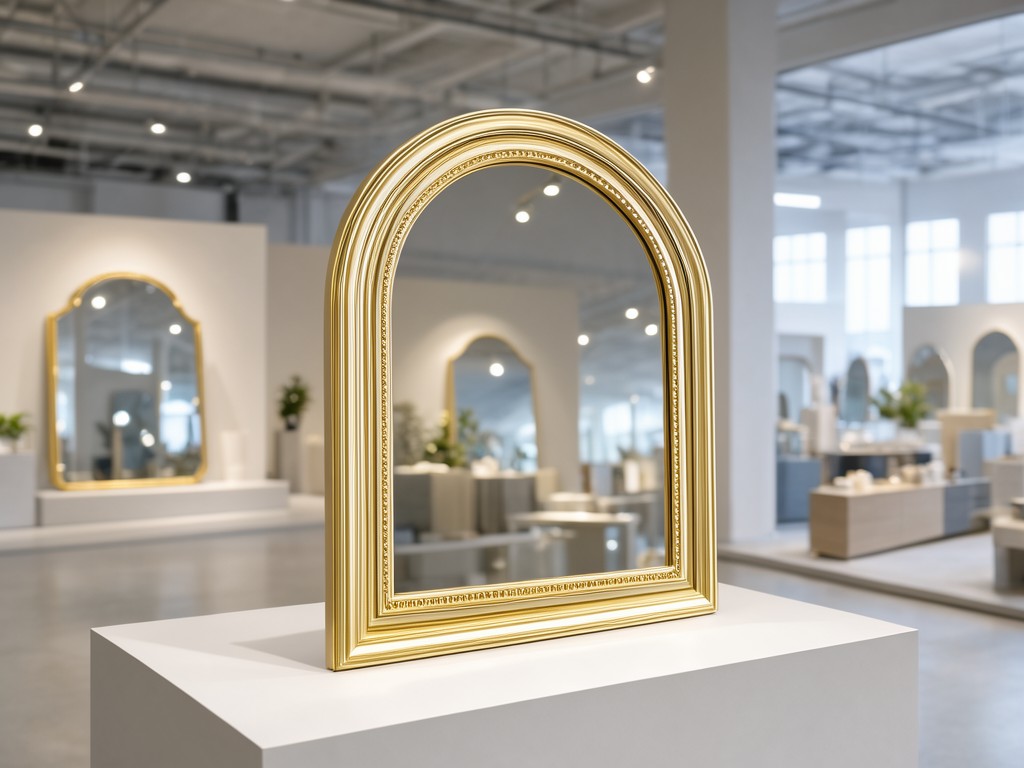
What Can Be Customised and What Cannot
Customisation stops where the arch geometry starts. The radius is fixed by the bending die or the glass template; changing it means new tooling. Everything downstream of the glass cut is negotiable within volume thresholds.
- Frame material — aluminum extrusion holds tight miter tolerance; solid wood accepts gold leaf but moves with humidity
- Powder-coated aluminum — fastest colour match, 15-25% cost premium over basic paint
- Gold leaf on wood — longer lead, higher reject rate at the arch crown
- Glass thickness — 4 mm for standard wall hanging; 5 mm or 6 mm for leaning floor mirrors or high-traffic areas
- 4 mm — lower freight cube, higher flex risk in large arches
- 5-6 mm — heavier carton, higher pallet surcharge
- Backing and seal — copper-free for humid rooms; standard silver with edge sealant for dry retail
- Size and quantity — under 1000 mm height usually ships by parcel; over 1500 mm moves to LCL or FCL pallet configuration
What cannot be changed without new dies: the arch radius, the frame profile cross-section, and the glass tempering pattern if the buyer later asks for safety glass. Those changes reset tooling amortisation and push lead time by weeks, not days.
Who Uses It and Where It Matters
Boutique hotels hang arched mirrors above vanities where steam and daily wiping test the edge seal. Retail fitting rooms use them at eye level, which means any distortion shows in the customer's reflection and directly affects purchase decisions.
Salon studios mount them at floor level, so impact resistance and frame corner strength matter more than optical perfection. A residential entryway mirror sees less abuse but higher finish expectations because it sits in the sightline of guests.
- Hospitality vanity zones: humidity, cleaning chemicals, edge blackening watch.
- Retail fitting rooms: optical flatness, reflection accuracy, frame joint appearance.
- Salon and studio floors: corner impact, frame torsion, wall-mount load rating.
- Residential entryways: finish consistency, arch radius uniformity, pack survival.
Inspection Items and Test Methods
Returns usually trace back to the same weak point: the edge seal at the glass perimeter. A visual pass under factory lighting is not enough when the mirror reaches a bathroom with condensation cycling every day.
The factory should check distortion by reflecting a straight grid at one metre distance; any bow over 2 mm across the arch is a reject. Silvering adhesion gets a cross-hatch tape test at the cut edge. Frame miter joints get a pull test at 20-30 N depending on material. Packaged units undergo a drop test on one corner and one flat face before the carton is sealed.
Specification rule: specify edge sealing and backing type in the purchase order, not just "gold mirror." A generic description leaves the sealant choice to the line worker, and that is where batch-to-batch variation enters.
Capacity, Tooling and Scheduling
Tooling amortisation changes the unit cost curve more than the glass choice. A new arch bending die or glass template carries a fixed cost that only makes sense above a certain volume, typically several hundred pieces per style.
Lead time moves with order size because the cutting line, silvering tank, and drying rack are batch processes. A sample run of five pieces can take two weeks while a production run of five hundred runs in three to four weeks once the die is proven. The gap between sample and production is where most second-source qualifications fail.
Volume and cost: below 100 pieces, expect to pay setup pricing with lead times driven by die availability. Above 500 pieces, the per-unit cost drops because the arch template and frame profile run continuously, but the packing line becomes the bottleneck.
Ask for the die life and the maximum arch radius before signing a forecast.
Packing, Marking and Freight Configuration
Arched mirrors ship best in double-wall cartons with EPS corner protectors and a foam wrap over the glass face. The arch crown is the first impact point in a drop, so corner density matters there more than at the square base.
- Carton size: matched to mirror dimensions with 30-50 mm foam clearance.
- Corner protectors: high-density EPS at the arch crown and bottom corners.
- Pallet configuration: vertical stacking with cardboard interleaving, maximum two mirrors per stack for 5 mm glass.
- Marking: batch code, size, and glass type on two sides; "fragile" and "this side up" labels per export carton.
Freight cost is driven by cube weight, not dead weight. A large arched mirror takes up pallet space that could hold several smaller rectangular units, so consolidating sizes into one container improves the landed cost more than negotiating the per-piece price.
Request a Specification Review
Send your target arch radius, glass thickness, and annual volume. We will return a tooling availability check, a tolerance sheet for the gold finish, and a packing configuration for your destination port.
Start specification review