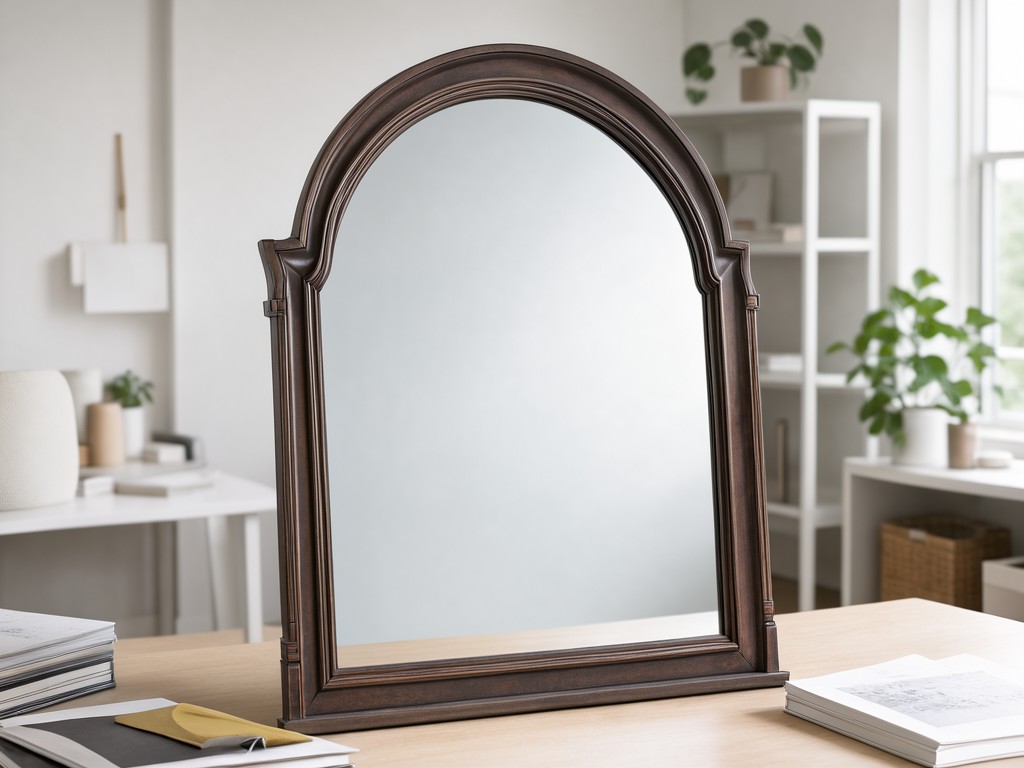
Specifying best price large arched mantel mirror wholesale for Wholesale and OEM Orders
The complaint that repeats across reorders often involves premature silver oxidation at the edges of the glass pane. When sourcing for large-scale retail projects, the cost-reduction strategy frequently targets the moisture-resistant edge-sealant, leading to de-silvering within months of exposure to high-humidity environments. To maintain a competitive return rate, the specification must prioritize the chemical composition of the backing coating and the thickness of the silvered substrate.
What the Design Has to Balance
| Material Option | Technical Impact | Cost Trade-off |
|---|---|---|
| MDF Reinforced Frame | High dimensional stability; prevents warping under weight. | Lowest unit cost for high volume orders. |
| Solid Wood Vene | Natural moisture resistance; varied grain patterns. | Higher price-point; requires longer curing cycles. |
| Polyurethane Resin | Waterproof properties; intricate molding capability. | Medium weight; increases freight costs. |
How It Performs in Use
Load-Bearing and Mounting Integrity
Large arched mirrors exceeding 15kg require specific hardware configurations to prevent frame stress. Standard wire-hanging methods create point stress on the top rail, leading to structural failure after repeated adjustments. A heavy-duty aluminum French cleat distributes the weight across the entire width of the frame, reducing the risk of the glass cracking against the backing during installation.
Measured Performance in Real Use
Optical clarity in a large mantel mirror is dictated by the glass thickness. A 4mm sheet often exhibits a slight "funhouse" effect or distortion when viewed from an angle across a large room. Upgrading to 5mm silvered glass ensures a flat reflection plane, which is a requirement for high-end hospitality applications. Furthermore, the use of an epoxy-based backing paint prevents the silver layer from reacting with atmospheric sulfur, a common failure in low-grade wholesale units.
Wear shows up at the same point every season when the adhesive holding the glass to the frame fails. Solvent-based adhesives dry out under temperature fluctuations, causing the glass to rattle. We utilize a neutral-cure silicone adhesive that maintains a flexible bond between the glass and the frame, ensuring the unit remains rigid for the duration of the product life.
Segment-Specific Requirements
| Segment | Standard Specification | Critical Metric |
|---|---|---|
| Retail Consumer | 4mm glass, MDF frame | Retail-ready packaging |
| Hospitality/Hotel | 5mm glass, Metal/Wood frame | Oxidation resistance rating |
| OEM Brand Label | Custom de-profile frame | Batch tolerance +/- 2mm |
Quality Control and Batch Consistency
Most quality disputes start with a consistency gap in dimensional tolerances between different batches. When arched mirrors are cut, the radius of the curve can vary by several millimeters if the jig is not re-calibrated. We utilize CNC-guided cutting templates to ensure that every arched unit stays within a 1mm tolerance of the master pattern. This ensures that if a buyer reorders six months later, the new mirrors will fit the same architectural openings.
The inspection process also includes a salt-spray test for metal-framed variants to verify the powder coating adhesion. This prevents the bubbling effect often seen in coastal environments. By testing the bond strength via a cross-cut test, we guarantee that the finish will not peel during transit or long-term environmental exposure.
Keeping Repeat Orders Supplied
- Tooling amortization for custom arched shapes reduces unit cost once the volume exceeds 500 units.
- Standardized foam-in-place packaging reduces the breakage rate to under 1% during global sea freight.
- Batch tracking of the silvering solution allows for precise color matching across different production runs.
- Lead times for standard-sized arches are maintained at 30-45 days through raw material buffering.







